
Image
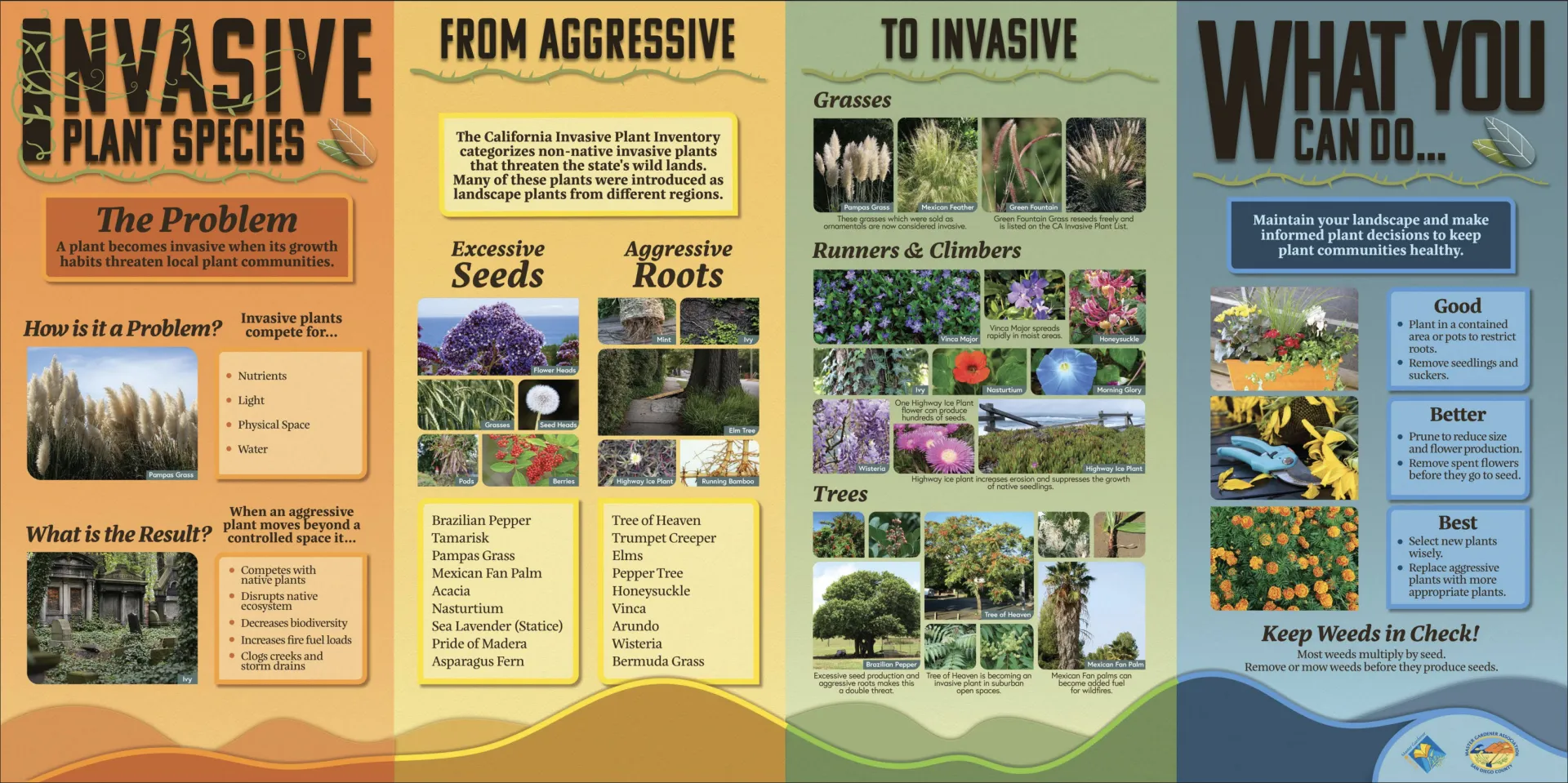
Invasive Plants of San Diego County
Once established in natural areas, invasive plants displace native vegetation and greatly reduce the amount and quality of habitat for native wildlife.
- Common Fennel (Foeniculum vulgare): Fennel is a major invasive plant in many lower elevation natural areas in coastal California. Fennel occupies disturbed areas, and is very competitive with natives that try to re-establish in the site.
- Giant Reed (Arundo donax). The San Diego River at I-5 and I-8 is choked with invasives such as this. Impacts: Crowds out native plant species; reduces wildlife habitat; contributes to higher fire frequency and intensity; and modifies river hydrology.
- Nasturtium (Tropacolum majus). Nasturtiums become invasive if allowed to take over a garden bed, due to their trailing habit.
- Mexican Fan Palm (Washingtonia robusta). Mexican fan palm is a common landscape ornamental that has become invasive in riparian areas, orchards, and landscaped areas. This palm is known to create monospecific stands in riparian areas, and dead fronds of the tree can create a fire hazard.
- Canary Island Date Palm (Phoenix canariensis). Displaces native trees. It has been documented as a pest on the San Diego River. One adult can produce a carpet of seedlings.
- Brazilian and California Pepper (Schinus terebinthifolus and S. molle). In order to control pepper tree infestations, tree roots must be removed or killed, and seedlings must be controlled by hand-‐ pulling for at least three years.
- Myoporum (Myoporum laetum). Myoporum's heavy seed production results in dense monocultures that outcompete other species.
- Ice Plant (Carpbrotus edulis). It has invaded foredune, dune scrub, coastal bluff scrub, coastal prairie, and maritime chaparral communities, and competes directly with several threatened or endangered plant species for nutrients, water, light, and space.
- Coast Wattle (Acacia Cyclops). It grows fast, quickly out competing any surrounding native plants and produces large amounts of seed ensuring its success.
- Eucalyptus (Camaldulensis sp.). It grows aggressively, displacing surrounding native plants. Excessive leaf litter and shade eliminate understory plants.
Invasives That Easily Migrate to Canyons and Vacant Lots
- Jade Plant (Crassula ovata) It is this migration characteristic that has allowed it to escape into the wild and become weedy in some areas outside its natural range.
- Morning Glory (Ipomoea tricolor). It behaves as an environmental weed, which has the potential to outcompete native species for nutrients, water, and sunlight. It climbs using other plants for support, and forms a dense canopy that shades out native vegetation.
- Hottentot Fig (Carpobrotus edulis). It has been widely introduced elsewhere and has become a popular plant for growth as an ornamental or for ground cover. However, it can readily and rapidly spread to form deep, dense mats, which smother other low-‐growing native vegetation, especially in coastal habitats.
- Pampas Grass (Cortaderia jubata). Regarded as a very serious invasive species; it forms dense stands that displace native vegetation and has become a serious problem in new forestry areas where it suppresses the growth of young trees and creates a fire hazard.
- Crown Daisy (Glebionis coronaria) Grows very well in mild or slightly cold climates, but will go quickly into premature flowering in warm summer conditions.
- Trailing Ice Plant (Lampranthus spectabilis). With a carpet of fleshy, gray-green leaves, trailing ice plant becomes splendidly colorful with many daisy-like blossoms from late winter to spring.
- Mustard (Brassica tournefortii). Dense stands appear to suppress native wildflowers. Because of its early growth, it appears to monopolize available soil moisture as it builds a canopy and seeds mature long before many native species have even begun to flower.
- Periwinkle (Vinca major). This aggressive flower has trailing stems that root wherever they touch the soil.
Native Plants Can Be Invasive
- Lemonade Berry (Rhus integrifolia). Native to Southern California coastal sage scrub and chaparral habitats.
- California buckwheat (Eriogonum fasciculatum var. foliolosum). This plant may become weedy or invasive in some regions or habitats and may displace desirable vegetation if not properly managed.
- Chamise (Adenostoma fasciculatum). Oils in the leaves and branches make the plant highly flammable, especially when dry, and this helps to fuel periodic and destructive wildfires that occur in these habitats. Chamise rapidly re-sprouts after fires.