
Image
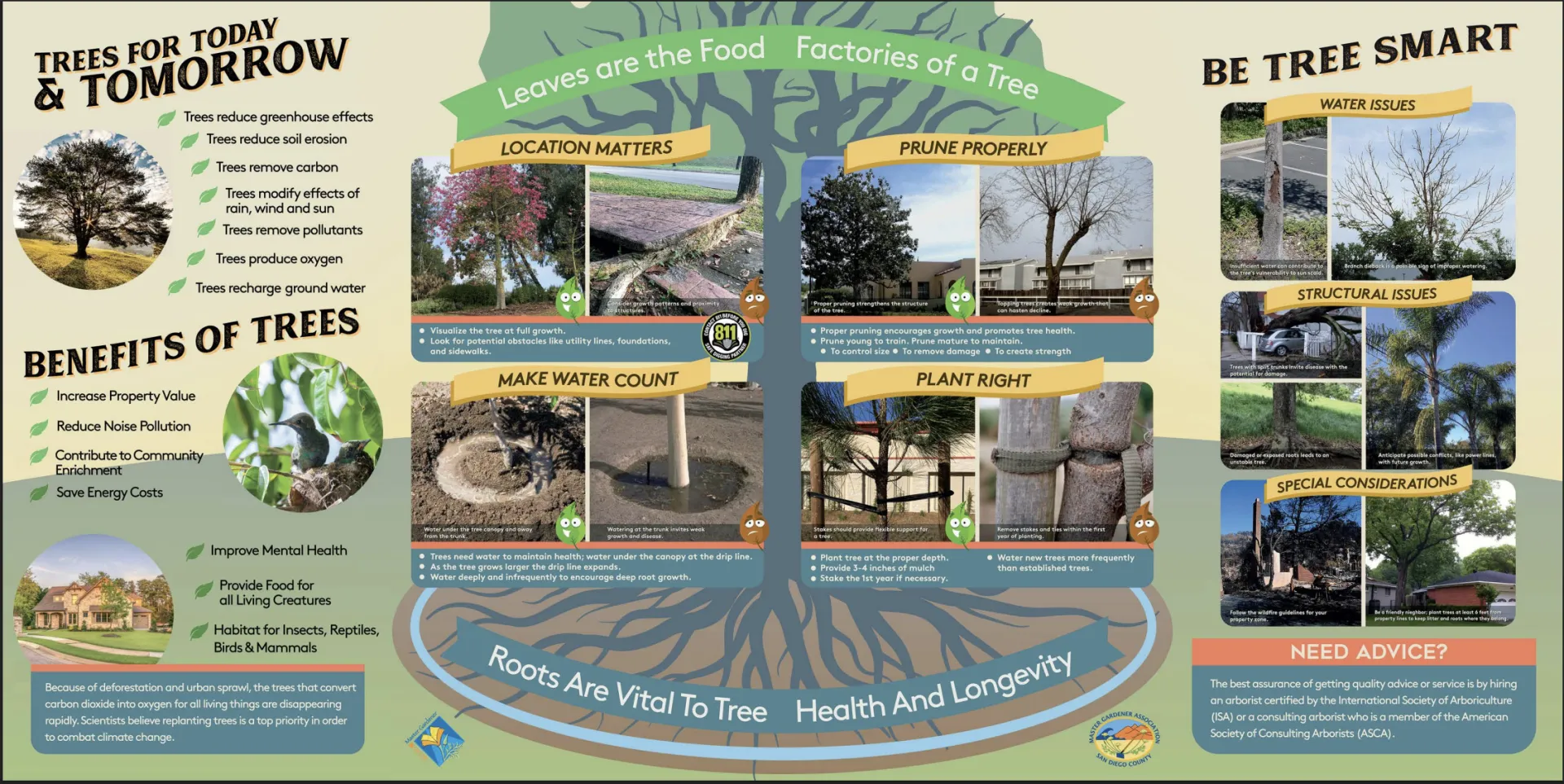
Trees for Today and Tomorrow Brochure
I : Trees are an investment and help create a healthier environment
- Climate change: Trees mitigate climate change and help reduce the overall concentration of CO2 in the atmosphere
- Reduce energy costs: Trees provide cooling shade, helping reduce the cost of air conditioning
- Help clean the air: Trees absorb carbon dioxide, odors and pollutant gases, as well as reduce dust particulates in the air
- Provides habitat for wildlife: Trees provide shelter for wildlife and contribute to biodiversity –the variety of life found on earth
- Increase property values: Several recent nationwide surveys show that mature trees in a well landscaped yard can increase the value of a house by 7 to 19 percent.
- Improve quality of soil and water: Healthy trees slow water runoff, prevent soil erosion and reduce water pollution.
- Grow your own fruit and/or nuts: Edible fruit and nut trees are bountiful and easy to grow.
II: Selecting the right tree for each location greatly improves the health of the tree and reduces problems
- Function of a tree: Determine the function of a tree. Is for shade, windbreak, privacy, aesthetics or architectural elements, to provide fruit or nuts?
- Consider tree characteristics: Research tree species for shape, mature height, growth rate, foliage, canopy spread, potential root damage and litter type – Know Your Tree Before You Plant
- Root development matters: Ensure the roots of a new tree are healthy with good root structure; no kinked or girdling roots to choke off the flow of water and nutrients between roots and branches.
- Avoid common pest problems: Select tree species with genetic resistance to local common pest problems.
- Be smart when purchasing a tree: Purchase bare root deciduous trees and the smallest evergreen specimen possible
III: Proper tree planting will ensure a young trees’ survival and increase the chances of a healthy tree at maturity
- Consider existing factors: Know soil type and hours of sunlight, distance from buildings or sidewalks or sewer lines, ensure good drainage to help prevent root rot and encourage healthy root growth
- Hidden elements: First call Dig Alert https://www.digalert.org/ of determine if utility easements or underground obstructions are present
- Safety factors: Planting trees near or under utility lines requires careful consideration – check this website for more specific information
- Fire Safety: Tree species and location can influence the fire safety of your home; care should be taken to lessen factors that contribute to flammability and hazard. If you live in a fire risk area, check with you local Fire Council or Fire Department before planting trees. Check the California Fire Safe Council website for more information:
- Neighbor Friendly: Consider the effect a mature tree may have on your neighbor? Will tree litter fall over the property line? Will the roots wander next door?
- Fall Planting: Fall is the best planting season due to warmer soil temperature; more soil moisture and roots have more time to establish before summer temperatures arrive.
IV: Choosing a healthy young tree increases potential health at maturity
- Good trees start in the nursery: Take the time to carefully inspect trees in the nursery, before buying
- Finding a good specimen: Verify root health, strong branch structure and a strong central leader
- Check for potential damage: No signs of topping or damage to trunk or limbs
Plant correctly to ensure a healthy tree at maturity; follow these steps
- Identify the root crown of your tree – scoop away soil to expose where the trunk meets the roots, should be a slight flare visible. That flare should be at least an inch above soil after watering.
- Prepare planting hole – twice diameter of root ball with slightly sloping sides and as deep as the root ball. Roughen the sides of the hole.
- Fill hole with water and let drain into soil; repeat if soil is very dry.
- Slide specimen out of container and scuff up sides of root ball to determine if any coiled roots. Spread out as many roots as possible and cut away any circling ones.
- Rest root ball on firm soil to avoid settling; place tree upright in the hole, facing grafting scars away from sun exposure.
- Fill hole with original soil and pack firmly, leaving uppermost root crown slightly above soil grade. Do not add amendments or fertilizers
- If tree is falling over without support set stakes in ground outside the root ball and at least as deep as the tree, tie loosely with soft, pliable material, no more than 2/3 up the tree. Ties should not be tight.
- Spread 3-4" of organic mulch around base of tree, kept 3 inches away from trunk
V. Caring for Trees - Trees are a significant investment; providing proper care will help protect that investment
- Stake trees for protection, anchorage and support only as long as needed; all stakes should be removed after one season.
- Train young trees for structure and form; prune young trees with great care so they can grow into healthy, mature trees.
- Prune mature trees properly for optimum health – Do Not Top Trees.
- Young trees need more frequent watering for healthy roots; water deeply 3 days after planting and then once a week for the next 3 weeks.
- For the first six months of a tree’s life, water deeply once a week; for the remainder of the first year, water every other week in absence of soaking rain.
- Deep watering encourages the formation of robust roots underground.
- Once roots are well established, water deeply and infrequently, watching for signs of drought stress – are leaves wilting, yellowing curling or browning at the edges?
- Protect trees from lawn equipment like week whackers and mowers. Cuts in the cambium layer, just behind the tree bark can cause permanent damage and expose the tree to infection.
- Protect young trees from chemicals. Pesticides and herbicides can burn or damage a young tree’s roots and leaves.
- Regularly inspect trees for signs of insect damage; if you suspect disease, consult a Certified
- Arborists who can inspect the tree and advise you on care and safety. Watch trees carefully for foliage changes to catch problems early and begin care and treatment.
VI: Tree Mistakes to Avoid
- Topping: Topping and other poor pruning techniques disfigure trees and make them susceptible to diseases and premature death.
- Mechanical Damage: Injury caused to the bark of a tree by weed whackers, lawn mowers, other lawn equipment and bicycles or objects leaned against trees may be permanent and shorten the life of your tree.
- Be a Good Tree Neighbor: Pruning or injuring trees that belong to the city or a neighbor is against California law and may result in a lawsuit against you.
- Competing plantings: Grass, weeds or other plants growing around the base of the tree compete with the tree for moisture and nutrients as well as creating shelter for potentially damaging insects.
- Incorrect Watering Practices: Underwatering trees not only affects their long-term health and growth, it can kill. Young trees, particularly those under five years old, are very vulnerable.