
Image
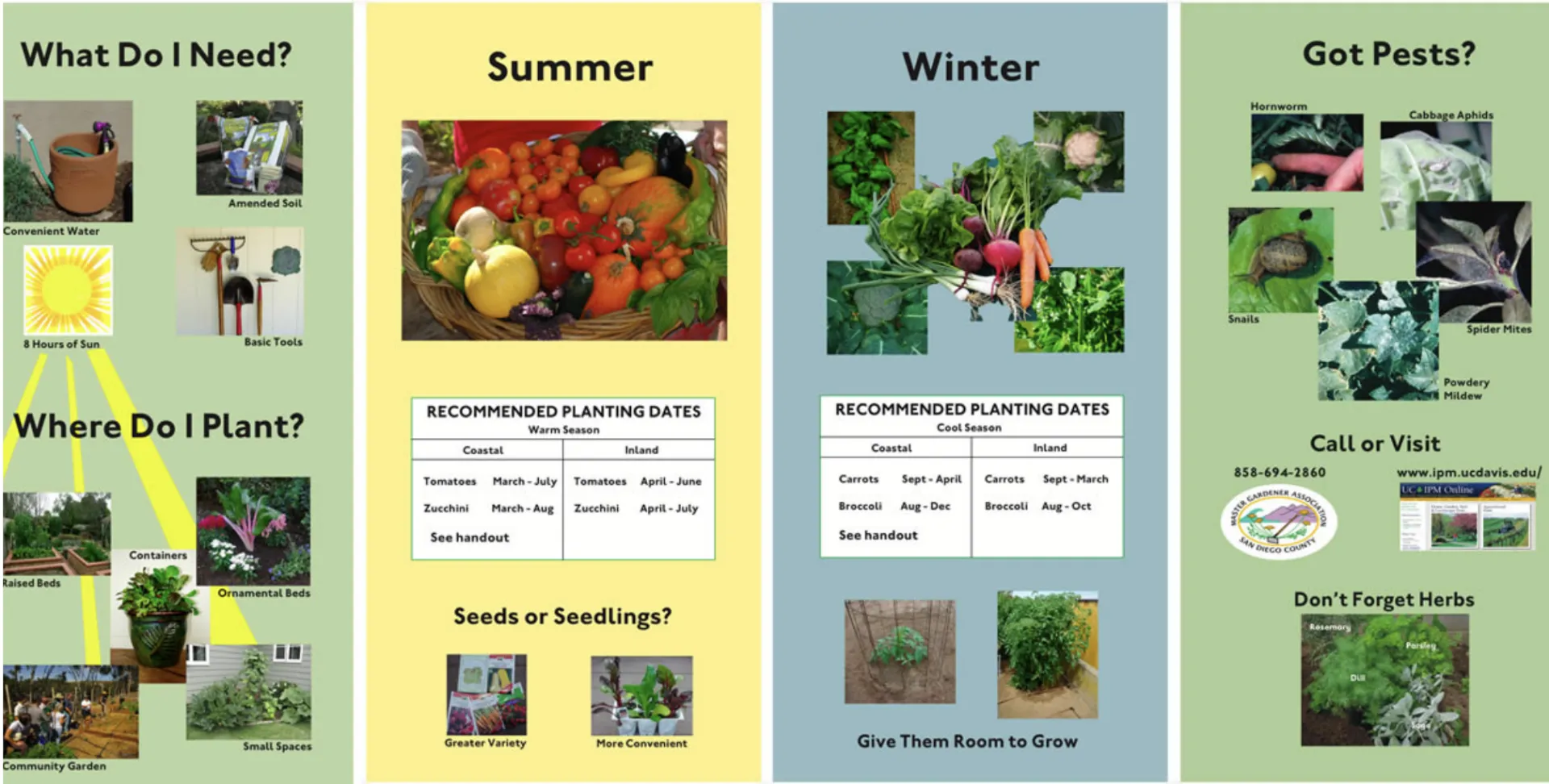
Vegetable Exhibit
Panel 1 – What Do I Need? Where Do I Plant?
Concept: Good planning helps create a successful garden.
What to know:
- Vegetables need more water than most ornamental plants. A water source near the garden makes watering more manageable.
- Plants that we grow for food need a healthy soil. Amendments improve drainage, moisture retention and soil structure. Compost adds nutrients and fertilizer keeps plants productive.
- Sunlight is critical for fruit/vegetable production. Eight hours is optimal; plants that receive fewer hours will be less productive. Cool season crops like root vegetables and leafy vegetables need fewer hours of sunlight.
- Tools: a shovel or spade to turn in amendments, a rake to smooth the soil, and a hoe or hand trowel to trench or weed. Gloves to protect hands.
Where to plant:
- Be creative! Vegetables can be ornamental as well as food producing.
- Match plant needs, requirements and production to your needs, commitment, and options.
Panel 2 – Summer
Concept: Vegetable plants have optimal planting seasons even in San Diego.
- Summer vegetables are warm season plants that span from March-August, depending on where you live.
- Warm season crops are typically plants that produce a flower, which turns into a fruit or vegetable: tomatoes, peppers, eggplants, cucumbers, green beans, and squashes.
- Warm season plants need warm soil and a relatively high temperature range. Tomatoes typically need a range of 65°F (nighttime) to 90°F to produce and set fruit.
- Most warm season, flower-producing plants need long day length.
Panel 3 – Winter
Concept: Vegetable plants have optimal planting seasons even in San Diego.
- Winter vegetables are cool season plants that can be planted between Sept-Dec, and again in Feb-March, depending on where you live.
- Cool season crops are typically plants that produce leaves, roots and buds for consumption: leafy greens, cauliflower, broccoli, carrots, and radishes.
Panel 4 - Got Pests? Don't Forget Herbs
- Hornworms, cabbage aphids, snails, spider mites, powdery mildew are common in vegetable gardens in San Diego.
- Popular herbs to grow:
- Rosemary
- Dill
- Parsley
- Sage