
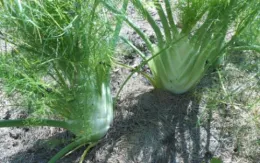
There are two types of fennel:
- Florence fennel, also called bulbing fennel: grown primarily for the bulb-like base of the stalks which is eaten as a vegetable. In grocery stores, fennel is sometimes labeled sweet anise, but anise seeds come from a totally different plant, Pimpinella anisum.
- Common and bronze fennel: grown for the seeds or foliage—they do not form succulent bulbs. They are not recommended in the Bay Area due to concerns regarding invasiveness.
Although perennial, fennel is usually grown as a cool season annual to harvest as bulbs for eating. If allowed to flower, even bulbing fennel will self-sow easily and can take over an area if not controlled. Fennel attracts many beneficial insects and is a host plant for swallowtail butterflies.
Fronds of bulbing varieties typically reach 12 to 30 inches tall before harvesting, but will get taller if allowed to bloom and go to seed. Common and bronze fennel can get as tall as 4 to 5 feet.
Planting
- Direct seed or transplant 8 to 12 inches apart in February to April or in September to October, possibly in May or August depending on weather and local conditions.
- If growing your own seedlings, start the seeds 6 weeks before you want to plant
Harvesting
- Harvest the bulb-like base when it is large and plump, 4 to 6 inches across, typically 60 to 90 days after transplanting. Cut just above the soil line.
- Pollen can be collected from flower blooms by shaking flower heads into a plastic bag.
- Pick leaves at any time during the growing season. Do not remove more than ⅓ of the foliage.
- Harvest seeds when flower heads turn brown. Cut the seedheads and place them in a paper bag in a cool, ventilated location. The seeds will fall off when dry and can then be collected.
Pest management

- Aphids
- Thrips
- Cabbage moth larvae
- Anise swallowtail larvae (pictured): While the butterflies are welcome, and damage from the larvae eating the foliage is negligible on mature plants, young seedlings can potentially be overwhelmed. Pick off as needed.
More links
- How to Grow Fennel in Your Garden, Utah State Extension
- Fabulous Fennel, UC Master Gardeners of Sonoma County
Recommended varieties for Santa Clara County*
Di Parma OP: Superior bulbing fennel, large and uniform, with great flavor
* Many other varieties may also do well here in Santa Clara County. This list is based on UC Master Gardener trials, taste tests, and feedback from local growers.