

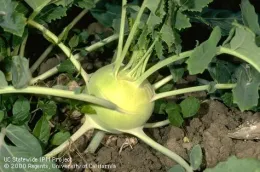
Kohlrabi is a member of the cabbage family and is grown for its edible, bulb-shaped, stem. Often mistaken for a root, the bulbous stem sits just above the soil. The taste and texture are similar to broccoli stems but is juicier and crisper. The skin of the bulb can be greenish-white or purple depending on the variety, but the flesh inside will be white in either case.
Planting
- Direct seed or transplant 4 to 6 inches apart in February to March or September to October, possibly in August depending on weather or local conditions.
- If growing your own seedlings, start the seeds 6 weeks before you want to plant.
Harvesting
- Kohlrabi is a fast grower and is usually ready to harvest within 8 weeks, depending on weather and variety.
- Harvest when young and tender. Kohlrabi left too long can become tough and develop off flavors.
- Kohlrabi leaves are also edible and are similar to kale.
- An extended cool period followed by warmth can cause the plants to bolt (send up a flower stalk) which may also cause them to get woody and tough.
Pest management
Kohlrabi is in the cabbage family, also known as cole crops or brassicas, and pests are similar across the family.
Pests and disorders of cabbage, UC IPM
Recommended varieties for Santa Clara County*
| Kohlrabi Duo, Hybrid | The white flesh is deliciously sweet and juicy. Can be eaten raw or cooked. Mix of green Kongo and purple Kohlibri varieties. 8 to 10 inches tall. Plant 4 to 6 inches apart. |
Other recommended varieties: Early Purple Vienna, Kohlibri, White Vienna
* Many other varieties may also do well here in Santa Clara County. This list is based on UC Master Gardener trials, taste tests, and feedback from local growers.