UC ANR is committed to providing an accessible and inclusive web experience for all users. If you encounter an accessibility barrier or need content in an alternative or remediated accessible format, please contact anraccessibility@ucanr.edu.
Approximately 48 million people are sickened by foodborne illnesses leading to 128,000 hospitalizations and 3,000 deaths every year, according to the CDC estimates. A foodborne disease outbreak occurs when two or more people get the same illness from the same contaminated food or drink.
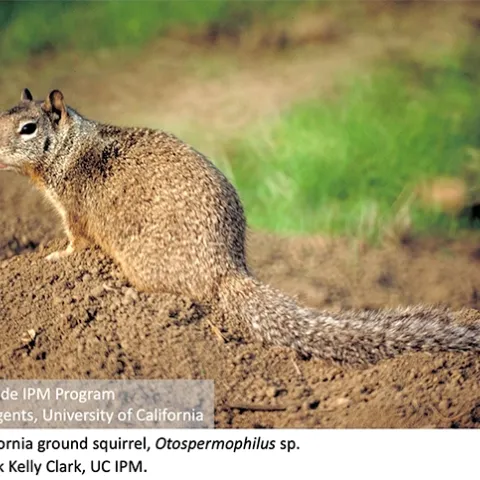
New online course on the management of ground squirrels and pocket gophers now available Cheryl Reynolds, UC Statewide IPM Program We're pleased to announce that a new online course on managing ground squirrels and pocket gophers has been added to UC IPM's growing library of online training courses.
Congrats to the two "Jakes" from the laboratory of community ecologist Rachel Vannette, UC Davis Department of Entomology and Nematology. The two postdoctoral scholars, Jacob "Jake" Francis and Jacob "Jake" Cecala, have just received prestigious federal research fellowships.
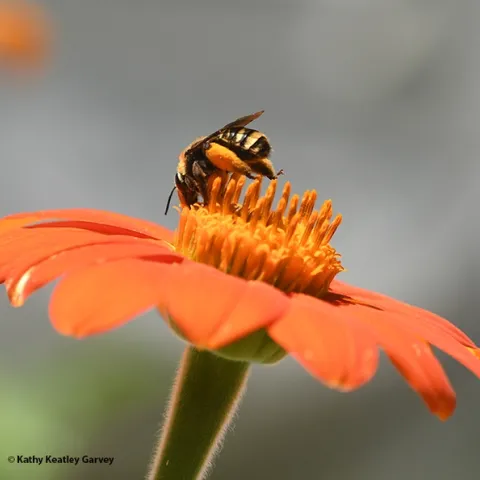
It's Day 7--the last day--of National Pollinator Week. Meet a longhorned bee, Svastra obliqua expurgata, family Apidae. It's also known as a sunflower bee.
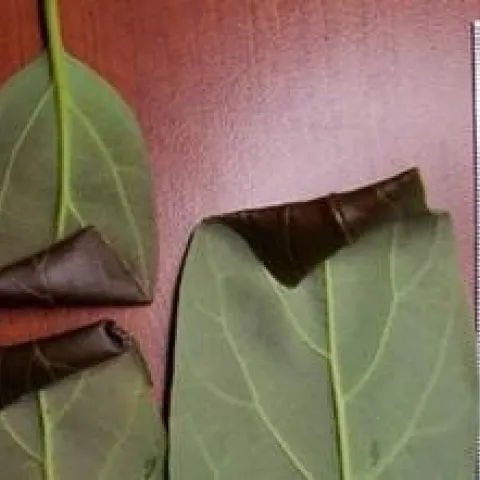
Day 5 of National Pollinator Week: Meet the leafcutter bee, family Megachilidae. It's a native pollinator, a solitary bee, and about the size of a honey bee. Its coloration--the black-and-white banded abdomen--makes it easily recognizable.
Scientists are hoping the RNA of an obscure infection can one day be used like a Trojan horse to deliver life-saving treatments to citrus trees. UCR microbiologist Kiran Gadhave examining citrus for yellow vein disease symptoms.
When you think of pollinators, you think of bees, right? And well you should: honey bees are the global workhorses of the pollination community and pollinate about one-third of the food we eat, including fruits and vegetables and some nuts, primarily almonds (California's almond acreage exceeds 1.
David Peris, Xavier Delcls, Bjarte Jordal https://doi.org/10.1111/brv.12763 A beetle bores a tree trunk to build a gallery in the wood in order to protect its lay. As it digs the tunnel, it spreads ambrosia fungal spores that will feed the larvae.
Author: Pamela Kan-Rice Published on: June 8, 2021 A pocket gopher emerges from a burrow. The holes and mounds created by burrowing rodents pose hazards to farmworkers and farm machinery.