

UC ANR is committed to providing an accessible and inclusive web experience for all users. If you encounter an accessibility barrier or need content in an alternative or remediated accessible format, please contact anraccessibility@ucanr.edu.
"The enemy of my enemy is my friend" holds true in entomology as well! The activity of natural enemies of pests (beneficial insects) is a key component of Integrated Pest Management in alfalfa to prevent pest resurgence and secondary pest outbreaks.
As I've written numerous times, research into the efficacy of livestock protection tools, including livestock guardian dogs, is difficult (if not impossible).
While domestication of plants has yielded bigger crops, the process has often had a negative effect on plant microbiomes, making domesticated plants more dependent on fertilizer and other soil amendments than their wild relatives.
Several years ago, the UC Weed Science group produced a series of training videos. In the next few days, I'm going to share links to the videos. The first topic is principles of weed control. The videos are broken up into smaller parts, so they are easier to view.
I'll be back! And, they are, with a vengeance! Just like the Terminator, those pesky blue alfalfa aphids are once again wreaking havoc in alfalfa fields, including those just breaking dormancy in colder climates.
Have you ever seen a plume moth? Or has a plume moth ever seen you? We spotted a pterophorid plume moth (family Pterophoridae) yesterday on our back door in Vacaville, Calif.
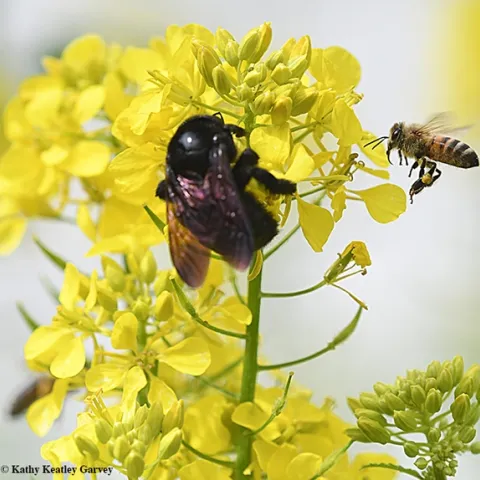
Topic From Integrated Pest Management to Integrated Pest and Pollinator Management Description An update on current research on pollinator health We will dive into the fascinating world of bees managed and wild - and learn about the current research to keep them healthy from leading experts in the...
UC Cooperative Extension advisor Scott Oneto and retired insurance executive Staci O'Toole are researching conditions in a Placerville hazelnut orchard that best support the production of highly prized Perigord truffles, reported Becky Grunewald in the Sacramento Bee.