Agriculture

Primary Image
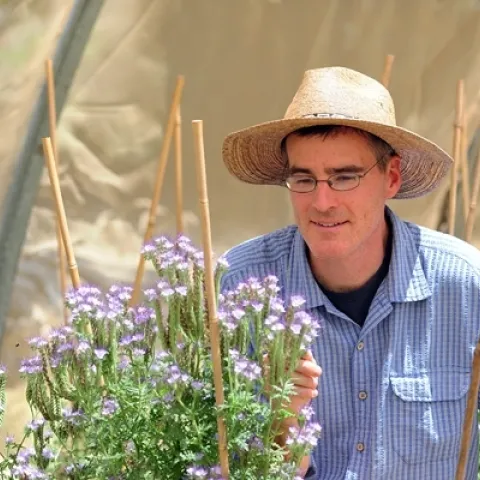
UC Davis pollination ecologist Neal Williams has just been named a Highly Cited Researcher by Clarivate Analytics, an honor awarded to exceptional scientists and social scientists who have demonstrated significant influence by publishing multiple papers that rank in the top 1 percent by citations in a particular field and year, over a 10-year period. (Photo by Kathy Keatley Garvey)
Entomology & Nematology News: Article

Pollination Ecologist Neal Williams: Highly Cited Researcher

December 7, 2018
By Kathy Keatley Garvey
DAVIS--Pollination ecologist and Chancellor's Fellow Neal Williams, professor of entomology, UC Davis Department of Entomology and Nematology, has been named one of the Highly Cited Researchers in the 2018 list just released by Clarivate Analytics.
View Article
Primary Image
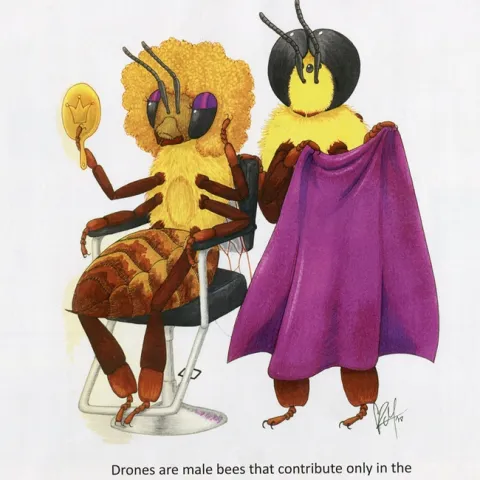
A UC Davis student wrote: "Drones are male bees that contribute only in the perm production for the queen." That inspired Karissa Merritt to create this for the newly published Bohart Museum of Entomology calendar, now available for purchase.
Bug Squad: Article

When Queen Bees Get Permanents: Calendar That!

December 6, 2018
By Kathy Keatley Garvey
"Drones are male bees that contribute only in the perm production for the queen." So wrote an undergraduate student in one of Lynn Kimsey's entomology classes at the University of California, Davis. The student meant "sperm." But it came out "perm.
View Article
Primary Image
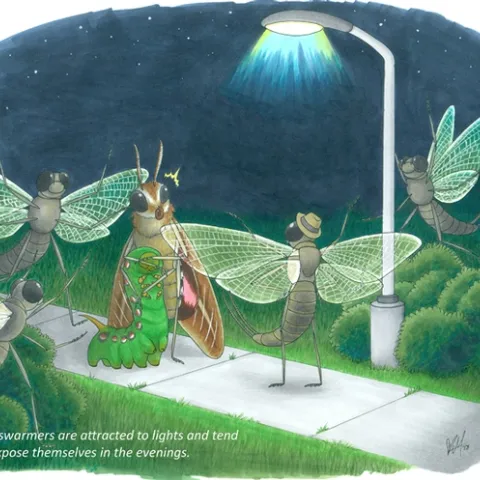
"The swarmers are attracted to lights and tend to expose themselves in the evenings." This statement from a UC Davis student now illustrates the Bohart Museum calendar. This art work is by Karissa Merritt, a fourth-year entomology student, Bohart associate, and longtime artist.
Entomology & Nematology News: Article

Bohart Museum's Innovative Calendar: Combining Insects, Art and Fun

December 6, 2018
By Kathy Keatley Garvey
The swarmers are attracted to lights and tend to expose themselves in the evenings. That's how a University of California, Davis undergraduate student described mayflies in a class taught by Lynn Kimsey, professor of entomology and director of the Bohart Museum of Entomology.
View Article
Primary Image
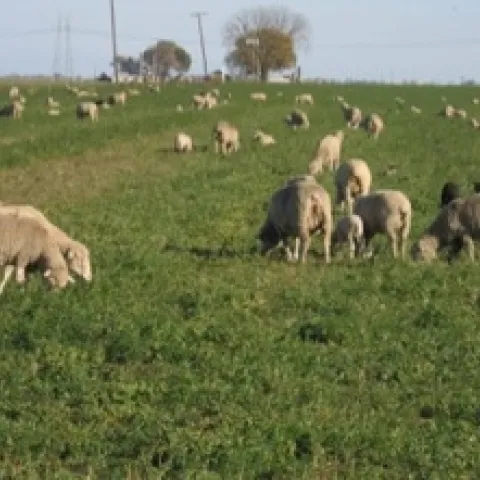
'Sheeping-off' alfalfa fields in the wintertime benefits alfalfa growers and sheep herders in that sheep get feed and alfalfa growers get weevil and weed control benefits and thatched removed for higher quality hay.
Alfalfa & Forage News: Article

‘Sheeping off’ alfalfa is a win-win for all!

December 5, 2018
By Rachael Long
Sheeping off' or grazing alfalfa fields in the fall and winter, when alfalfa fields are dormant and not growing very fast is frequently of benefit to both alfalfa growers and sheep producers.
View Article
Primary Image
The three-cornered alfalfa hopper, Spissistilus festinus. (Photo by Kathy Keatley Garvey)
Bug Squad: Article

About That Three-Cornered Alfalfa Hopper...

December 4, 2018
By Kathy Keatley Garvey
It's green, it's tiny, and everyone is hoping it doesn't wreak any havoc in the vineyards. "It" is the three-cornered alfalfa hopper, Spissistilus festinus, a lear-winged, wedge-shaped (thus the name "three-cornered") insect that's about a quarter of an inch long.
View Article
Primary Image
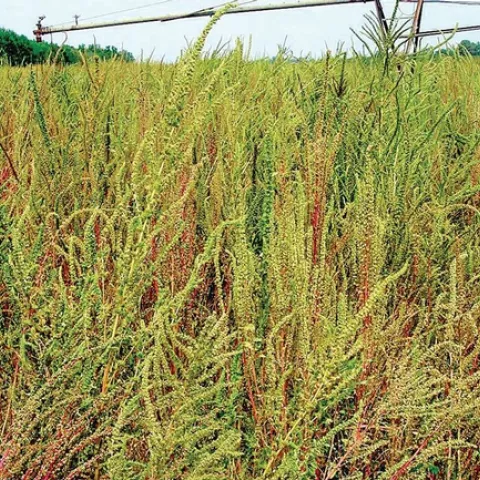
Poor control of Palmer amaranth can result in a significant infestation late in the season and crop failure. Photos by the late Dr. Ted Webster, Research Agronomist with USDA-ARS.
UC Weed Science (weed control, management, ecology, and minutia): Article

Field scouting guide: Palmer amaranth

December 4, 2018
By Gale Perez
From Growing Produce by Karli Petrovic | November 27, 2018 https://www.growingproduce.com/vegetables/field-scouting-guide-palmer-amaranth/ This month's field scouting guide concentrates on Amaranthus palmeri S. Watson (Palmer amaranth).
View Article