UC ANR is committed to providing an accessible and inclusive web experience for all users. If you encounter an accessibility barrier or need content in an alternative or remediated accessible format, please contact anraccessibility@ucanr.edu.
Time flies when you're having fun? No, time's fun when you're studying flies! Take it from the fly researchers at the University of California, Davis, who will present their work at the Bohart Museum of Entomology open house from 1 to 4 p.m., Saturday, Jan.
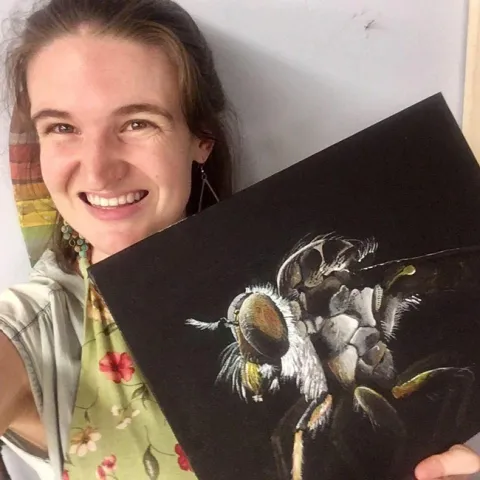
Time flies when you're having fun? No, time's fun when you're studying flies! Nearly a dozen fly researchers from throughout the UC Davis campus will greet the public and explain their research at the Bohart Museum of Entomology open house from 1 to 4 p.m., Saturday, Jan.
It's an invader that has long attracted attention--and alarm--in California agriculture. "The spotted-wing drosophila, Drosophila suzukii, first invaded California in 2008," says UC Davis postdoctoral researcher Brian Gress, "and has since rapidly spread throughout North America and Europe.
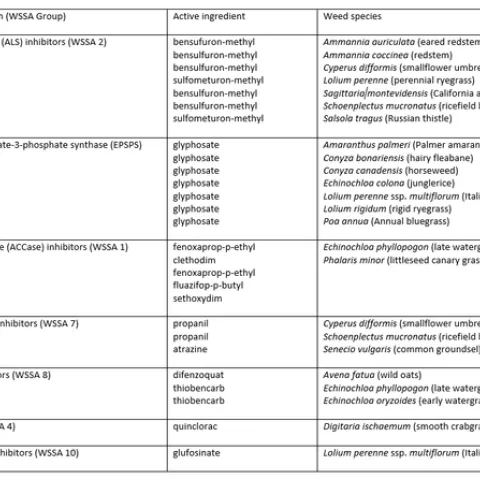
Weeds compete with crops for light, water, and nutrients, which can result in yield reductions. Weeds can also interfere with crop production by serving as alternate hosts for pests and pathogens, providing habitat for rodents, and impeding harvest operations, among other impacts.
Weeds compete with crops for light, water, and nutrients, which can result in yield reductions. Weeds can also interfere with crop production by serving as alternate hosts for pests and pathogens, providing habitat for rodents, and impeding harvest operations among other impacts.
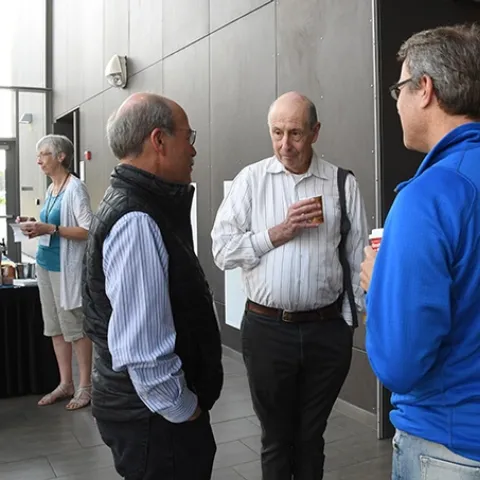
Looking back on 2018, Bruce Hammock, distinguished professor at the University of California, treasures the memories of the Hammock lab reunion, when 100 scientists from 10 different countries gathered to honor his work, reunite, collaborate and reminisce.
Pesticide registrations - what types are available? Section 3 - Also known as the initial pesticide label registration; contains basic registered uses, use directions, requirements, and prohibitions.
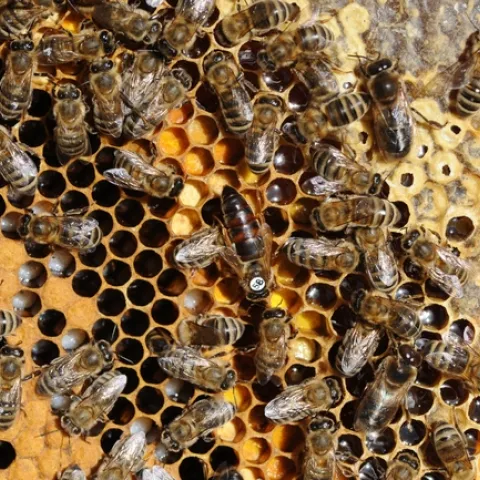
"Beekeeping and Management" will be part of the two-day UC Davis School of Veterinary Medicine's 2019 winter conference presented by its Center for Continuing Education in February 2019. The conference, covering several vet med topics or tracks, is set for Saturday and Sunday, Feb. 9-10.
Many gardeners are interested in knowing how winter temperatures affect garden pests. The hope is that following a cold wintersuch as this yearfewer pests will survive to plague the garden. Unfortunately, both insect pests and plant diseases have ways of surviving our harshest winters.



![Codling moth larvae inside a fruit. [Credit: Jack Kelly Clark, UC IPM]](/sites/default/files/styles/large_square/public/2018-12/blog57017.jpg.webp?h=387d831c&itok=K0sOEBDt)