Rangelands

Primary Image
Description
Entomology & Nematology News: Article

First Seminar of 2024: Adler Dillman to Speak on Nematode Parasitism of Insects

January 3, 2024
By Kathy Keatley Garvey
Nematologist Adler Dillman of UC Riverside will present the UC Davis Department of Entomology and Nematology's first seminar of the year at 4:10 p.m., Monday, Jan. 8 on "Nematode Parasitism of Insects with Toxic Cardenolides." His seminar will be in Room 122 of Briggs Hall and also will be on Zoom.
View Article
Primary Image
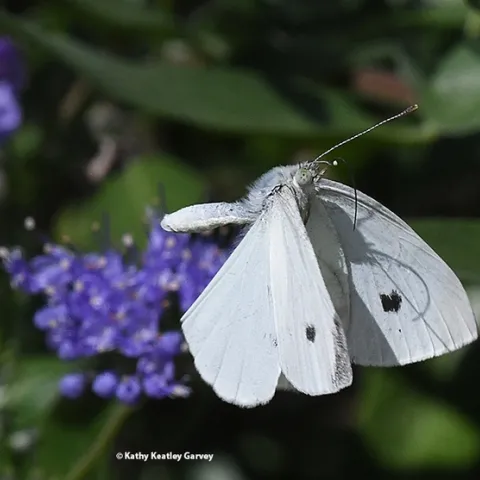
The search is on to collect the first cabbage white butterfly of the year in the three-county area of Yolo, Sacramento and Solano. (Photo by Kathy Keatley Garvey)
Bug Squad: Article

Two Insect Contests: One Winner, One to Go

January 2, 2024
By Kathy Keatley Garvey
One down, one to go! We have a winner in the 4th annual Robbin Thorp Memorial First-Bumble-Bee-of-the-Year Contest, sponsored by the Bohart Museum of Entomology. Details are being gathered, with the winner to be announced soon.
View Article
Primary Image
Cartoon from the William Ja lab. He will speak on "Eat, Exrete and Die: Regulation of Homeostatic Behaviors and Aging in Drosophila" on Jan. 22.
Entomology & Nematology News: Article

Department's Winter Quarter Seminars Announced

January 2, 2024
By Kathy Keatley Garvey
Seminar coordinator and associate professor Brian Johnson has announced the list of UC Davis Department of Entomology and Nematology seminars for the winter quarter, from Jan. 8 through March 11. All seminars will be on Mondays at 4:10 p.m. in Room 122 of Briggs Hall and also will be on Zoom.
View Article
Primary Image
UC Davis distinguished professor emeritus Art Shapiro (right) of the Department of Evolution and Ecology and Louie Yang, professor, Department of Entomology and Nematology at the Bohart Museum of Entomology's recent open house on monarchs. (PHoto by Kathy Keatley Garvey)
Bug Squad: Article

Turning Over an Old Leaf

January 1, 2024
By Kathy Keatley Garvey
It's New Year's Day and it's common for folks to turn over a new leaf. What about the old leaves? Sometimes if you turn over an old leaf this time of year in Solano and Yolo counties, you might find a monarch caterpillar.
View Article
Primary Image
A golden dung fly, Scathophaga stercoraria, peers at the photographer. (Photo by Kathy Keatley Garvey)
Bug Squad: Article

2023: These Are a Few of My Favorite Things

December 29, 2023
By Kathy Keatley Garvey
There's no fame, fortune or glory in writing a daily (volunteer) Bug Squad blog. It's about the insects. It's always been about the insects, from honey bees to bumble bees, to butterflies, to dragonflies, to praying mantises and more.
View Article
Primary Image
The Kniphofia "Christmas Cheer" poker plant, seen here in the Ruth Risdon Storer Garden and nearby area, grows in clumps. (Photo by Kathy Keatley Garvey)
Bug Squad: Article

Spreading Some Holiday Cheer

December 28, 2023
By Kathy Keatley Garvey
If you've lately visited the Ruth Risdon Storer Garden, part of the 100-acre UC Davis Arboretum and Public Garden, you've seen them. Honey bees nectaring on the Kniphofia "Christmas Cheer" poker plant.
View Article
Primary Image
A yellow-faced bumble bee, Bombus vosnesenskii, forages on Eryngium amethystinum, a genus that belongs to the carrot family, Apiaceae. (Photo by Kathy Keatley Garvey)
Bug Squad: Article

UC Davis Arboretum Is the Magical Place to Find the First-of-the-Year Bumble Bee

December 26, 2023
By Kathy Keatley Garvey
If history repeats itself, the person who finds and photographs the first bumble bee of the year in the two-county area of Yolo and Solano will do so in the 100-acre UC Davis Arboretum and Public Garden--or will find it foraging on a plant purchased from one of the Arboretum's popular plant sales.
View Article
Primary Image
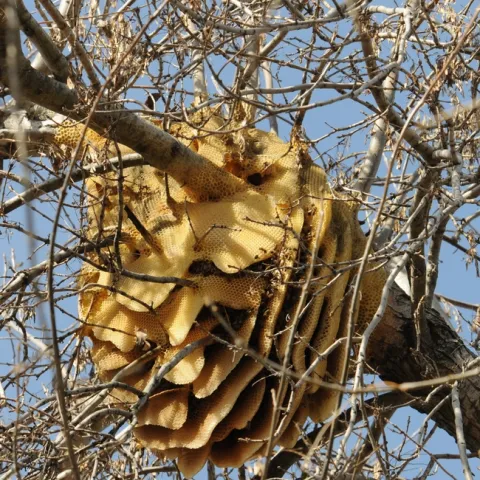
A feral honey bee colony (now gone) from a backyard in Vacavile, Calif. (Photo by Kathy Keatley Garvey)
Bug Squad: Article

It's Bee-ginning to Look a Lot Like...

December 25, 2023
By Kathy Keatley Garvey
It's bee-ginning to look a lot like Christmas... All hail our littlest agricultural worker. European colonists brought the honey bee (Apis mellifera) to what is now the United States in 1622. Specifically, the bees arrived at the Jamestown colony (Virginia).
View Article