Bug Squad Logo

Bug Squad

Bug Squad blog image depicts a honey bee sting in action.

Welcome to the Bug Squad blog! The Bug Squad blog was launched Aug. 6, 2008 and is a daily blog (Monday through Friday). It showcases entomologists and the work they do.  The blog focuses on scientists in the UC Davis Department of Entomology and Nematology, the Bohart Museum of Entomology, Harry H. Laidlaw Jr. Honey Bee Research Facility, the UC Davis Bee Haven, and assorted campuswide events, including UC Davis Picnic Day, UC Davis Biodiversity Museum Day, and Bohart Museum open houses. The blog spotlights insects, including bees, butterflies, dragonflies, and praying mantises, as well as arachnids such as jumping spiders and crab spiders. Author and photographer is Kathy Keatley Garvey, communications specialist, UC Davis Department of Entomology and Nematology, and a longtime journalist and community scientist with two degrees from Washington State University.  She is a member of the Entomological Society of America (ESA) and the Association for Communication Excellence (ACE). Her blog posts and images have won international awards from ACE and ESA and appeared on journal and magazine covers. She shoots primarily with a Nikon Z-8 mirrorless camera, a Nikon D500 and Nikon 800, with assorted macro lenses. Feedspot lists it as one of the top entomology blogs on the Internet. 
Primary Image
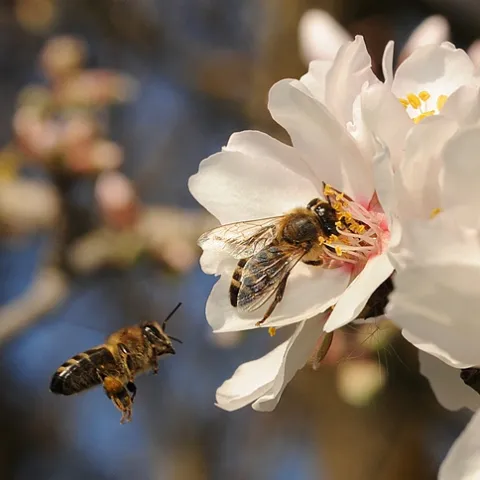
ALMOND BLOSSUMS at the Harry H. Laidlaw Jr. Honey Bee Research Facility, UC Davis, burst into bloom today. Honey bees came in twos and threes. (Photo by Kathy Keatley Garvey)

Oh, Hap-Bee Day!

February 11, 2011
By Kathy Keatley Garvey
It happened. Remember when Chicken Little ran around yelling "The sky is falling! The sky is falling!" For almond growers, beekeepers, entomologists, researchers and artists, it's "The almonds are blooming! The almonds are blooming!" Finally, the almond trees at the Harry H. Laidlaw Jr.
View Article
Primary Image
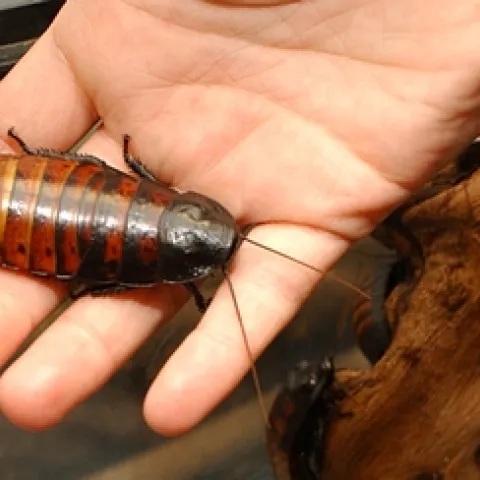
NAME CARS after insects? How about "The Hisser," the Madagascar Hissing Cockroach? This photo was taken in the Bohart Museum of Entomology at UC Davis where visitors love to hold them. (Photo by Kathy Keatley Garvey)

The Beetle With Racing Stripes

February 10, 2011
By Kathy Keatley Garvey
Didn't you just love that commercial for the Volkswagen Beetle during the Super Bowl? While the Green Bay Packers were beetle-ing up the Pittsburg Steelers, 31-25, Volkswagen brought out its delightful Super Bug commercial. It starred a black beetle with racing stripes.
View Article
Primary Image
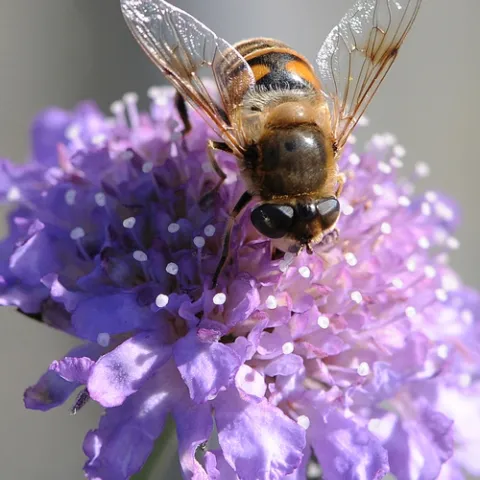
DRONE FLY is often mistaken for a honey bee. This drone fly was nectaring a pincushion flower (Seabiosa columbaria) Feb. 5 in Tomales. (Photo by Kathy Keatley Garvey)

The Imposter

February 9, 2011
By Kathy Keatley Garvey
"If it looks like a duck, quacks like a duck, and walks like a duck, it's probably a duck," or so the saying goes. But if it looks like a honey bee, moves around on blossoms like a honey bee, and feeds on nectar and pollen like a honey bee, it may not be a honey bee.
View Article
Primary Image
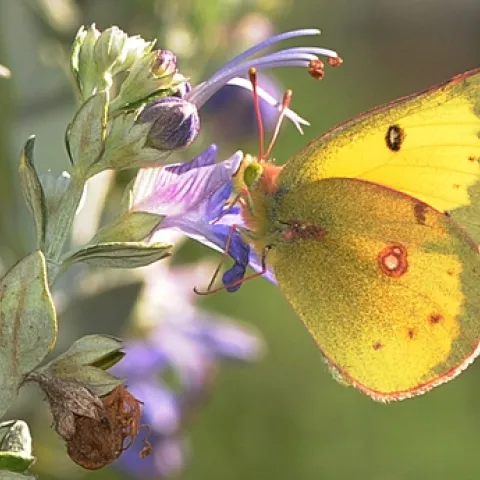
A MALE orange sulphur butterfly (Colias eurythme) nectars a bush germander on Feb. 7 at the Haagen-Dazs Honey Bee Haven, Harry H. Laidlaw Jr. Honey Bee Research Facility, UC Davis. (Photo by Kathy Keatley Garvey)

Mellow Yellow: The Butterflies Are Back!

February 8, 2011
By Kathy Keatley Garvey
Mellow yellow! The butterflies are back! We spotted a bright yellow butterfly nectaring a bush germander on Feb. 7 in the Hagen-Dazs Honey Bee Haven at the Harry H. Laidlaw Jr. Honey Bee Research Facility, University of California, Davis.
View Article
Primary Image
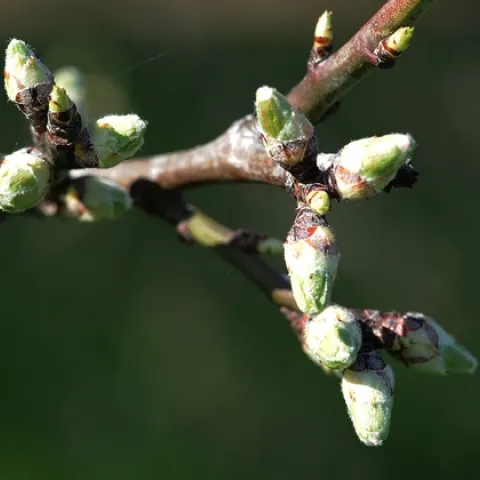
ALMOND TREE at the Harry H. Laidlaw Jr. Honey Bee Research Facility is just about ready to burst into bloom. This photo was taken Feb. 7. The commercial almond pollination season generally begins around Valentine's Day. (Photo by Kathy Keatley Garvey)

Off to the Almond Orchards

February 7, 2011
By Kathy Keatley Garvey
It's one of the most beautiful agricultural scenes you'll ever see--bee trucks heading to California almond orchards to pollinate one of the state's most important crops.
View Article