
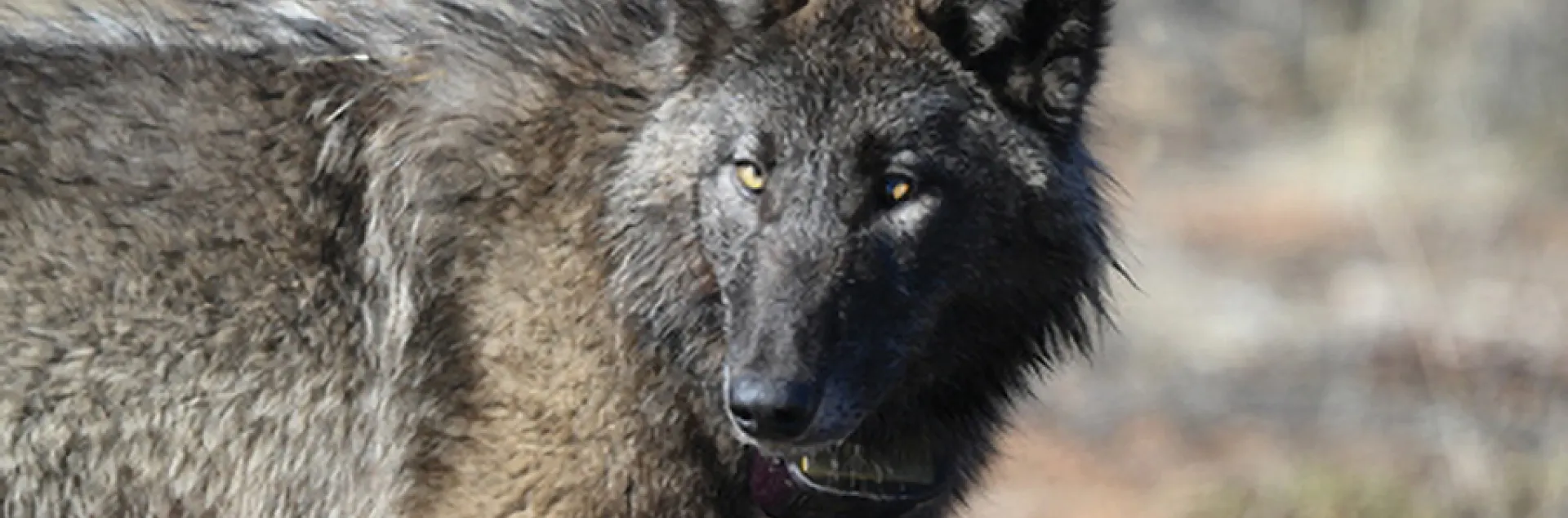
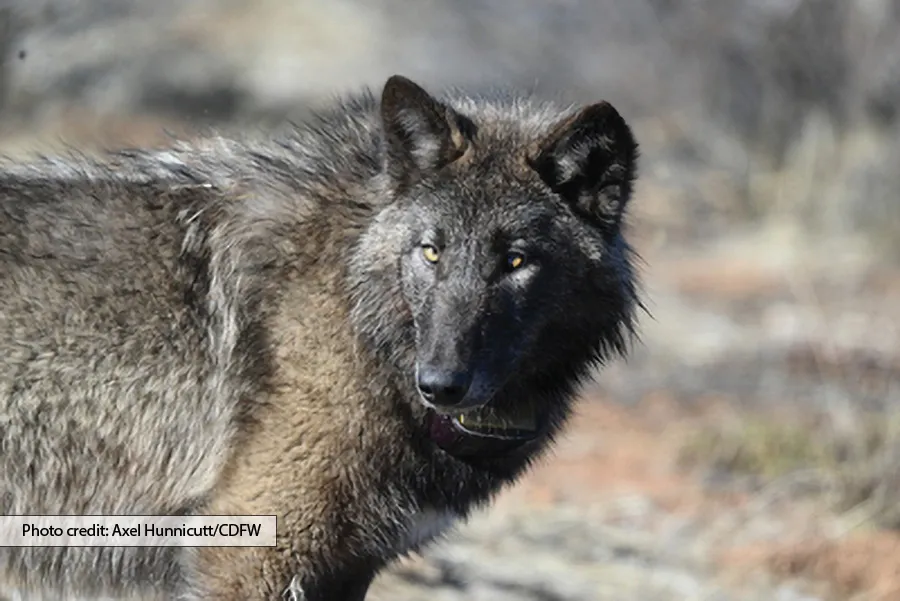
Nearly a decade after the California Department of Fish and Wildlife confirmed the state’s first wolf pack, the rural community in Sierra Valley faced unprecedented challenges when the Beyem Seyo wolf pack began to regularly attack and kill domestic livestock. Despite extensive efforts at non-lethal deterrence, the pack became so dependent on cattle as a food source that several members of the pack were ultimately euthanized in October 2025. A new study by UC Cooperative Extension analyzed the costs associated with these wolf attacks and found that, when combining the costs of livestock losses and interventions aimed at deterring further depredations (the injuring or killing of livestock by wolves), the economic toll over seven months reached at least $2.6 million.
The gray wolf, a species protected under both federal and state Endangered Species Acts, was first introduced into Idaho and Yellowstone in the mid 1990s. After a century-long absence, the first wolf was documented migrating into California in 2011, and the first pack was confirmed in the state in 2015. By the end of 2024, at least 50 individual wolves had been confirmed in California. While some saw this as a conservation success story, ranchers in Sierra Valley experienced the downside of this resurgence when the Beyem Seyo pack began preying on local cattle in March 2025.
By summer, the pack was found near residences during daylight hours and had become dependent on cattle as its main source of food. To reduce the harm this pack was causing to the community, CDFW deployed what they called the Summer Strike Team – a group of biologists, wardens, and CDFW staff – whose goal was non-lethal hazing and deterrence of wolf-related livestock attacks. Yet despite spending 18,000 staff hours over 114 days, the attacks continued to increase, and by October 2025, 92 cows and calves had been injured or killed by the pack. As a result, four members of the pack were ultimately euthanized.
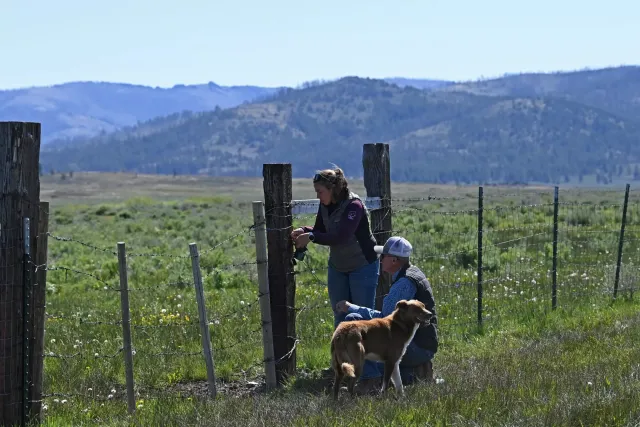
To better understand the economic impact of this livestock depredation, UC Davis professor of Cooperative Extension Tina Saitone and UC Cooperative Extension livestock and natural resources advisor Tracy Schohr analyzed the direct costs associated with the attacks.
First, they looked at the direct costs of cattle losses between March 7 and Oct. 10, 2025, that either the CDFW or the U.S. Department of Agriculture verified as ‘confirmed’ or ‘probable’ wolf depredations; only these verified kills were eligible for rancher compensation under the state’s Wolf Compensation Program. Using the fair market value for these ‘confirmed or probable’ kills, the authors estimated $234,735 in losses to Sierra Valley ranchers.
Saitone said, “Beyond direct predation, wolves impose additional costs. Cattle exposed to wolves show increased vigilance and avoidance behaviors that reduce weight gain and conception rates while increasing disease vulnerability. Producers face higher expenses from intensified monitoring, fence repairs, non-lethal deterrents, and depredation investigations.”
Further, when the authors considered missing or unconfirmed cattle losses, the total wolf-related depredation losses ranged from between $533,688 to $1.7 million, depending on methodology. When these costs are added to the cost of agency interventions (e.g., the efforts of the Summer Strike Team), which totaled more than $2 million, this single wolf pack was responsible for damages of at least $2.6 million in 2025. This research underscores the importance of wildlife agency resources and funding of comprehensive livestock loss compensation programs.
To learn more about the economic impacts of the Beyem Seyo wolf pack on California, read the full article by Tina L. Saitone and Tracy K. Schohr: “The Beyem Seyo Wolf Pack: Economic Toll of Unprecedented Livestock Conflict in California.” ARE Update 29(2): 1–5. UC Giannini Foundation of Agricultural Economics, online at https://giannini.ucop.edu/filer/file/1767890615/21559/
ARE Update is a bimonthly magazine published by the Giannini Foundation of Agricultural Economics to educate policymakers and agribusiness professionals about new research or analysis of important topics in agricultural and resource economics. Articles are written by Giannini Foundation members, including University of California faculty and Cooperative Extension specialists in agricultural and resource economics, and university graduate students.