
Note: This article was originally published in the Contra Costa Times. It has been updated.
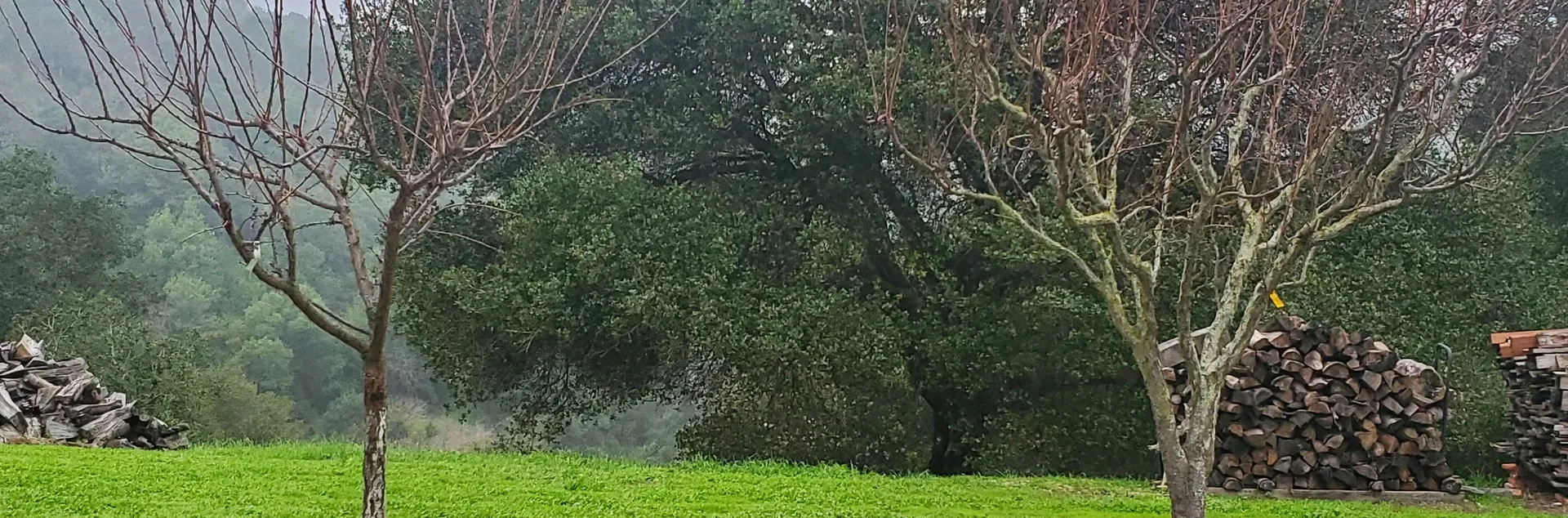
Winter is the time to perform certain maintenance activities on deciduous fruit trees to reduce insect and disease problems during the growing season. The most common deciduous fruit trees in the home orchard and the ones that require the most attention during winter are the stone fruits—apricot, cherry, peach and nectarine, plums and prunes, and the pome fruits—apple and pear. Dormant season activities include sanitation, pruning, and the application of dormant or delayed dormant sprays as necessary.
Sanitation helps reduce the population of insect and disease pests that over-winter on site and thus reduces the need for in-season sprays. Remove and destroy all old fruit on the tree and on the ground to eliminate the sources of insects and diseases for the next season. If you have not already done so, rake up and dispose of all the leaves under fruit trees.
Pruning aids in insect and disease management, promotes vigor, opens the canopy to sun and improves air circulation. All fruit trees benefit from pruning out any dead, diseased, crossed, or broken branches, water sprouts (vigorous very upright shoots), and root suckers. The amount of additional pruning, such as the thinning out of last year’s wood to promote new growth and fruiting, can vary by tree species. The amount to annually prune out in cherry is only 10%, while peach and nectarine is 50%, plum and prune are 20% and apple and pear are 15–20%.
Apricot is the exception to winter pruning in the Bay Area as it is susceptible to Eutypa, a fungus, which is spread during rainfall. For that reason, prune apricot six weeks prior to the rainy season or wait until the rainy season ends.
Fruit trees can also be pruned in the summer. The advantage of this is that it will better control the size of the tree, keeping it more manageable and making harvesting much easier.
• You can find more detailed and specific fruit tree pruning information and pruning diagrams at the University of California IPM website:
• https://ipm.ucanr.edu/PMG/GARDEN/fruit.html
• Information about summer pruning of fruit trees: https://ucanr.edu/site/uc-marin-master-gardeners/article/summer-pruning-fruit-trees
• Cutting back overgrown fruit trees: https://ucanr.edu/blog/stanislaus-sprout/article/cut-those-overgrown-fruit-trees-down-size
Dormant or delayed dormant sprays help manage some of common diseases and over-wintering insect pests. Dormant or delayed dormant sprays are generic terms for the application of pesticides applied when trees are either dormant or just coming into bud swell (delayed dormant). The pesticides applied could be fungicides, oils, or oil combined with another pesticide. It’s essential to identify the insect or disease you wish to manage prior to spraying, choose the appropriate pesticide, and follow the label directions exactly. The decision to spray, the choice of pesticide, and the timing of the spray is determined by the amount of insect and disease problems encountered during the prior growing season. A dormant spray may not be warranted every year in the backyard orchard, but if it is necessary, then spraying after pruning allows maximum coverage.
• Winter Pest Management in Backyard Deciduous Fruit Trees: https://anrcatalog.ucanr.edu/pdf/8368.pdf
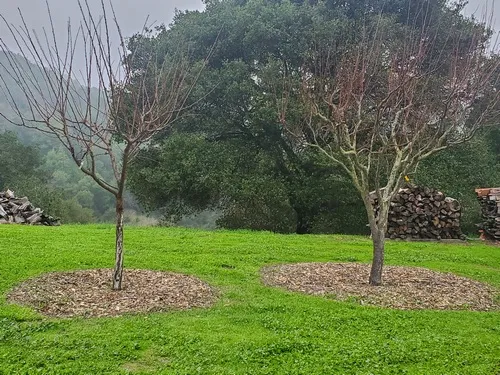
Photo: Sara Hoyer, UC Master Gardener volunteer
Help Desk of the UC Master Gardeners of Contra Costa County (EDC)