
By M. A. Foley.
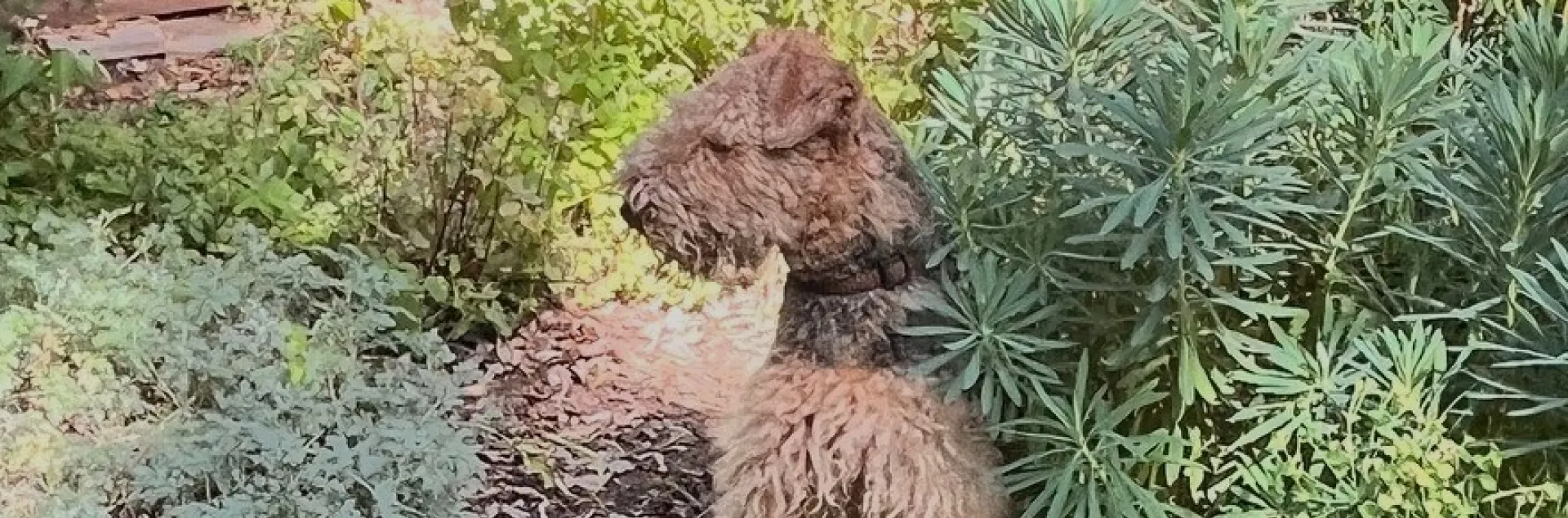
Dogs in our gardens can present many challenges. Dogs usually want to please their humans, but the very nature of the beast does not always coincide with our gardening desires and expectations. Dogs can wear paths through yards in unexpected and unplanned places. They might dig unsightly holes, which can disturb plant roots or even dig up entire plants. Dog urine deposited on lawns can kill the grass, resulting in brown spots, while plants and shrubs sprayed with dog urine may look scorched or burned. If any of these scenarios sound familiar, it is time to consider how best to achieve that delicate balance between plants, gardener and dogs.
Worn Doggie Trails and Sleeping Spots
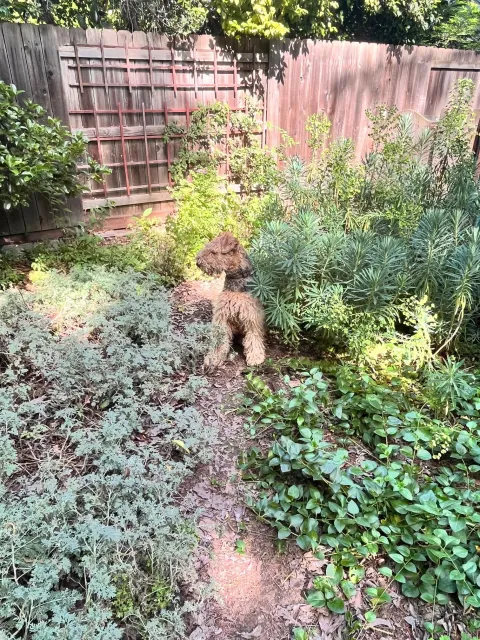
The heavily trodden paths that appear in the garden may be a good indication that the gardener should just go with the flow by adding a pebble path, mulch or pavers to the dog’s well-traveled path to enhance its appearance. Dogs that pace or charge to the fence to protect their territory create paths that are in the natural flow of their lives.
With creativity, barriers may encourage the dog to alter its route. Planting large shrubs in the path and staking them firmly is one possibility. Large rocks or boulders may help change a course of travel. Large wire tomato cones can be anchored upside down to protect plants from being trod upon (sharp wire ends should be bent over to protect large enthusiastic dogs from potential injury).
Dogs may stretch out to rest on top of plants, flattening a garden bed in seconds. Keep a look out for places your dog likes to lie. If you want to plant something in those spots, the strategic placement of large rocks can deter your dog from napping there. The rocks create an uncomfortable deterrent while adding natural and pleasing hard surfaces to a planter bed. No rock can ever be too big; the bigger the better.
Why do dogs dig?
The ASPCA reminds us that our pet dogs share the desire with their wild ancestors to sleep in and under things that resemble a den. They often dig at the ground and circle before lying down, as though they’re trying to make a softer resting place. Dogs also dig when trying to get warm, stay cool, entertain themselves, bury valued items, or when hunting ground-dwelling animals. Some dogs dig an escape route to end loneliness, boredom and confinement.
Some dogs dig holes to consume soil, roots, and other organic material. They tend to be selective about the soil they consume, so this kind of digging is usually restricted to very specific areas. For example, dogs may mine for bone meal amendment, so you might well expect your dog to dig up and eat the bone meal you used to fertilize your bulbs, pulling out the bulbs in the process.
If your dog digs a hole underneath a shrub and lies in the hole to keep cool, you could try providing an alternative cool spot for Rover’s naps. Elevated dog beds on thin platforms allow for air flow under a dog’s body. Such a bed could create a cooling effect in the shade close to the ground. A child's pool of very shallow water for cooling may prevent your dog from undertaking major excavations under low shrubs.
Digging is a normal behavior for dogs. To deal with digging that has become a gardener's problem, identifying the dog’s underlying motivation for the behavior is essential. If you can figure out why your dog digs, you can figure out how to fix or reduce the problem. In some cases, to prevent digging in unwanted locations you might need to offer appropriate places for digging instead.
“Dog Whisperer” Cesar Millan suggests exercise, whether it be on a tread mill or hiking in the beautiful outdoors, as the best way to drain any dog's energy. As the mantra goes, “a tired dog is a good dog.” When Fido is tired out from a vigorous run, she is content to admire your gardening efforts and not tear them apart.
May the holes in your garden only be the ones you dig yourself!
Beware of foxtails!
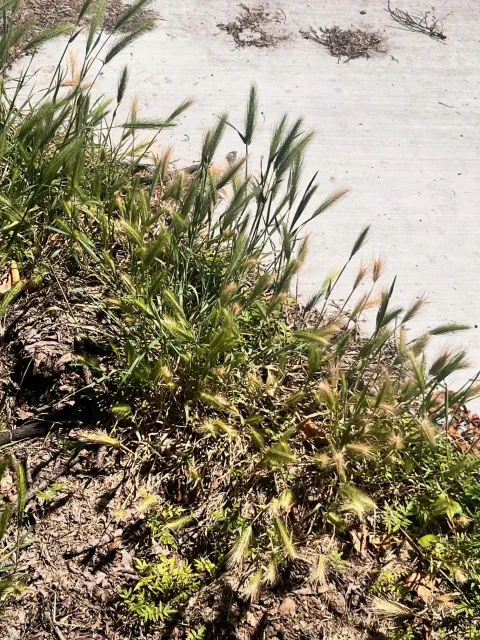
One natural invader you definitely want to keep out of your garden, and avoid when out on dog walks, is foxtail grass, a fast-growing annual weed with a barbed seed head that can work its way into a pet’s nose, eyes, mouth, or ears, and between their toes. Foxtail season usually runs from May through December. If a foxtail has become deeply embedded or the area around it is red and swollen, call your veterinarian.
Dogs enhance our lives, but so do birds! Learn how to create a garden that provides food and shelter for many bird species throughout the year by attending our workshop, “Plant a Native Garden for the Birds” on May 18th. For more information and to register, visit our workshop webpage. All Workshops are free, but registration is required.
PLANT SALE! Saturday, May 16, 2026 from 9am till noon at the Master Gardeners Demonstration Garden at Patrick Ranch. The plants, which are selected to thrive in our climate, have been propagated by UC Master Gardeners of Butte County.
UC Master Gardeners of Butte County are part of the University of California Cooperative Extension (UCCE) system. To learn more about us and our upcoming events, and for help with gardening in our area visit the UC Master Gardener website. If you have a gardening question or problem, email the Hotline at mgbutte@ucanr.edu or leave a phone message on our Hotline at 530-552-5812. To speak to a Master Gardener about a gardening issue, or to drop by the MG office during Hotline hours, see the most current information on our Ask Us section of our website.