
The Issue
About one-third of all food produced in the world is never eaten and instead ends up in landfills and compost piles. Modoc County faces significant food insecurity, with over 1 in 4 children (roughly 25.4%) living in food-insecure households, a rate among the highest in California. These challenges are likely exacerbated by the short, roughly 90 day growing season and limited natural rainfall.
While being a food desert compared to much of the rest of California, Modoc County produces over 60,000 beef calves each year, supporting an industry that generates over $220,000,000 annually. Modoc County is the leading organic beef producing county in California. In an area with limited locally grown commodities, beef is a product that stands out as a way to address food security.
How UC Delivers
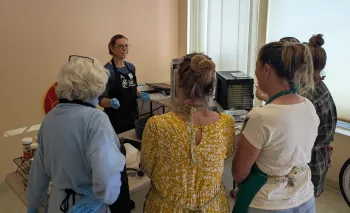
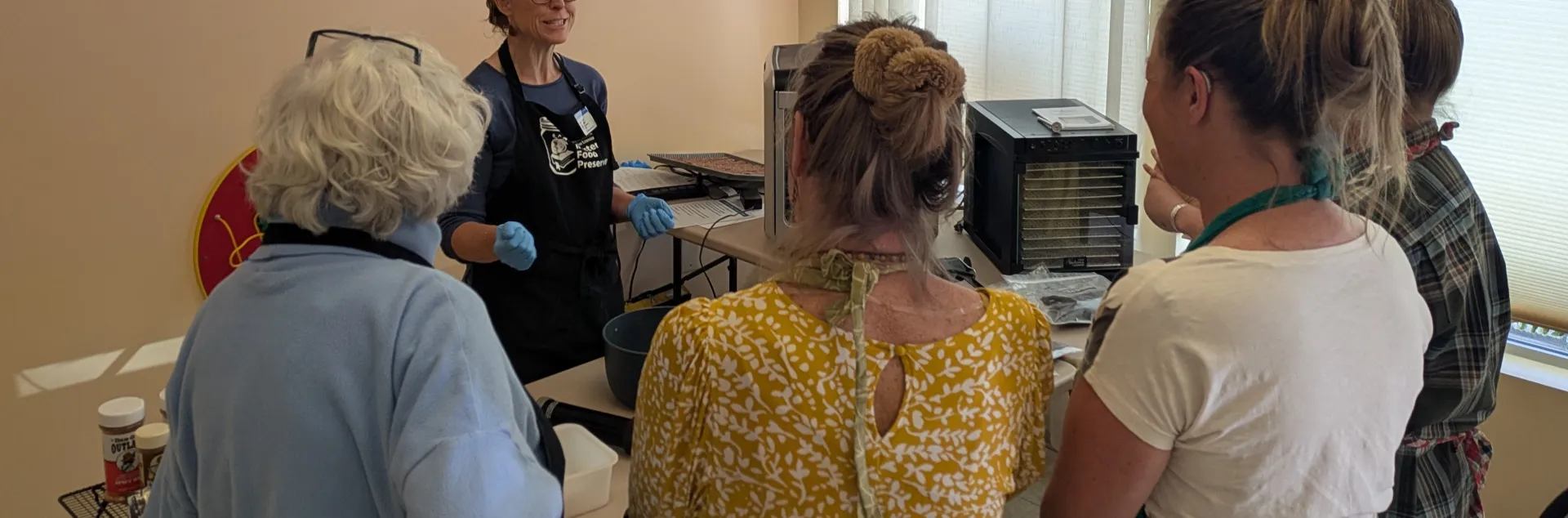
In March 2026, UC Cooperative Extension Advisors Laura Snell and Laurie Wayne, along with volunteers from the Far North Master Food Preservers, led a three-part beef preservation workshop on pressure canning, freeze drying and dehydrating beef. This workshop for the general public highlighted multiple ways to make and store ready-to-eat meals with beef as the primary protein and was supported by the Modoc County CattleWomen and Adult Education.
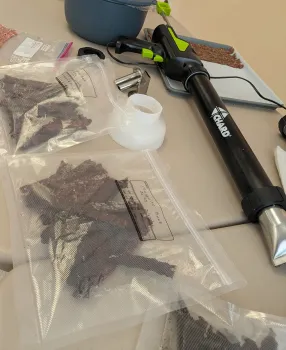
Seventeen participants from across the region learned about food safety, reasons for food spoilage and ways to preserve food for longer storage, along with an introduction to the UC Master Food Preserver program. The first station showcased pressure-canned hamburger soup while getting hands-on experience with multiple types of pressure canners. The second station utilized dehydrators and jerky making equipment to make multiple styles and flavors of beef jerky. Finally, students were able to make ready to eat meals with freeze dried beef, vegetables and noodles for storage of up to 25 years.
After receiving support from the McConnell fund, the Far North Master Food Preservers received a freeze dryer, dehydrator, and vacuum sealer. This equipment is part of a suite of tools available to the public for classes and value-added product development.
The Impact
“I learned a lot! The class was much more than what I expected,-- science backed food preservation instead of rebel canning videos on YouTube and tools to take home to reassure me when I’m preserving at home.” Sam Starr, Beef Preservation Class Participant.
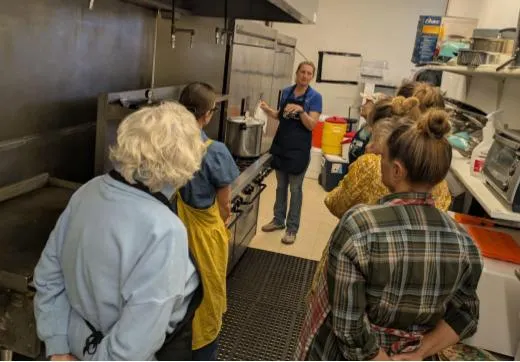
A pre- and post-evaluation survey was conducted for the workshop. Before, over 75% of participants had never tried meat preservation or had only tried it once or twice. At the end of the training, 100% of participants noted increased knowledge in food safety, and knew what preservation tools are available in their community. Using a paired T-test on a scale of 1-4, knowledge in confidence in pressure canning meat and vegetables increased from 2.29 to 3.33 and knowledge in how home preservation methods work increased from 2.85 to 3.33. One hundred percent of participants noted that the hands-on activities helped them learn and that they gained knowledge of food preservation techniques. Ninety-three percent are likely to try dehydrating, freeze drying and pressure canning at home, which can help participants reduce food waste and improve food security.
All of these skills, along with the focus on locally produced beef, supports UC ANR’s public values, including enhancing regional-based food supply chains and waste reduction, and improving food and nutrition security.