UC ANR is committed to providing an accessible and inclusive web experience for all users. If you encounter an accessibility barrier or need content in an alternative or remediated accessible format, please contact anraccessibility@ucanr.edu.
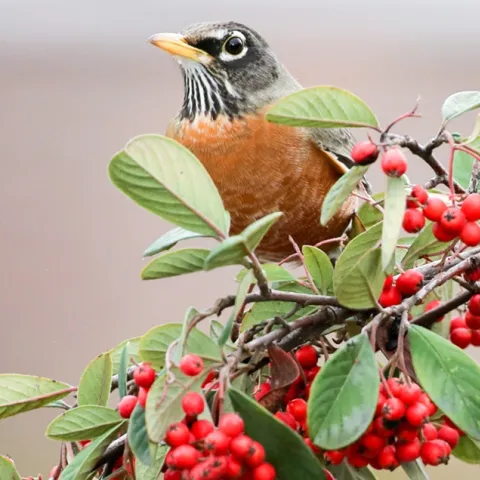
A handsome and distinctive shrub, Heteromeles arbutifolia seems quintessentially Californian. As legend goes, its distinctive holly-like red berries visible in hillside chaparral in Los Angeles gave rise to the name for Hollywood.
As fall settles in and deciduous trees show off glorious hues of yellow, orange, red and purple, one outstanding performer that often fails to get attention is Vitis californica, a native California wild grape and its relatives.
The Viburnum genus consists of more than 150 evergreen, semi-evergreen, and deciduous woody plants from the Caprifoliaceae family. Native mostly to Northern temperate zones, some viburnums also hail from South America and Southeast Asia.
Commonly called plumbago or leadwort, three of the common Ceratostigma species are evergreen shrubs; the fourth is a groundcover. They are among the few blue summer-flowering shrubs completely adaptable to Sonoma Countys Mediterranean climate.
Crape myrtles are shrubs and small trees indigenous to temperate and tropical regions from Asia to Australia. The myrtle in their name is a nod to the similarity of their leaf shape of a true myrtle (Myrtus).
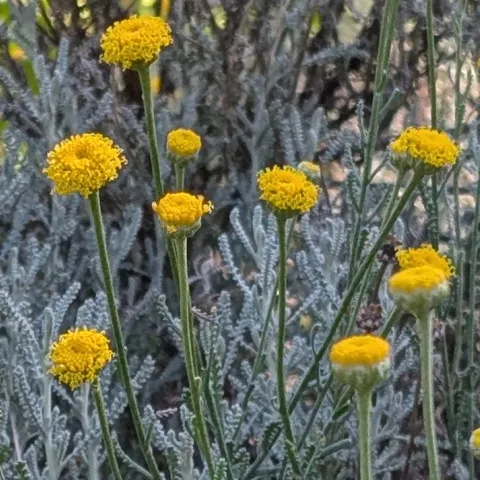
Santolina chamaecyparissus from the Mediterranean Basin is commonly called lavender cotton, a confusing name with no connection to either lavender or cotton. The Latin derivation translates to holy flax in English, but that, too, is obscure.
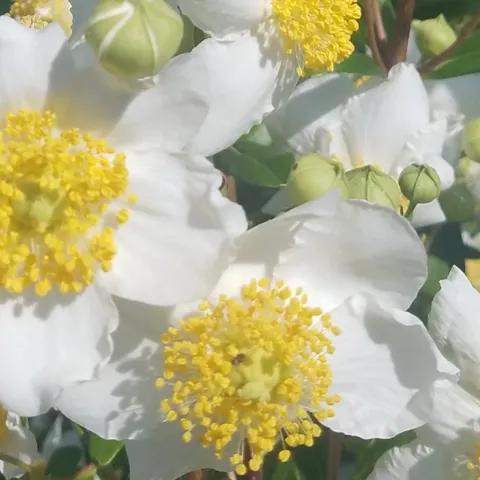
Carpenteria californica, or bush anemone, is one of Californias loveliest, but rarest, native shrubs. It grows only on dry granite ridges of southern Sierra Nevada foothills in the Central Valley near Fresno, and is the only species in its genus.
Euphorbia is a very large genus with over 2,000 species, part of the Euphorbiaceae family whose members include surprising shapes and sizes. They can be annuals, perennials, evergreen or deciduous, even shrubs or trees.
Grown as either a large shrub or a small, multi-trunked tree, a blooming western redbud is one of the most dramatic of California natives. Although spring blossoms are the most standout feature of the western redbud, its foliage and overall aspect are equally welcoming.
This native California grass is commonly called deer grass, although deer generally avoid it. In California, it ranges from Shasta County to the Mexican border. It is also found in Texas, New Mexico, and Mexico usually below 7000 ft.