UC ANR is committed to providing an accessible and inclusive web experience for all users. If you encounter an accessibility barrier or need content in an alternative or remediated accessible format, please contact anraccessibility@ucanr.edu.
Free home garden consultations to create a beautiful low water use garden offered by the UC Master Gardener Program of Sonoma County in partnership with Sonoma Water and the Sonoma-Marin Saving Water Partnership.
Tarragon is one of the four ingredientsalong with parsley, chives and chervil in fines herbes used in classic French cooking, but it can stand on its own as an aromatic flavoring for meat, fish, eggs, and many vegetable dishes. Plants must be acquired carefully to avoid those that lack flavor.
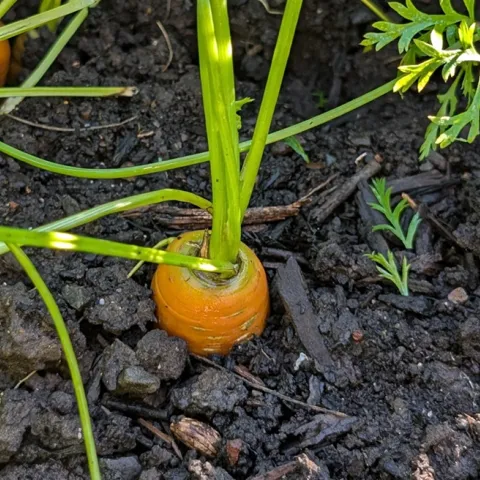
Carrots have been a staple food for centuries in Europe, Africa, and Asia for their easy care, nutritive value, and versatility in food preparation. Their rainbow of colors attracts gardeners today, a feature popular with children for snacking and growing in school and home gardens.
By SCMG Electra de Peyster 1. Cover all the holes with soil. When new holes appear you know that those tunnels are active. 2. Use two mouse traps for each hole. Each mouse trap should be drilled with a hole to accommodate a 4 inch nail, so trap can be secured in soil. 3.
Of all fruit and ornamental trees, persimmons are one of the most brilliantly adorned in autumn. As vivid, eye-catching foliage in shades of red, orange, and yellow begins to fall, bountiful crops of delicious orange fruits are exposed on bare branches, ready for harvest.
Its very name suggests that pineapple guava is planted as a food-producing shrub, but, just as often, gardeners select it as an evergreen specimen plant for its ornamental qualities.
Growing tomatoes during times of drought in Sonoma County may seem to be counterintuitive, but with careful selection, gardeners can treat tomatoes as water camels and not water hogs. Even the thirstiest tomato plant requires only one to two gallons of water per week.