UC ANR is committed to providing an accessible and inclusive web experience for all users. If you encounter an accessibility barrier or need content in an alternative or remediated accessible format, please contact anraccessibility@ucanr.edu.
It's easy to invite bees, butterflies, hummingbirds, and other welcomed winged visitors into the garden. Just provide the food, water, and shelter they need to feel at home. This is called habitat gardening, and it's a satisfying way to choose plants.
Today there are more choices than ever when it comes to lawn and lawn alternatives. If you like the look and feel of a conventional lawn, there are even some lower-water choices available.
Most plants are a pleasure to grow. Fortunately, there are only a few to avoid. Here's how invasive plants and plants that have been treated cause problems. Scotch broom currently infests millions of acres throughout California.
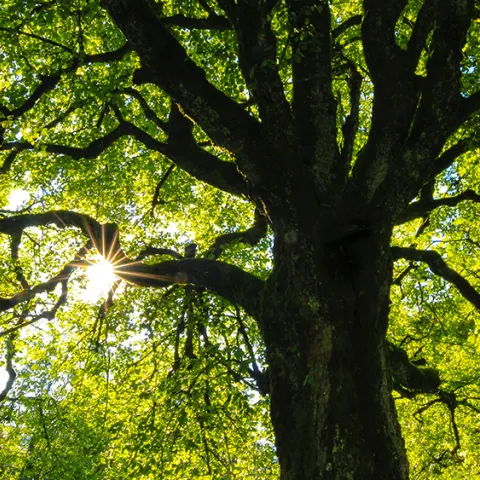
The tree you plant today may be here for your children and grandchildren and beyond. Photo: Candid Shots, Pixabay Use our PLANT LIST: > TREES FOR BACKYARDS AND PATIOS These trees thrive in Marin and are well-suited to the typical backyard setting.
Year-round food and water are essential for habitat gardens. Photo: Bridget Ahearn "The birds and the bees" is a sweet expression, but the work of pollinators is a serious business. Without pollination, life on Earth would cease.
Bees are our most important pollinators. Most are solitary bees that live independently, not the bumble bees or honey bees we are more familiar with. Bees visit flowers for the pollen or nectar, which supply the nutrients they need.
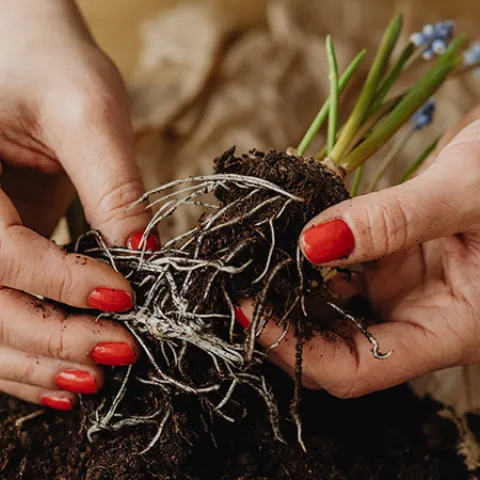
Division benefits plants and allows you to share with others. Photo: Courtesy UC Regents Use division techniques for plants with runners, bulbs, tubers, or rhizomes. These plants produce multiple stems above the ground. You cannot use division techniques for plants with a single stem.
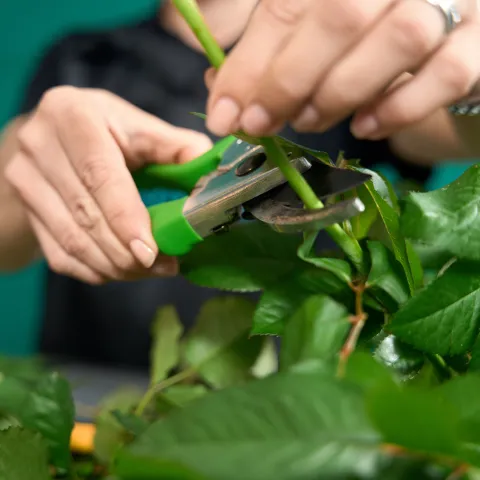
Gary Barnes, Pexels Propagation through cuttings is the process of using a piece of an existing plant and encouraging it to grow into a new plant. Stems, leaves, and roots can all be used for cuttings. This is a good method for woody and herbaceous plants.
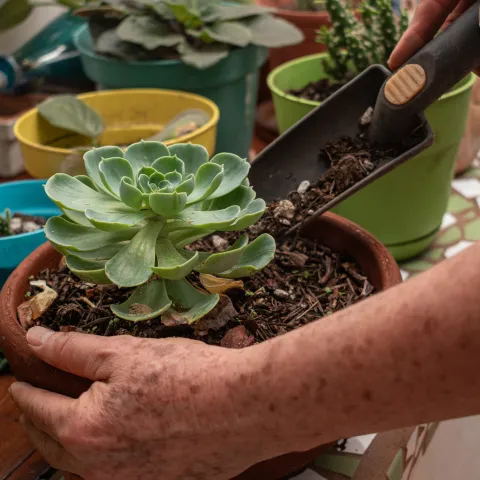
Corrine Kutx, Unsplash Succulents are among the easiest plants to propagate. Snap off baby succulents (pups) growing right off the parent plant or make a cutting of a stem. You can take succulent cuttings in the fall, spring, or summer. Pruning/cutting tools.
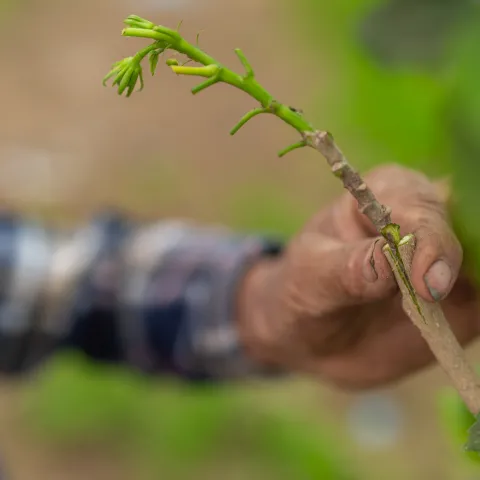
Whip graft tied with string. Photo: Piqsels Grafting involves joining two genetically distinct plants to unite and continue growth as a single, compound plant.