UC ANR is committed to providing an accessible and inclusive web experience for all users. If you encounter an accessibility barrier or need content in an alternative or remediated accessible format, please contact anraccessibility@ucanr.edu.
New article :: Exploring sterile pollen technique as a novel tool for management of Palmer amaranth (Amaranthus palmeri) Posted by: Gale Perez Published on: May 26, 2024 Newly published research provides a novel and sustainable weed-management strategy WESTMINSTER, Colorado 22 May2024 Recently pub...
In the Master Gardener's Rose Cycle, July is when we fertilize lightly with organic products if needed. Deadheading continues and pruning of crossing branches or dying canes are a must. We also monitor our irrigation systems for the proper amount of water provided.
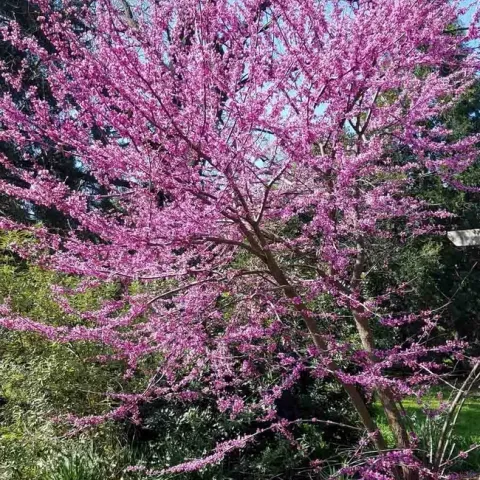
Redbuds in bloom are a most welcome harbinger of spring. Their dense clusters of magenta flowers bloom early, providing splashes of color against a winter landscape of browns and grays.
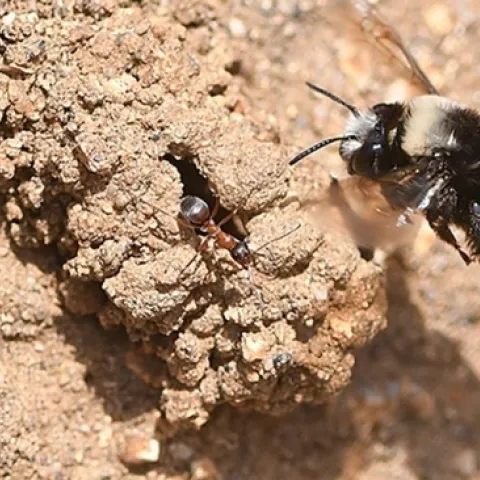
Have you ever seen the digger bees on the sandy cliffs of Bodega Head, Sonoma County? if you hike a short distance up a meandering trail, you'll see a landscape of turrets, the work of solitary, ground-nesting digger bees, Anthophora bomboides standfordina. The nests remind us tiny sandcastles.
Pre-dawn irrigation is preferable to reduce the amount of water lost to evaporation. Tasks Control weeds before they flower, produce seed and multiply. If citrus trees have scale, mites or thrips, spray with summer weight horticultural oil.
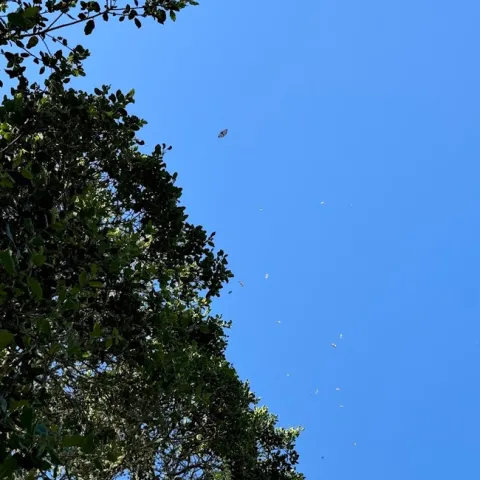
Are those moths? What are they doing to my oaks? Why are they out in the daytime? If you live in the Santa Cruz area (or much of the Bay Area) and have coast live oak or other oak species on your property, you have probably been wondering these exact questions. Bird? Plane? No-- California oak moth.