UC ANR is committed to providing an accessible and inclusive web experience for all users. If you encounter an accessibility barrier or need content in an alternative or remediated accessible format, please contact anraccessibility@ucanr.edu.
General situation We're a little later than normal kicking off this season's projections for thrips, but the season is off to a slow start so we're not in too bad a position. It's still cold overnight.
General situation We're a little later than normal kicking off this season's projections for thrips, but the season is off to a slow start so we're not in too bad a position. It's still cold overnight.
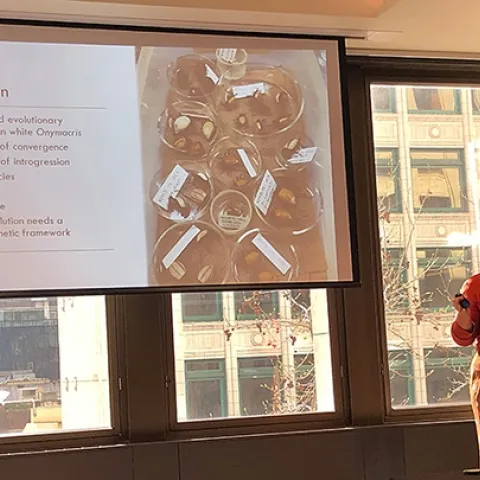
Iris Quayle acknowledged she was nervous at first. But when she began delivering her first-ever presentation at a scientific conference, I found it quite fun to present my work and see people's excitement.
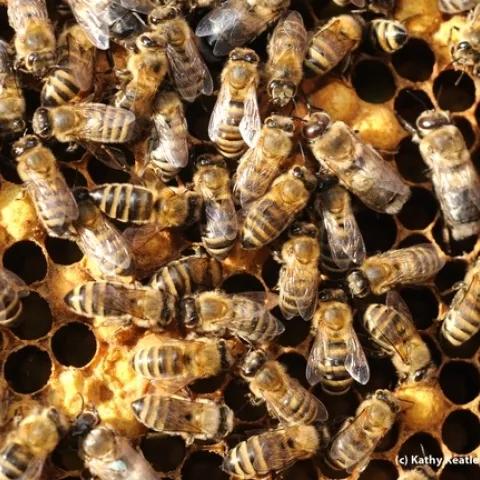
Research associate Christopher Mayack of the USDA's Agricultural Research Service (ARS), Davis, will speak on "Chemical Biomarkers and the Physiological Underpinnings of Honey Bee Health Decline" at the next seminar hosted by the UC Davis Department of Entomology and Nematology.
In this Issue: Byproduct Feeding Practices Important to California's Sustainability Welcome Jackie Atim AMR in lagoons National Mastitis Council in Visalia...
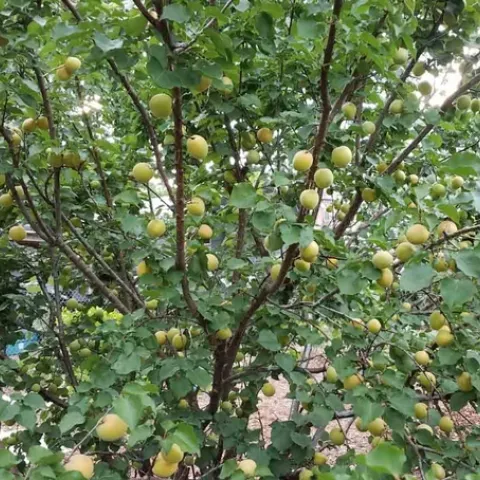
If you didn't already prune your apricots at the end of last summer, please hold off a little longer. Our area has a fungus called Eutypa that infects fresh pruning wounds when rainfall occurs 2 to 6 weeks after pruning.
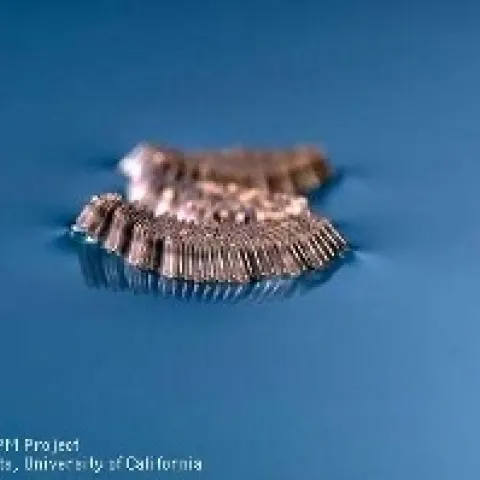
Below are answers to the 2023 Easter Egg Hunt! How did you do? Some mosquitoes lay single eggs on water surfaces, while others, like Culex species, lay batches of 100 or more eggs, called rafts, pictured above.