UC ANR is committed to providing an accessible and inclusive web experience for all users. If you encounter an accessibility barrier or need content in an alternative or remediated accessible format, please contact anraccessibility@ucanr.edu.
COVID-19 is having a tremendous impact on social, environmental, and economic conditions throughout the state of California and across the globe. Collectively we have endured a series of losses, from financial security to the lives of loved ones.
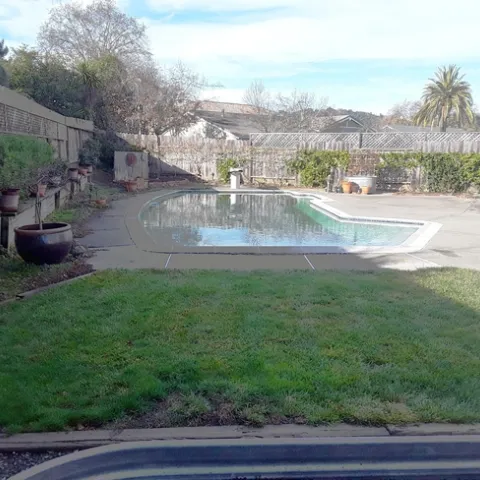
by Mel Kendall Last fall my husband and I decided to remove our in-ground pool. With the pool now gone our power bill has dropped exponentially. On the expected but not fully realized side is the resulting void.
In the last week, we have highlighted some invasive species that damage and threaten California's natural resources. If you missed any of our posts, click on the species listed below.
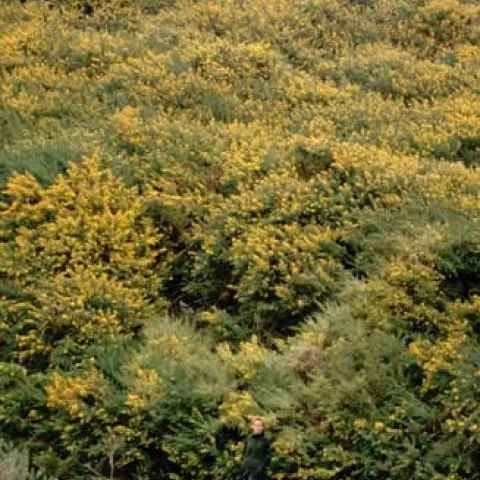
Brooms are shrubs which were originally planted in California as ornamentals and for erosion control, but are now considered to be invasive weeds since they are highly competitive. They crowd out native plants and form impenetrable barriers to wildlife.
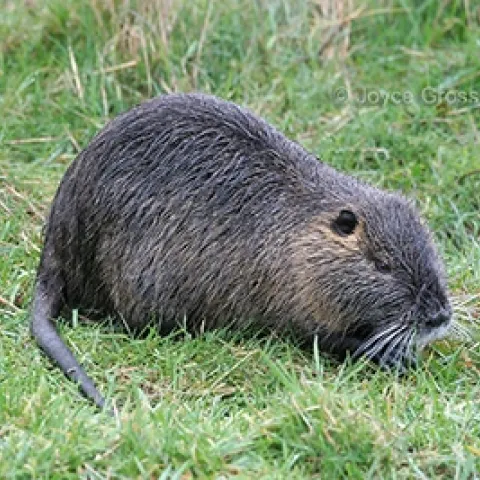
Nutria are found near rivers, streams, lakes, ponds and wetlands. Their burrowing and feeding on vegetation can cause damage. In addition, they can carry pathogens and parasites.
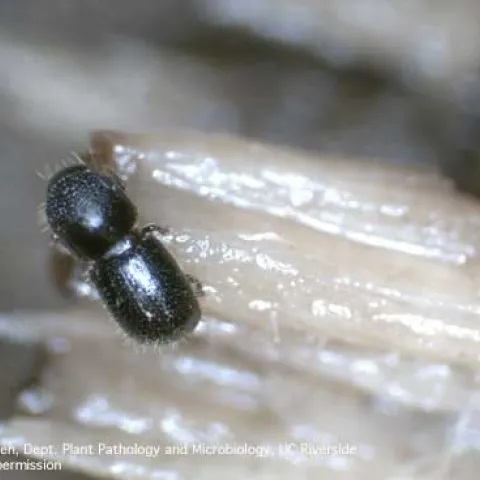
Small beetles are causing big problems in Southern California. Two closely related species, the polyphagous shot hole borer and the Kuroshio shot hole borer (collectively referred to as invasive shot hole borers), have been attacking more than 60 species of trees.
On May 27, 2020, Travis Bean, UC Cooperative Extension specialist and an incredible, amazing and accomplished man passed away suddenly at the age of 43. Travis was born in Lincoln, Neb., on Feb. 11, 1977, and raised in Yuma, Ariz.
Reposted from the UCANR News California's most destructive wildfire year on record was 2018, with devastating fires occurring in Northern California oak woodlands. From 2015 to 2017, six of California's 20 most deadly and destructive fires in history occurred in these areas.
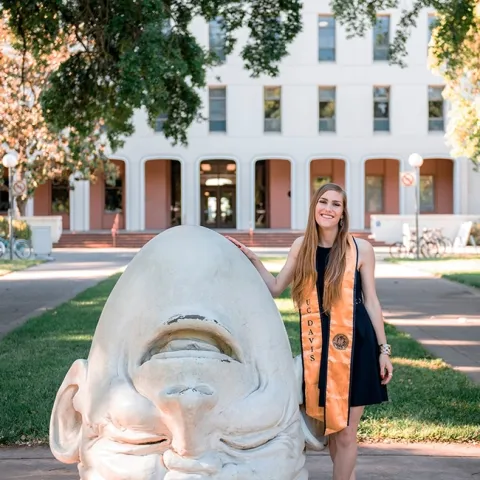
This is a story about how a student's "A" term paper in an entomology professor's went on to win a campuswide competition. When UC Davis fourth-year student Jessica Macaluso enrolled in a longevity class taught by UC Davis distinguished professor of entomology James R.
Hello all, Please find the attached document to provide the previous weeks estimated water use report in terms of evapotranspiration for almonds, peaches, walnuts, established vineyard, alfalfa, and pasture in Stanislaus County.
![Nutria. [Credit: Tony Northrup]](/sites/default/files/styles/large_square/public/2020-06/blog71559.jpg.webp?h=2ee6a279&itok=luERLUb0)