UC ANR is committed to providing an accessible and inclusive web experience for all users. If you encounter an accessibility barrier or need content in an alternative or remediated accessible format, please contact anraccessibility@ucanr.edu.
Birds do it...bees do it... You've probably seen the territorial male European carder bees on patrol. They dart through the stems of a nectar treasure, such as bluebeard (Caryopteris 'Blue Mist'), knocking off all floral visitors. They're trying to save the nectar for their girls, perchance to mate.
How times change with the advancement of knowledge. It's long been known that when honey beesas well as other insectsget trapped in the milkweed's pollinia, or sticky mass of pollen, many perish when they are unable to free themselves.
Links to job posting for a UC Cooperative Extension Weed Science Advisor position. The University of California is seeking candidates for the position of "Area CE Advisor - Low Desert Weed Science". The position will be located in Holtville and will serve Imperial and Riverside Counties.
A short video summarizing some of the information that was provided at the June 24th farm visit to Sano Farms in Firebaugh, CA is now available at You Tube (https://youtu.be/Qa5vVvmQjXU) or at our CASI website (http://casi.ucanr.edu/Video_updates/).
It's possible to grown many other tree crops along the coast other than avocado and citrus. When speaking of other perennial evergreens like avocado, trees that don't lose their leaves but retain a canopy year round, we want trees that can handle the occasional cold periods that happen in winter.
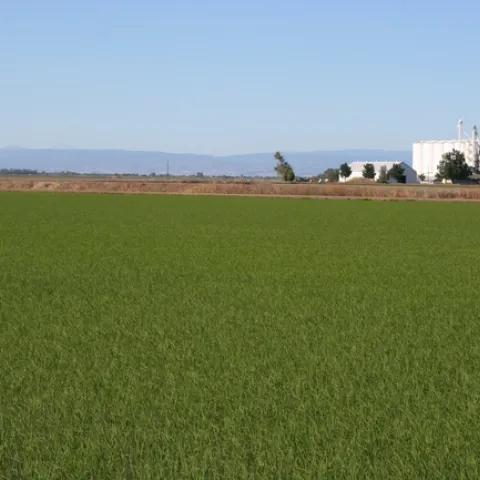
Do you think you have a good looking field of rice? Do you wonder how it might stack up against other fields? Well then join the 2016 UCCE Rice Yield Contest. This year we are expanding Yield Contest from Butte County to the whole Sacramento Valley.
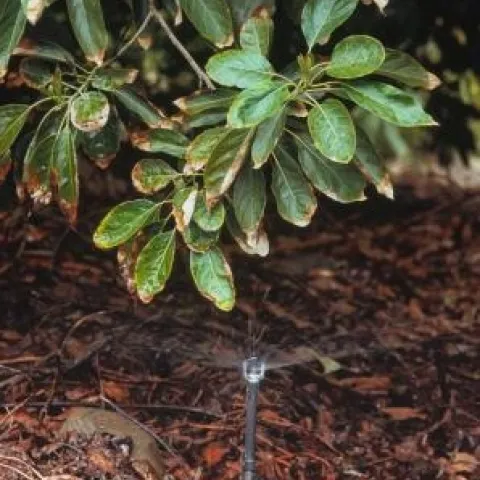
So after five years of drought a grower told me he finally gets it. Farming avocados in Goleta with limited well water and poor quality and expensive, rationed delivery, he has finally cut out trees that were not performing well. These were wind sept trees, areas with root and crown rot.
Do they ever slow down? Not much. The male European wool carder bee (Anthidium manicatum), a yellow and black bee about the size of a honey bee, spends most of the day defending its "property" (food) from other visitors.
So here's this tiny praying mantis hovering over a spider's web in the bluebeard (Caryopteris clandonensis) in our pollinator garden. In the web are freshly caught prey, including a honey bee.