UC ANR is committed to providing an accessible and inclusive web experience for all users. If you encounter an accessibility barrier or need content in an alternative or remediated accessible format, please contact anraccessibility@ucanr.edu.
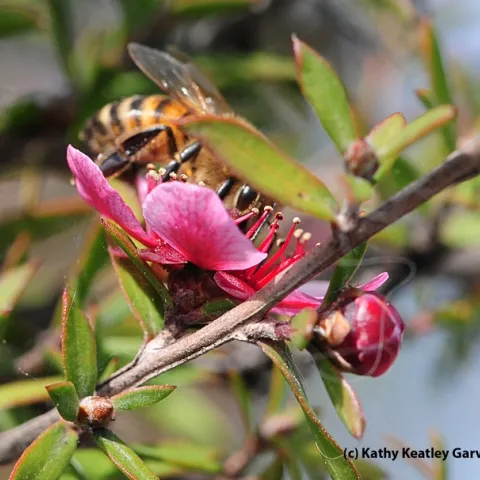
Honey bees can't get enough of the New Zealand tea tree, which, as its name implies, is a native of New Zealand. Our favorite New Zealand tea tree is Leptospermum scoparium keatleyi. It's the tallest and rangiest variety of the Leptospermum scopariums--that's one of the reasons we like it.
Integrated pest management (IPM) is an ecosystem-based strategy that focuses on long-term prevention of pests or their damage through a combination of techniques such as biological control, habitat manipulation, modification of cultural practices, and use of resistant varieties.
In the United States, only species listed on state or federal noxious weed lists are regulated. According to our analysis, these regulatory lists poorly represent invasive plants in unmanaged (i.e., nonagricultural) systems.
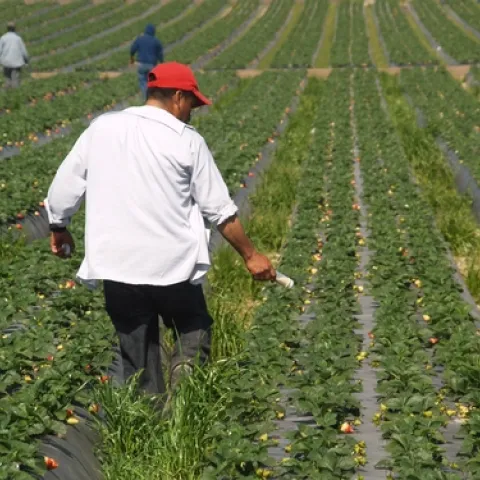
[USDA 04 Feb 2013 by Ann Perry] -- Farmers can fine-tune their use of cover crops to help manage costs and maximize benefits in commercial organic production systems, according to U.S. Department of Agriculture (USDA) scientists.
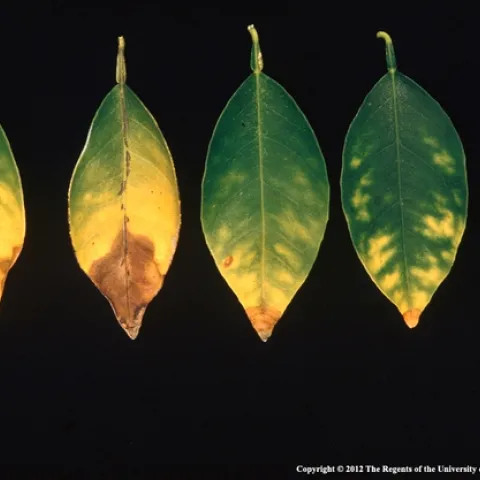
Many citrus trees in the southern end of the San Joaquin Valley are grown on moderately calcareous soils and frequently have high levels of boron in the leaf tissue. Citrus is sensitive to boron. Boron, when excessive, may cause defoliation and significant yield loss.
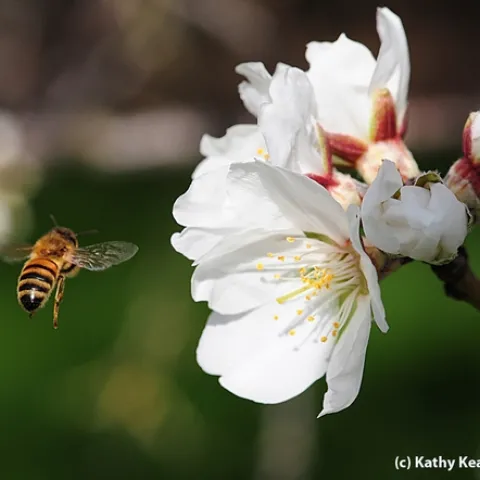
Symphony in the almond blossoms... There's a wild almond tree planted in a field off Bee Biology Road at the University of California, Davis, that's incredibly beautiful. Honey bees from the nearby apiary at the Harry H. Laidlaw Jr.
A quick post today with information about MSMA herbicides. There has been concern and lack of certainty about the registration status of MSMA and other organic arsenical herbicides. I was forwarded the attached press release and current labels for MSMA 6.6 and MSMA 6 Plus.
If you want to know about the molecular neurobiology of feeding behavior in insects, then the University of California, Davis campus is the place to be on Wednesday, Feb. 27.
'Tis the season for the return of the insects. Many a honey bee foraged in the flowering quince (Chaenomeles speciosa) last weekend. But wait, what's that? A spotted cucumber beetle (Diabrotica undecimpunctata) tucked inside a blossom.