UC ANR is committed to providing an accessible and inclusive web experience for all users. If you encounter an accessibility barrier or need content in an alternative or remediated accessible format, please contact anraccessibility@ucanr.edu.
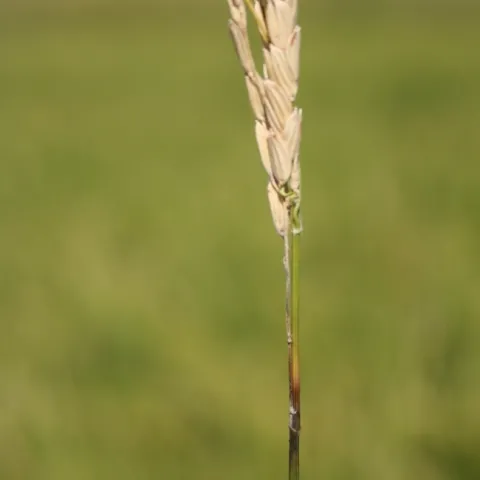
During 2010 and 2011, the distribution of rice blast in California expanded considerably. The disease was found in areas where it typically had not been a problem in the past. Yolo County is one of these areas.
It's too cold in Tulelake to work in the field, so I'm stuck writing reports and going to meetings this week. I recently finished summarizing my 2011 onion weed control studies conducted at the Intermountain Research and Extension Center (IREC) in Tulelake.
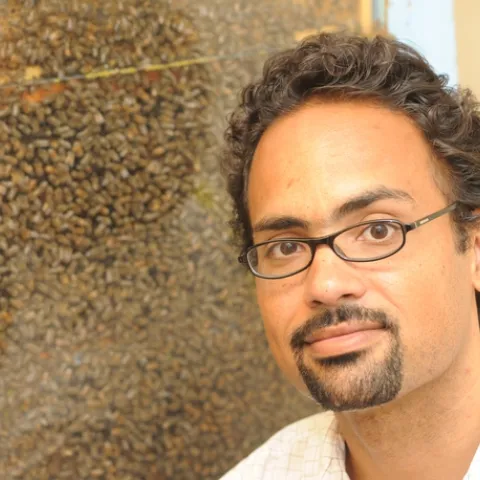
Like to know more about honey bees make collective decisions? Mark your calendar to attend a seminar this week at the University of California, Davis. Brian Johnson, assistant professor at the UC Davis Department of Entomology, will speak on "Organization of Work in the Honey Bee" from 12:10 to 1 p.
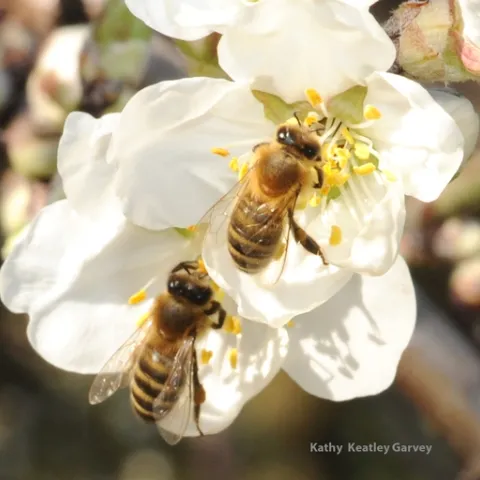
A good way to spend part of Valentine's Day is to "bee" among the almond blossoms. We stopped by the Harry H. Laidlaw Jr. Honey Bee Facility on Bee Biology Road, University of California, Davis, today to see and hear the bees buzzing. That they did! An entire chorus of bee buzzing...
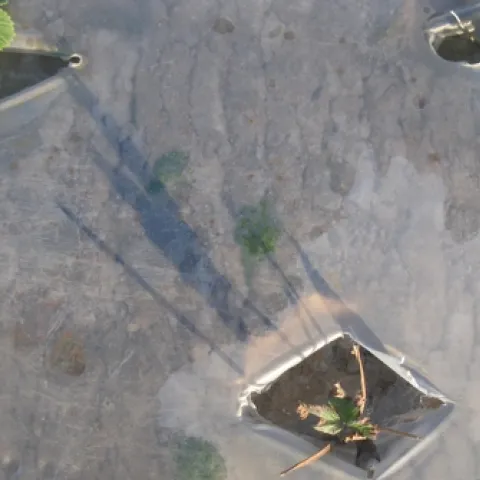
Strawberry plants suffering from salt toxicity. Symptoms include brown and brittle leaf margins (above, photo by Albert Ulrich, UC) and stunted plant growth (below, photo by Stuart Styles, CalPoly). Strawberry is among the crops that are very sensitive to salinity.
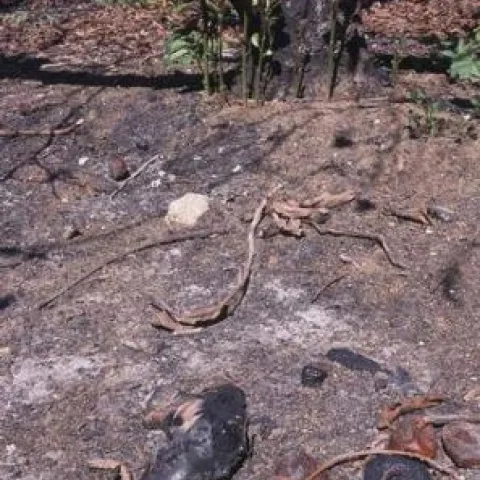
The wildfires in San Diego and Ventura Counties during the fall of 2003 were certainly devastating to many avocado groves adjacent to burning native chaparral.
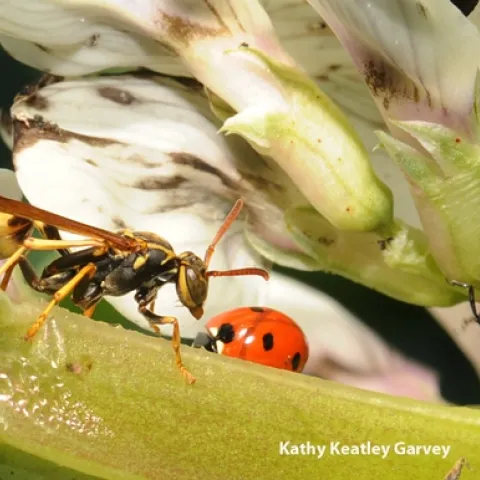
What a spectacular paper wasp! On a visit last week to the Hagen-Dazs Honey Bee Haven on Bee Biology Road, University of California, Davis, we saw a paper wasp (genus Mischocyttarus) foraging in the fava beans with assorted ladybugs, aphids and ants.
At last, the Laidlaw almonds are in bloom. That would be the almond trees on the grounds of the Harry H. Laidlaw Jr. Honey Bee Research Facility on Bee Biology Road at the University of California, Davis. And no one appreciates this more than the bees holed up in the 40 hives behind the facility.
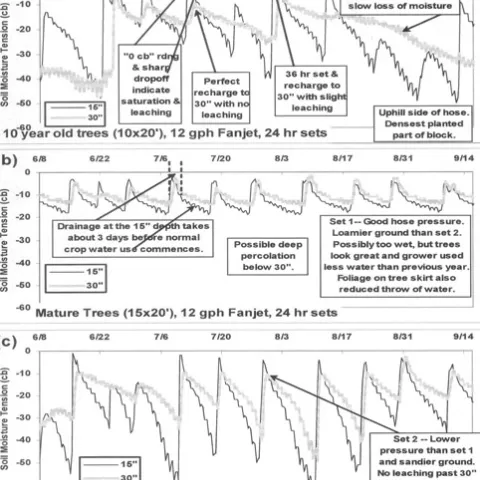
The best key to unlock efficient irrigation practice is to know exactly how much water your crop uses and replace it in a timely fashion that matches your irrigation system capacity and avoids crop stress and water logging.
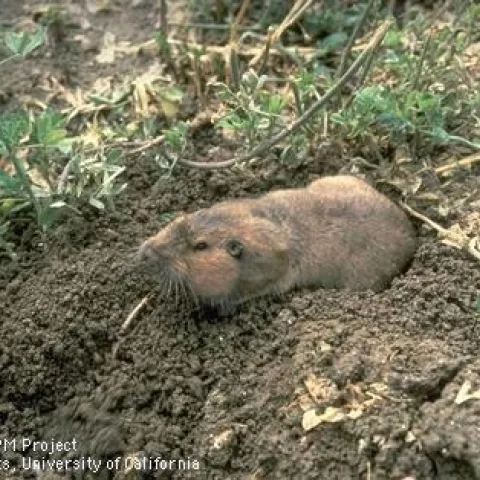
Vertebrate pests that have caused damage to citrus trees include rodents and small mammals, large mammals, and birds. Citrus orchards provide food and shelter for a number of these pests, and damage may be severe if the pest resides in the orchard.