UC ANR is committed to providing an accessible and inclusive web experience for all users. If you encounter an accessibility barrier or need content in an alternative or remediated accessible format, please contact anraccessibility@ucanr.edu.
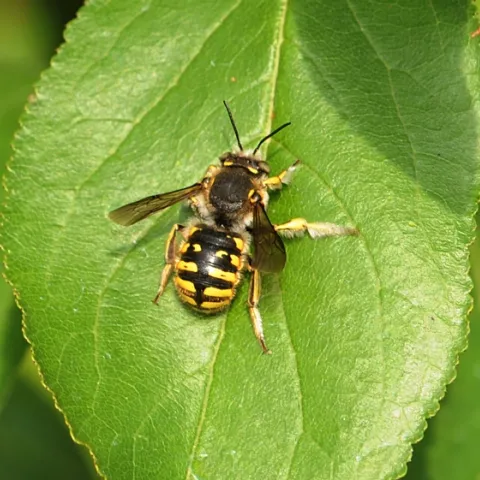
A good time to photograph the European wool carder bee is in the early morning when it's warming its muscles to prepare for flight. It lies perfectly still. That's what it did in our yard last weekend. It warmed itself on the sunny side of a leaf. Not unlike the sunny side of a street...
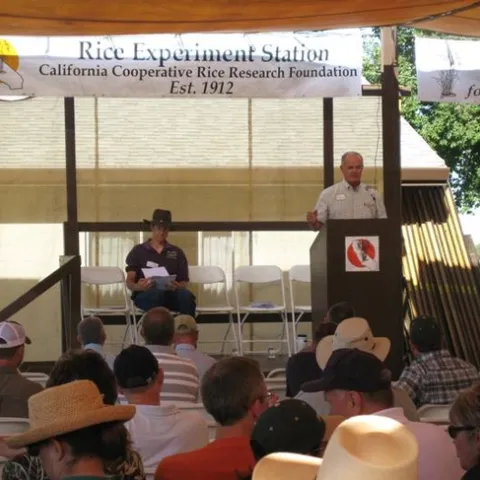
Almost two weeks ago the California Rice Experiment Station (RES) had its annual field day. It was a great opportunity to see fist-hand the research going on at the station.
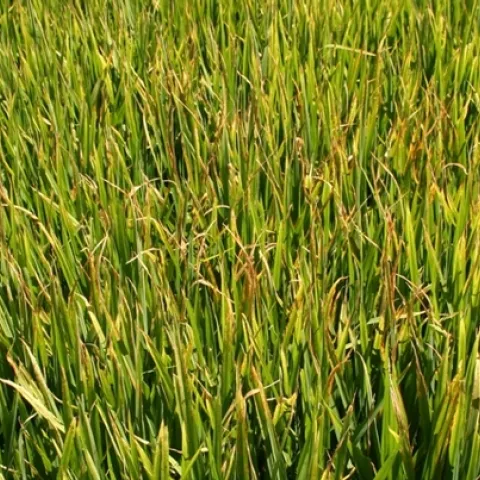
I visited a field a few weeks ago in the Woodland area. Older leaves showed discolored tips and margins, and necrotic spots. Leaf tips eventually turned brown and die. The grower was worried it might have been blast, because of some of the lesions were elliptical and resembled blast lesions.
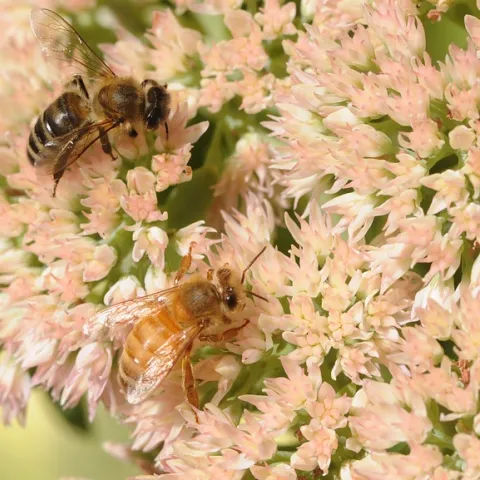
When beekepers from all over the Western states converge on the Western Apicultural Society (WAS) meeting in Hawaii next week, they won't be there to bask in the sun.
Jumpin' Jehosaphat! Those jumping spiders can jump--several lengths of their body, in fact. There seem to be more spiders in our yard this summer than usual--crab spiders, black widows, web weavers and jumping spiders. Well, that makes sense--we have more bees.
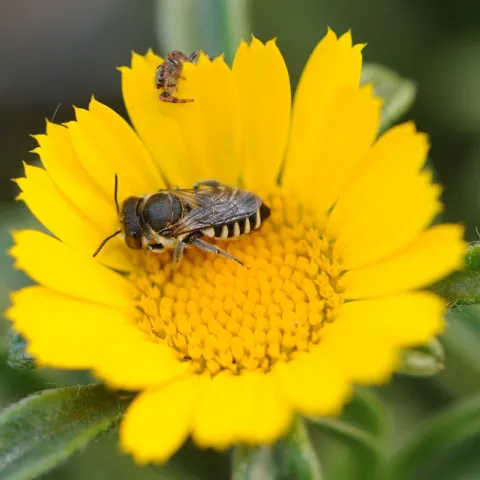
One left hungry. One didn't. We watched a leafcutter bee (genus Megachile) foraging on a gold coin flower (Asteriscus maritimus 'Gold Coin') yesterday when suddenly danger lurked. A jumping spider peered over the petals, its legs (aka "claws") extended in anticipation, the mark of a good hunter.
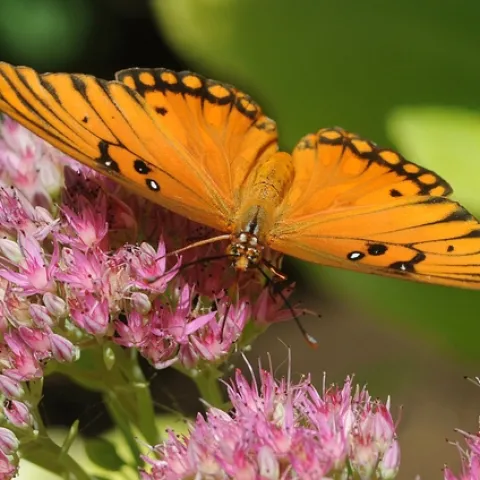
It's showtime! The Gulf Fritillary butterfly is one of the showiest butterflies in California, says butterfly guru Art Shapiro, professor of evolution and ecology at UC Davis. Indeed it is. The bright orange-red butterfly with a wingspan that can reach four inches visited our back yard yesterday.
Last week I sat in on the Weed Science School at held at UC Davis. This event is held every two years (alternating with the Aquatic Weed School) and is intended as a refresher or high-level introduction to weed science for professionals in the field.