UC ANR is committed to providing an accessible and inclusive web experience for all users. If you encounter an accessibility barrier or need content in an alternative or remediated accessible format, please contact anraccessibility@ucanr.edu.
It's not too early to start thinking about NPW. NPW? National Pollinator Week. The fourth annual National Pollinator Week, set June 21-27, is a time not only to remember the pollinators, but to celebrate them.
Robbin Thorp's many areas of expertise include the amazing diversity of native bees. He'll discuss their diversity, nesting habits and nest site requirements when he addresses the 2010 Bee Symposium, sponsored by the Santa Rosa-based Partners for Sustainable Pollination (PFSP).
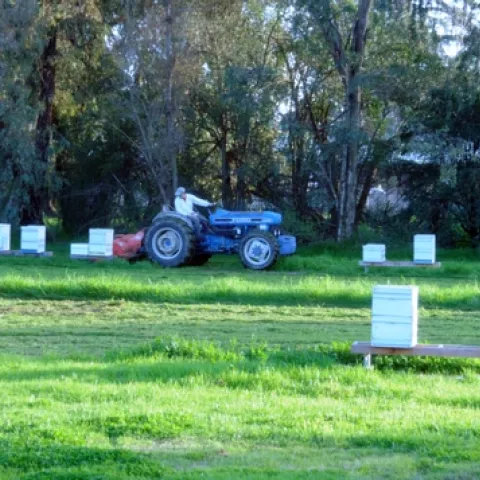
It's not spring, but don't tell that to the folks at the Harry H. Laidlaw Jr. Honey Bee Research Facility at the University of California, Davis. Today bee breeder-geneticist Michael "Kim" Fondrk mowed the lush green grass around the apiary.
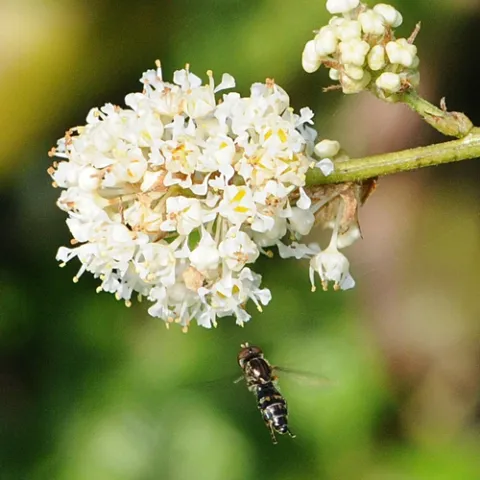
Have you seen the little syrphid flies, aka flower flies and hover flies, hovering around the early spring blossoms? We saw half a dozen of them Monday, Feb. 15 nectaring a white ceanothus at the Marshall Post Office in Marin County. The ceanothus is a shrub from the buckhorn family, Rhamnaceae.
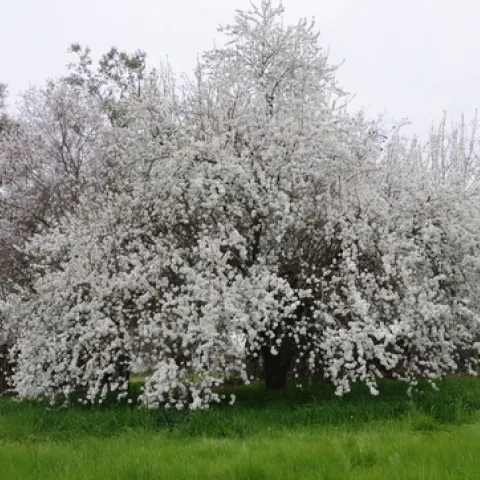
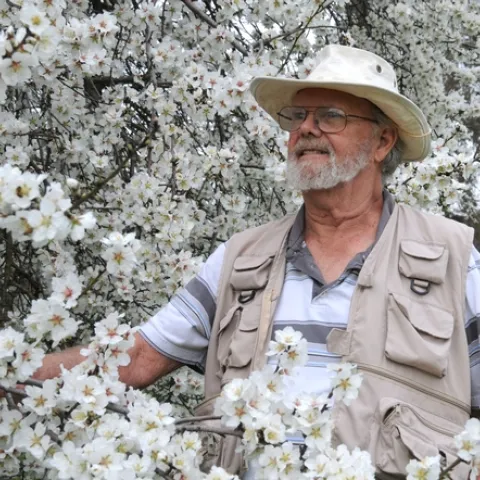
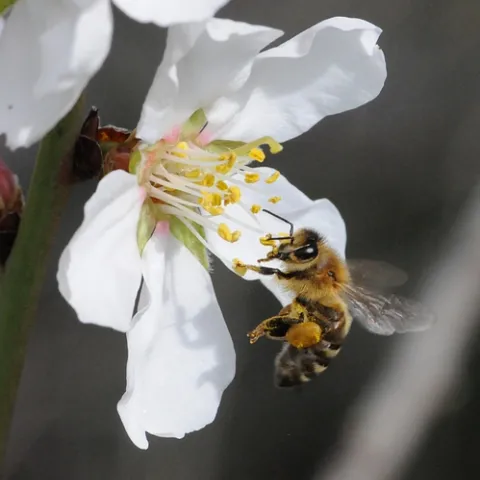
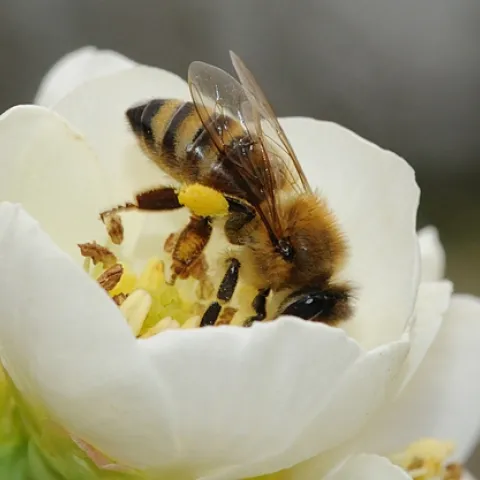
It's Presidents' Day today, a holiday for most of us but not for the honey bees. The bees are buzzing in and around the almond blossoms, collecting nectar and pollen for their hives. Nectar provides the carbohydrates for the hive, and pollen provides the proteins.
There's nothing like a steaming hot cup of coffee to jump-start the day. If there's anything better than one cup, it's TWO cups. Well, honey bees like a little caffeine, too. And nicotine.
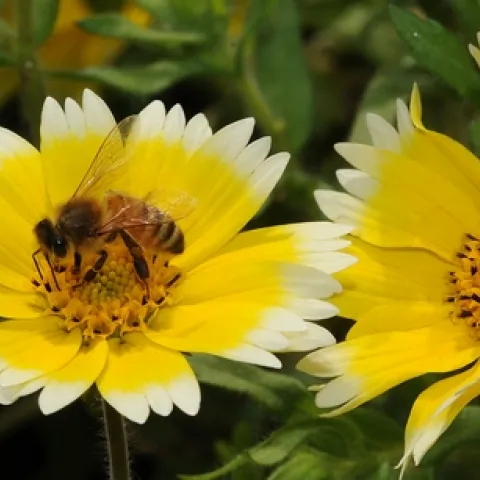
The Tidy Tips are a'blooming and the bees are a'buzzing. The Tidy Tips, a native California wildflower (Layia platyglossa, family Asteraceae) is a welcome addition to flower beds.