A Natural Solution for California's Herds: African Catfish Peptides

California's cattle producers and agricultural communities are all too familiar with the rising challenge of antibiotic resistance, making common bacterial infections harder to treat in livestock. But imagine a future where we could tackle these infections with a natural, powerful alternative. Our research points to just that: antimicrobial peptides (AMPs) found in African catfish.

We're really excited about these peptides because African catfish thrive in pathogen-rich freshwater, naturally producing these robust immune compounds in their skin mucus as a defense. This natural origin makes them highly appealing alternatives to synthetic drugs.

Predicted Safety and Potent Action

One of the most compelling aspects of these AMPs is their predicted safety for mammals. Our initial computer analyses suggest that various catfish AMPs are generally recognized as safe (GRAS). We predict they'll be absorbed in the human intestine without causing liver, brain, or heart toxicity. Furthermore, lab tests on a promising peptide, NACAP-II, confirmed it was non-hemolytic, meaning it didn't damage rabbit red blood cells—a strong indicator of its potential safety for mammalian cells.

Beyond safety, these peptides demonstrate effectiveness against problematic bacteria. One study revealed NACAP-II's strong activity against Extended-Spectrum Beta-Lactamase (ESBL)-producing Escherichia coli—a critical concern for both animal and human health due to its resistance to many common antibiotics. Another peptide, ACAP-IV, also showed antibacterial activity against E. coli and Staphylococcus aureus. We believe these AMPs work by directly disrupting bacterial cell membranes, a mechanism that makes it harder for bacteria to develop resistance compared to how they resist traditional antibiotics.
Santa Clara County Cooperative Extension: Page

CalFresh Healthy Living, UCCE in the Community

Elementary school students working in the school garden Student holding broccoli grown in school garden Salad greens growing in school garden Produce samples and information at shelter food distribution Community Nutrition Educator encouraging students to vote and provide feedback at cafeteria promo...
View Page
Santa Clara County Cooperative Extension: Page

Organic Materials Management

The Organic Materials Management program is dedicated to advancing sustainable practices in the processing and use of organic materials in agri-food systems.
View Page
Santa Clara County Cooperative Extension: Page

FEEDSTOCKS

It's in the mix Feedstocks are the raw ingredients for composting. They are organic materials, usually solid, and usually in an active state of decomposition.
View Page
Santa Clara County Cooperative Extension: Page

BACKYARD COMPOSTING SYSTEMS

Let's build a Compost pile Backyard composting comes in many shapes and sizes. Here we have examples of make-your-own open piles, prefabricated plastic bins, and tumblers. Choose a system that works best for your lifestyle and space.
View Page
Santa Clara County Cooperative Extension: Page

Wildfire Mitigation & Management

The Wildfire Mitigation and Management program focuses on wildland fire-related research and outreach, while building trust, strong partnerships and collaborative relationships within Central Coast communities.Barb works to answer some of the questions behind the use of prescribed fire in a variety of…
View Page
Santa Clara County Cooperative Extension: Page

ASP SYSTEM

Got Rot? The aerated static pile, or ASP, system is made for larger composting operations when there are a lot of materials that need to be processed and not enough labor to turn the compost piles.
View Page
Santa Clara County Cooperative Extension: Page

CFT SYSTEMS

The continuous flow through, or CFT, system, is a massive worm bin. It is named such because the feeding and harvest of the bin is continuous. Each week, we feed the worms from the top of the bin and then harvest from the bottom of the bin with a bar that runs across the bottom.
View Page
Santa Clara County Cooperative Extension: Page

FINISHED COMPOST

When is the Compost Ready? Finished compost can have a broad definition. Our finished compost has gone through either a cold or hot composting process, and then through a curing period.
View Page
Santa Clara County Cooperative Extension: Page

Post-Workshop Information

Inspired by the workshop or want more composting support? Join us at Martial Cottle Park to see the systems we have in-person while getting your hands dirty with us. Sign up for an workday here.
View Page
Primary Image
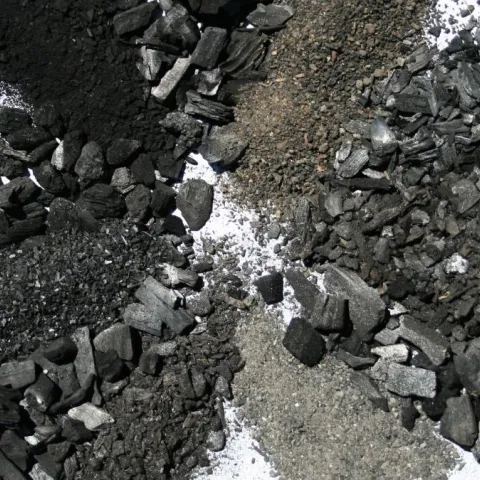
various types of biochar
Santa Clara County Cooperative Extension: Page

Co-Composting with Biochar

Photo: Sanjai Parikh Remember learning in school that mitochondria are the powerhouses of the cell? Well, compost piles have their own powerhouses - bacteria that are relatives of mitochondria. These hardworking bacteria help break down organic material, a process that requires oxygen.
View Page