A Natural Solution for California's Herds: African Catfish Peptides

California's cattle producers and agricultural communities are all too familiar with the rising challenge of antibiotic resistance, making common bacterial infections harder to treat in livestock. But imagine a future where we could tackle these infections with a natural, powerful alternative. Our research points to just that: antimicrobial peptides (AMPs) found in African catfish.

We're really excited about these peptides because African catfish thrive in pathogen-rich freshwater, naturally producing these robust immune compounds in their skin mucus as a defense. This natural origin makes them highly appealing alternatives to synthetic drugs.

Predicted Safety and Potent Action

One of the most compelling aspects of these AMPs is their predicted safety for mammals. Our initial computer analyses suggest that various catfish AMPs are generally recognized as safe (GRAS). We predict they'll be absorbed in the human intestine without causing liver, brain, or heart toxicity. Furthermore, lab tests on a promising peptide, NACAP-II, confirmed it was non-hemolytic, meaning it didn't damage rabbit red blood cells—a strong indicator of its potential safety for mammalian cells.

Beyond safety, these peptides demonstrate effectiveness against problematic bacteria. One study revealed NACAP-II's strong activity against Extended-Spectrum Beta-Lactamase (ESBL)-producing Escherichia coli—a critical concern for both animal and human health due to its resistance to many common antibiotics. Another peptide, ACAP-IV, also showed antibacterial activity against E. coli and Staphylococcus aureus. We believe these AMPs work by directly disrupting bacterial cell membranes, a mechanism that makes it harder for bacteria to develop resistance compared to how they resist traditional antibiotics.
Primary Image
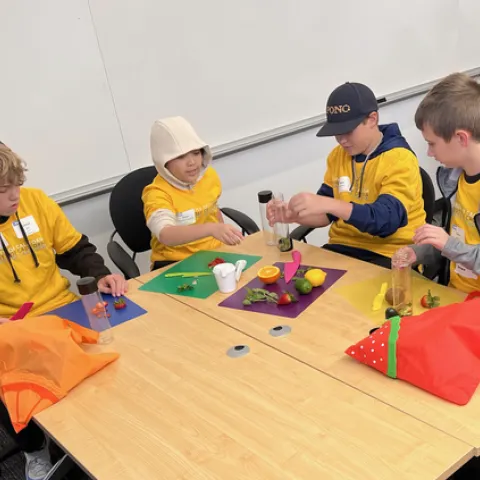
Four kids in yellow UC shirts slice citrus and berries to put in reusable bottles.
ANR Employee News: Article

ANR takes kids to work at UCOP

April 29, 2024
By Pamela S Kan-Rice
UC ANR employees at UC Office of the President in Oakland participated in Take Our Kids to Work Day on April 24. Take Our Kids to Work Day is a national movement that allows children to explore career possibilities while learning more about their parents' work and organization.
View Article
Primary Image
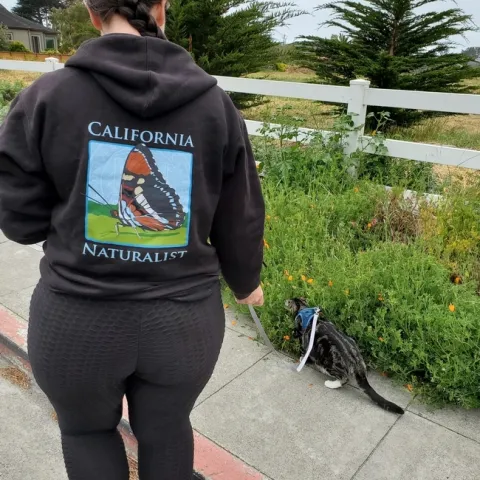
Sarah-Mae Nelson and her cat walked for UC ANR Moves in 2021.
ANR Employee News: Article

Join UC ANR Moves at 1:15 p.m. on May 1

April 29, 2024
By Pamela S Kan-Rice
Join the UC ANR Moves event on Wednesday, May 1, from 1:15 to 2 p.m. UC ANR Moves promotes health and well-being by encouraging all employees to take a walk or engage in another physical activity for 30 to 40 minutes.
View Article
Primary Image
Uc ANR Latinos & Friends Affinity Group - union, respeto, armonia. Abstract graphics in red and orange appear to show 2 images with arms around each other's shoulder.
ANR Employee News: Article

Learn Spanish with NOS

April 29, 2024
By Pamela S Kan-Rice
Would you like to learn to speak Spanish? Ricardo Vela, manager of News and Information Outreach in Spanish and chair of the Latinx & Friends Affinity Group, is organizing weekly lessons that will be offered via Zoom and start in July.
View Article
Primary Image
Beetle on a white rose damaged by it.
The Stanislaus Sprout: Article

Hoplia Beetles on light colored roses and other flowers

April 29, 2024
By Anne E Schellman
You may have noticed swarms of flying insects landing on your roses, calla lillies, hydrangeas, and other flowers. If you look closely, you'll see the insect inside the flower, and the chewing damage on the petals.
View Article
Primary Image
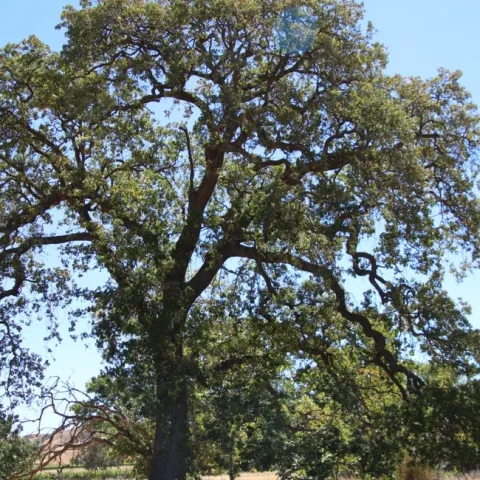
Tall, towering tree over a grassy area.
The Stanislaus Sprout: Article

Celebrating Trees on Arbor Day

April 29, 2024
By Anne E Schellman
These trees which he plants, and under whose shade he shall never sit, he loves them for themselves, and for the sake of his children and his children's children, who are to sit beneath the shadow of their spreading boughs.
View Article