A Natural Solution for California's Herds: African Catfish Peptides

California's cattle producers and agricultural communities are all too familiar with the rising challenge of antibiotic resistance, making common bacterial infections harder to treat in livestock. But imagine a future where we could tackle these infections with a natural, powerful alternative. Our research points to just that: antimicrobial peptides (AMPs) found in African catfish.

We're really excited about these peptides because African catfish thrive in pathogen-rich freshwater, naturally producing these robust immune compounds in their skin mucus as a defense. This natural origin makes them highly appealing alternatives to synthetic drugs.

Predicted Safety and Potent Action

One of the most compelling aspects of these AMPs is their predicted safety for mammals. Our initial computer analyses suggest that various catfish AMPs are generally recognized as safe (GRAS). We predict they'll be absorbed in the human intestine without causing liver, brain, or heart toxicity. Furthermore, lab tests on a promising peptide, NACAP-II, confirmed it was non-hemolytic, meaning it didn't damage rabbit red blood cells—a strong indicator of its potential safety for mammalian cells.

Beyond safety, these peptides demonstrate effectiveness against problematic bacteria. One study revealed NACAP-II's strong activity against Extended-Spectrum Beta-Lactamase (ESBL)-producing Escherichia coli—a critical concern for both animal and human health due to its resistance to many common antibiotics. Another peptide, ACAP-IV, also showed antibacterial activity against E. coli and Staphylococcus aureus. We believe these AMPs work by directly disrupting bacterial cell membranes, a mechanism that makes it harder for bacteria to develop resistance compared to how they resist traditional antibiotics.

Primary Image
2026 GTPS Banner
UC Master Gardener Program of Contra Costa County: Page

2026 Great Tomato Plant Sale

The Great Tomato Plant Sale is our huge event where we sell thousands of spring veggie seedlings to our community. Get all the information on this page.
View Page
Primary Image
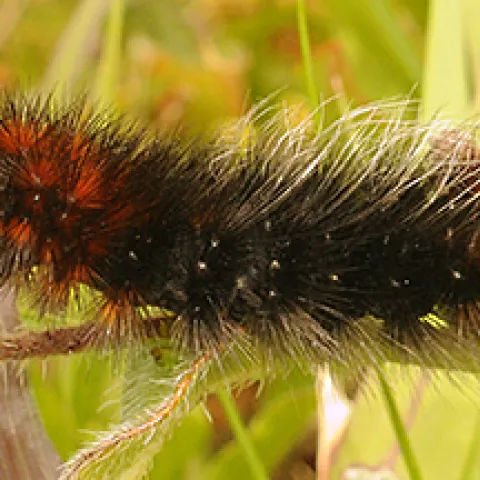
A wooly bear caterpillar at Bodega Bay. (Photo by Kathy Keatley Garvey)
Bug Squad: Article

Rick Karban and the Wooly Bear Caterpillars of Bodega Bay

January 15, 2026
By Kathy Keatley Garvey
 Ever seen the wooly bear caterpillars at Bodega Head, Sonoma County?UC Davis Distinguished Professor Emeritus Richard “Rick” Karban of the Department of Entomology and Nematology has studied the population dynamics of these caterpillars at the University of California Bodega Marine…
View Article
Event Primary Image
Black biochar on a forest floor.
Forestry Research and Outreach: Event

FREE Webinar: Biochar Applications for Forest Landowners

Event Date
Feb 25, 2026

Join UC ANR's Forest Stewardship program for a special session focusing on biochar applications!This webinar will feature speakers Cindy Chen, UC ANR Woody Biomass Advisor; Nadia Hamey, Registered Professional Forester; and Kenneth Scherer, Executive Director of the Biochar Coalition.Join the webinar to…
Forestry Research and Outreach
View Event
UCCE Humboldt - Del Norte Counties: Page

Returning 4-H Adult Volunteers

Re-apply annually by December 1stAll 4-H volunteers must be appointed annually. If you are a current 4-H Adult Volunteer, to continue in the next year you need to re-apply and be re-appointed by December 1st to continue with no break in service. 1. Update your ZSuite profileLog in to your existing …
View Page
Event Primary Image
Grove of giant sequoia trees post-wildfire. Photo displays standing dead trees with grass beneath.
Forestry Research and Outreach: Event

FREE Webinar: Post-Fire Resilience in Giant Sequoias

Event Date
Feb 12, 2026

Join UC ANR's Post-Fire team for a webinar all about giant sequoias post-wildfire!This free learning opportunity will feature the latest research from UC Berkeley Cooperative Extension Specialist Kristen Shive. Join to learn more about:Sequoia adaptations to fire and impacts of modern wildfiresManaging…
Forestry Research and Outreach
View Event
UCCE Humboldt - Del Norte Counties: Page

New 4-H Volunteer Appointment Process

 Process to become a new 4-H Adult Volunteer 1. Find a clubSee our list of clubs to find one near you. You can also email Kaylin Nylander or call her at (707) 445-7351 for help in finding or choosing a club. Contact the club leader to learn more about the volunteer opportunities…
View Page
Event Primary Image
2026 Rice Grower Meeting (jpg)
Cooperative Extension, Sutter-Yuba Counties: Event

2026 Rice Grower Meetings

Event Date
Jan 22, 2026

🌾 2026 Rice Grower Meetings 🌾 Join UC Cooperative Extension and partners for a series of Rice Grower Meetings, January 21–23, held in Richvale, Willows, Colusa, Yuba City, and Woodland. Get the latest updates on rice varieties, fertility, weeds, pests, diseases, drones for pesticide application, and county…
Cooperative Extension, Sutter-Yuba Counties
View Event
Topics in Subtropics: Article

A Gallery of Backyard Avocado Symptoms

January 15, 2026
By Ben A Faber
I recently got a request from an avocado tree guardian who had just a few trees left from a once flourishing orchard in Carpinteria.  There only a few trees left and they were struggling.  I was asked to diagnose them from images that were sent.  Here they are and my diagnosis.  Old trees…
View Article
UC Small Grains Blog: Article

Next week! Integrated Water and Nitrogen Management Trainings

January 15, 2026
By Mark E Lundy
SSJV Water Quality Coalitions are excited to offer FREE one-day training events through their joint Management Practices Evaluation Program (SSJV MPEP) and in cooperation with UC Cooperative Extension. The training will be held January 20, 21, and 22 at three locations in the San Joaquin Valley. It is…
View Article