A Natural Solution for California's Herds: African Catfish Peptides

California's cattle producers and agricultural communities are all too familiar with the rising challenge of antibiotic resistance, making common bacterial infections harder to treat in livestock. But imagine a future where we could tackle these infections with a natural, powerful alternative. Our research points to just that: antimicrobial peptides (AMPs) found in African catfish.

We're really excited about these peptides because African catfish thrive in pathogen-rich freshwater, naturally producing these robust immune compounds in their skin mucus as a defense. This natural origin makes them highly appealing alternatives to synthetic drugs.

Predicted Safety and Potent Action

One of the most compelling aspects of these AMPs is their predicted safety for mammals. Our initial computer analyses suggest that various catfish AMPs are generally recognized as safe (GRAS). We predict they'll be absorbed in the human intestine without causing liver, brain, or heart toxicity. Furthermore, lab tests on a promising peptide, NACAP-II, confirmed it was non-hemolytic, meaning it didn't damage rabbit red blood cells—a strong indicator of its potential safety for mammalian cells.

Beyond safety, these peptides demonstrate effectiveness against problematic bacteria. One study revealed NACAP-II's strong activity against Extended-Spectrum Beta-Lactamase (ESBL)-producing Escherichia coli—a critical concern for both animal and human health due to its resistance to many common antibiotics. Another peptide, ACAP-IV, also showed antibacterial activity against E. coli and Staphylococcus aureus. We believe these AMPs work by directly disrupting bacterial cell membranes, a mechanism that makes it harder for bacteria to develop resistance compared to how they resist traditional antibiotics.
UC Master Gardener Program of Contra Costa County: Article

Volunteer Support Hard At Work

July 9, 2023
By Jon Dwyer The Volunteer Support project of the Contra Costa County UC Master Gardeners organization is one of only three of the 15+ projects that are 100% inward facing, which means that all of the various activities within the project are in support of the UC Master Gardeners and do not deal wit...
View Article
Primary Image
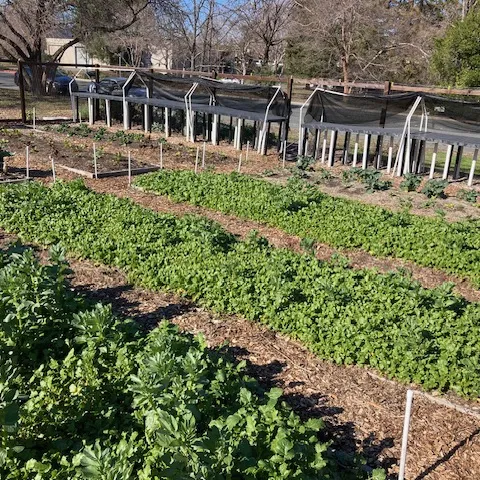
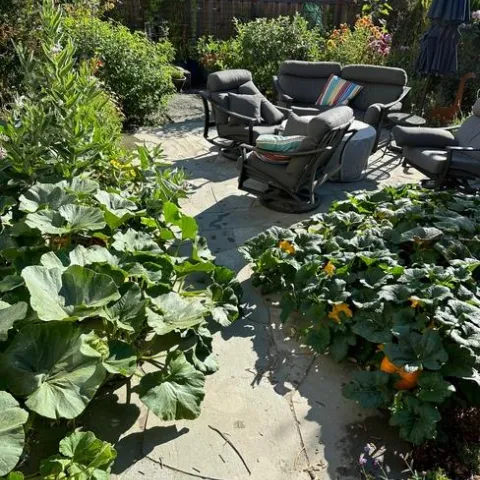
The Family Garden is a single 100–square foot bed that shows what’s possible. Photo by Titania Buchholdt.
UC Master Gardener Program of Contra Costa County: Article

News From Our Garden

July 9, 2023
By Janet Miller Even though we just passed over the summer solstice, ushering in our warmest season, it feels like Spring has just begun. With the recordbreaking rainfall, which we are grateful for, our garden beds were way too soggy to work at the normal time.
View Article
UC Master Gardener Program of Contra Costa County: Article

Community Gardens – Measuring Success

July 9, 2023
By Karen Maggio Engaging community, demonstrating best practices, encouraging teamwork, teaching and sharing experiences this is what we do as UC Master Gardeners, in community gardens throughout Contra Costa County.
View Article
Primary Image
Jack London Elementary School Garden in Antioch. Photo by Kate Verhoef
UC Master Gardener Program of Contra Costa County: Article

School Gardens Impact Our Communities

July 9, 2023
By Kate Verhoef Now that my time as School Garden CoLead is coming to an end, Ive been thinking about all the different ways that the School Gardens team has impacted youth, parents, educators and school communities over the last couple of years.
View Article
UC Master Gardener Program of Contra Costa County: Article

Problems with Succulents

July 9, 2023
By Stephanie Hargrave Clients question: I live in Walnut Creek and recently had my front and backyard landscaping done. A couple of the cactus plants seem to be dying. They get full sun and initially twice a week water. Now they are on a weekly watering schedule. Please advise.
View Article
UC Master Gardener Program of Contra Costa County: Article

Water Conservation Garden is Grateful

July 9, 2023
By Liz Rottger and Liv Imset The CoLeads of the Water Conservation Garden, Liv Imset and Liz Rottger, thank all the UC Master Gardeners who have been coming out and kickstarting our second season of this new pilot project.
View Article
Primary Image
BeesBliss
UC Master Gardener Program of Contra Costa County: Article

Bee's Bliss Unhappy in Pleasant Hill

July 9, 2023
By Stephanie Hargrove Clients question: Im wondering if I should prune back my Salvia Bees Bliss, I live in Pleasant Hill. The leaves yellowed after the winter, and I thought it was due to too much moisture from the winter rain.
View Article
UC Master Gardener Program of Contra Costa County: Article

Get Real in the Garden — CoCoMG South County Gatherings

July 9, 2023
By Kathy Gage Several years back, three South County UC Master Gardeners from Alamo, Danville and San Ramon Bonnie Dwyer (class of 2013), Bob Archer (class of 2019), and Janette Drew (class of 2016) came up with the idea of hosting early evening informal and unofficial gettogethers for South Count...
View Article
Primary Image
Image 1a (left): The prostrate growth habit of alkaliweed. Image 1b (right): Flowering alkaliweed, also growing in an upright form.
UC Weed Science (weed control, management, ecology, and minutia): Article

First look at controlling alkaliweed

July 9, 2023
By Douglas Amaral, Brad Hanson, Elizabeth J Fichtner
Pistachio production has been expanding, particularly into marginal soils with high salts, boron, and even sodic conditions. One plant that is endemic to these conditions, alkaliweed, has been reported in these orchards.
View Article