A Natural Solution for California's Herds: African Catfish Peptides

California's cattle producers and agricultural communities are all too familiar with the rising challenge of antibiotic resistance, making common bacterial infections harder to treat in livestock. But imagine a future where we could tackle these infections with a natural, powerful alternative. Our research points to just that: antimicrobial peptides (AMPs) found in African catfish.

We're really excited about these peptides because African catfish thrive in pathogen-rich freshwater, naturally producing these robust immune compounds in their skin mucus as a defense. This natural origin makes them highly appealing alternatives to synthetic drugs.

Predicted Safety and Potent Action

One of the most compelling aspects of these AMPs is their predicted safety for mammals. Our initial computer analyses suggest that various catfish AMPs are generally recognized as safe (GRAS). We predict they'll be absorbed in the human intestine without causing liver, brain, or heart toxicity. Furthermore, lab tests on a promising peptide, NACAP-II, confirmed it was non-hemolytic, meaning it didn't damage rabbit red blood cells—a strong indicator of its potential safety for mammalian cells.

Beyond safety, these peptides demonstrate effectiveness against problematic bacteria. One study revealed NACAP-II's strong activity against Extended-Spectrum Beta-Lactamase (ESBL)-producing Escherichia coli—a critical concern for both animal and human health due to its resistance to many common antibiotics. Another peptide, ACAP-IV, also showed antibacterial activity against E. coli and Staphylococcus aureus. We believe these AMPs work by directly disrupting bacterial cell membranes, a mechanism that makes it harder for bacteria to develop resistance compared to how they resist traditional antibiotics.

Primary Image
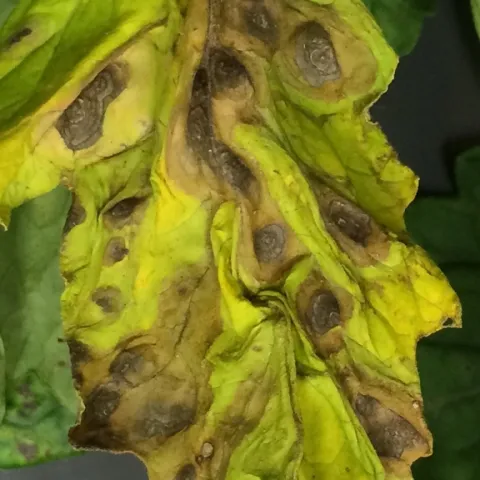
A tomato stem with wilted, discolored leaves.
The Backyard Gardener: Article

Late Spring Freezes in the Garden

May 23, 2022
By Dustin W Blakey
Recently the Eastern Sierra had some hard freezes that damaged plants. It's not that unusual for it to happen, but no one likes to see zapped foliage.
View Article
Primary Image
A shrimp tadpole, pest of rice. (Photo by Ian Grettenberger)
Entomology & Nematology News: Article

Bohart Museum Open House to Focus on 'Bugs in Ag'

May 23, 2022
By Kathy Keatley Garvey
The Bohart Museum of Entomology will focus on pests of agricultural crops, including rice and alfalfa, at its open house from 1 to 4 p.m. on Saturday, May 28. The event, titled Bugs in Ag: What Is Eating Our Crops and What Is Eating Them? will take place from 1 to 4 p.m.
View Article
Primary Image
Low growing perennials with flowers in a landscape.
The Stanislaus Sprout: Article

If You Build it, They Will Come!

May 23, 2022
By Anne E Schellman
The month of May is Garden for Wildlife month. Due to factors such as loss of habitat, pesticides exposure, and climate change, much of wildlife is being challenged today. There are many ways home gardeners can directly help birds, bees, butterflies, and other local wildlife.
View Article
Primary Image
A solar eclipse can cause disruptions in circadian cycles. photos by Brenda Altman
Under the Solano Sun: Article

Summer Solstice Circadian Rhythms

May 23, 2022
Today the day's sunshine is close to its maximum, it's solstice time. When the sun is directly over the Tropic of Cancer 23.5 degrees north latitude, the axis of the earth is tilted to its maximum so the northern hemisphere gets its maximum number of daylight hours.
View Article
Primary Image
Adult syrphid fly photo Jack Kelly Clark
Spill the Beans: Article

The Garden Good Guys

May 23, 2022
by Melody Kendall The last two weeks we featured information on the most common invertebrate garden pests in our area. If this information caused you some concern, the Good Guys are ready to rush to the rescue.
View Article
Primary Image
Vetch is sometimes grown with small grains, for example rye.
UC Weed Science (weed control, management, ecology, and minutia): Article

Is vetch a friend or foe to livestock?

May 22, 2022
By Morgan P Doran, Rachael Long
From the Alfalfa & Forage News blog (April 29, 2022) Vetch (Vicia spp.) is growing like a weed everywhere this year, carpeting our hills with great swaths of purple flowers. What is vetch? There are several species that are commonly grown as crops, cover crops or weeds (see list at the bottom).
View Article
Primary Image
A honey bee heading for the tower of jewels, Echium wildpretii. (Photo by Kathy Keatley Garvey)
Bug Squad: Article

Celebrating World Bee Day with the California Master Beekeeper Program

May 20, 2022
By Kathy Keatley Garvey
It's World Bee Day! How did that come about? One word: Slovenia. The Republic of Slovenia, rich in beekeeping history, asked the United Nations to proclaim an annual World Bee Day, and following a three-year international effort, the United Nations agreed to do so in December 2017.
View Article