A Natural Solution for California's Herds: African Catfish Peptides

California's cattle producers and agricultural communities are all too familiar with the rising challenge of antibiotic resistance, making common bacterial infections harder to treat in livestock. But imagine a future where we could tackle these infections with a natural, powerful alternative. Our research points to just that: antimicrobial peptides (AMPs) found in African catfish.

We're really excited about these peptides because African catfish thrive in pathogen-rich freshwater, naturally producing these robust immune compounds in their skin mucus as a defense. This natural origin makes them highly appealing alternatives to synthetic drugs.

Predicted Safety and Potent Action

One of the most compelling aspects of these AMPs is their predicted safety for mammals. Our initial computer analyses suggest that various catfish AMPs are generally recognized as safe (GRAS). We predict they'll be absorbed in the human intestine without causing liver, brain, or heart toxicity. Furthermore, lab tests on a promising peptide, NACAP-II, confirmed it was non-hemolytic, meaning it didn't damage rabbit red blood cells—a strong indicator of its potential safety for mammalian cells.

Beyond safety, these peptides demonstrate effectiveness against problematic bacteria. One study revealed NACAP-II's strong activity against Extended-Spectrum Beta-Lactamase (ESBL)-producing Escherichia coli—a critical concern for both animal and human health due to its resistance to many common antibiotics. Another peptide, ACAP-IV, also showed antibacterial activity against E. coli and Staphylococcus aureus. We believe these AMPs work by directly disrupting bacterial cell membranes, a mechanism that makes it harder for bacteria to develop resistance compared to how they resist traditional antibiotics.

Primary Image
The four are standing in front of the Master Gardener booth under a banner that reads: University of California Agriculture and Natural Resources. Practical. Connected. Trusted.
ANR Employee News: Article

Ag Day at the Capitol returns

March 31, 2022
By Pamela S Kan-Rice
After a two-year hiatus due to COVID-19, the California Department of Food and Agriculture hosted Ag Day at the Capitol in Sacramento on March 23.
View Article
Primary Image
Jim Costa, left, poses beside Glenda Humiston in his office. A U.S. flag hangs behind his shoulder.
ANR Employee News: Article

UC asks Congress to fund agricultural research and infrastructure

March 31, 2022
By Pamela S Kan-Rice
UC Vice President for Agriculture and Natural Resources Glenda Humiston led a delegation from California to meet with congressional members and staff on March 6-11 to discuss specific benefits of UC ANR in their districts and the importance of strong federal funding to support programs, including Co...
View Article
Primary Image
An infestation of cottony cushion scale on Nandina (Nandina domestica). (Photo by Kathy Keatley Garvey)
Bug Squad: Article

Don't Cotton to This Pest

March 31, 2022
By Kathy Keatley Garvey
It sucks sap, it secretes honeydew, and it draws ants. And curious photographers. Last weekend we spotted cottony cushion scale, Icerya purchasi, infesting the twigs and branches of our Nandina (Nandina domestica), planted 22 years ago.
View Article
Primary Image
Gary Lamberti
Entomology & Nematology News: Article

UC Davis Entomology Alumnus Gary Lamberti Receives Global Recognition

March 31, 2022
By Kathy Keatley Garvey
UC Davis entomology alumnus Gary Lamberti, professor of aquatic science in the Department of Biological Sciences, University of Notre Dame, and director of the university's Stream and Wetland Ecology Laboratory, is the recipient of a 2022 Society for Freshwater Science (SFS) Career Award for "signif...
View Article
Kern County: Article

Green Scene March 2022

March 31, 2022
Weekly Horticulture Zoom Talks March-April: A Few Things to Do Fireblight Disease of Trees and Shrubs Lawn and Garden Equipment: California's Recent (2021) Law...
View Article
Blog - Forest Research and Outreach : Article

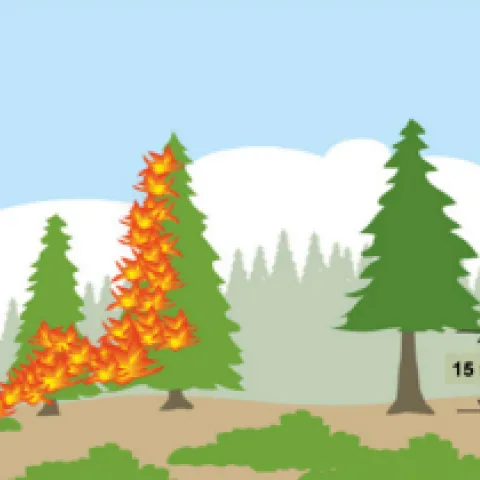
Why doesn’t fire kill some bacteria and fungi?

March 31, 2022
By Susan D Kocher
Reposted from the UC Riverside news Project examines microbes' role in greenhouse gas emissions Scientists have found microbes living in the charred soil that wildfires leave behind.
View Article
Primary Image
These are Ishai Zeldner's bee boxes in The Hive, Woodland. (Photo by Kathy Keatley Garvey)
Bug Squad: Article

The Beekeeper

March 30, 2022
By Kathy Keatley Garvey
Ishai Zeldner, a beekeeper turned businessman, would have been proud. Zeldner, who died in 2018 at age 71, would have been proud to see the family business he founded, Z Specialty Food, develop into a 20,000 square-foot facility at 1221 Harter Way, Woodland. It was his dream.
View Article