A Natural Solution for California's Herds: African Catfish Peptides

California's cattle producers and agricultural communities are all too familiar with the rising challenge of antibiotic resistance, making common bacterial infections harder to treat in livestock. But imagine a future where we could tackle these infections with a natural, powerful alternative. Our research points to just that: antimicrobial peptides (AMPs) found in African catfish.

We're really excited about these peptides because African catfish thrive in pathogen-rich freshwater, naturally producing these robust immune compounds in their skin mucus as a defense. This natural origin makes them highly appealing alternatives to synthetic drugs.

Predicted Safety and Potent Action

One of the most compelling aspects of these AMPs is their predicted safety for mammals. Our initial computer analyses suggest that various catfish AMPs are generally recognized as safe (GRAS). We predict they'll be absorbed in the human intestine without causing liver, brain, or heart toxicity. Furthermore, lab tests on a promising peptide, NACAP-II, confirmed it was non-hemolytic, meaning it didn't damage rabbit red blood cells—a strong indicator of its potential safety for mammalian cells.

Beyond safety, these peptides demonstrate effectiveness against problematic bacteria. One study revealed NACAP-II's strong activity against Extended-Spectrum Beta-Lactamase (ESBL)-producing Escherichia coli—a critical concern for both animal and human health due to its resistance to many common antibiotics. Another peptide, ACAP-IV, also showed antibacterial activity against E. coli and Staphylococcus aureus. We believe these AMPs work by directly disrupting bacterial cell membranes, a mechanism that makes it harder for bacteria to develop resistance compared to how they resist traditional antibiotics.
UCCE Siskiyou: Article

July - August 2021

July 8, 2021
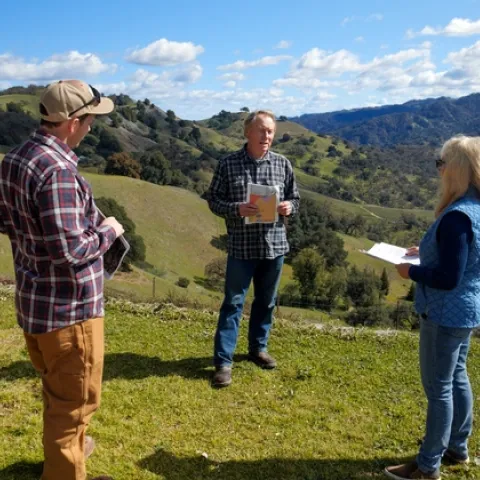
Upcoming Events 4-H State Leadership Conference State Field Day - Participant Highlights 4-H Record Book/Forms YQCA-Training 4-H Scholarship Siskiyou Golden Fair - Updates Forever 4-H Siskiyou County Endowment Siskiyou County Cattlemen's Association 2021 Annual Tour...
View Article
Primary Image
mike Shore
Topics in Subtropics: Article

Mike Shore Passes - Thanks For His Help

July 8, 2021
By Ben A Faber
People rise to the occasion all the time. Mike Shore was a good farmer who helped other farmers. If you had cherimoyas or sapotes or Meyer lemons from a small farm and didnt know how to pack and market them, he would jump in and do the work.
View Article
Primary Image
3 bright green poison oak leaflets on a stem with other leaves in the backgroun.
Pests in the Urban Landscape: Article

Poison Oak Resource Updated

July 8, 2021
By Belinda Messenger-Sikes
Poison oak is a common native plant in California, growing everywhere from oak woodlands to urban parks. Chances are, you or someone you know has suffered from a rash due to poison oak at some point. The best way to avoid exposure to poison oak is knowing how to identify it.
View Article
Primary Image
photos by Alex Russell
Under the Solano Sun: Article

Speeding up Backyard Composting One Day at a Time

July 7, 2021
Backyard composting doesn't have to be mysterious in the same way it doesn't have to stink. With a little attention and even less real knowledge, it's possible to have a place to throw kitchen scraps while building black gold to spread across the garden beds.
View Article

Beat the heat

July 7, 2021
By Wendy Powers
I went back to the office this week! My plant didn't survive the 16 months without a drink. Other than that, everything was intact.
View Article
Primary Image
An orbweaver snares a honey bee in its sticky web in a patch of Mexican sunflowers, Tithonia rotundifola, in Vacaville, Calif. (Photo by Kathy Keatley Garvey)
Bug Squad: Article

Catch of the Day

July 7, 2021
By Kathy Keatley Garvey
It's early morning and the spider is hungry. It snares a honey bee foraging for pollen and nectar in a patch of Mexican sunflowers (Tithonia rotundifola) in a Vacaville pollinator garden. The spider slides down the sticky web, kills its prey with a venomous bite, and begins to eat.
View Article
Primary Image
A screen shot of the online project, "The Academic Expedition," the work of doctoral students Olivia Winokur and Charlotte Ambrozek.
Entomology & Nematology News: Article

UC Davis Doctoral Candidates Develop and Create 'The Academic Expedition'

July 7, 2021
By Kathy Keatley Garvey
Academic outdoor educators receive comprehensive technical training in their fields, but often are not trained in leadership and communications skills "that aid in academic and personal success and well-being," say two UC Davis doctoral candidates enrolled in Professors for the Future (PFTF), a prog...
View Article