A Natural Solution for California's Herds: African Catfish Peptides

California's cattle producers and agricultural communities are all too familiar with the rising challenge of antibiotic resistance, making common bacterial infections harder to treat in livestock. But imagine a future where we could tackle these infections with a natural, powerful alternative. Our research points to just that: antimicrobial peptides (AMPs) found in African catfish.

We're really excited about these peptides because African catfish thrive in pathogen-rich freshwater, naturally producing these robust immune compounds in their skin mucus as a defense. This natural origin makes them highly appealing alternatives to synthetic drugs.

Predicted Safety and Potent Action

One of the most compelling aspects of these AMPs is their predicted safety for mammals. Our initial computer analyses suggest that various catfish AMPs are generally recognized as safe (GRAS). We predict they'll be absorbed in the human intestine without causing liver, brain, or heart toxicity. Furthermore, lab tests on a promising peptide, NACAP-II, confirmed it was non-hemolytic, meaning it didn't damage rabbit red blood cells—a strong indicator of its potential safety for mammalian cells.

Beyond safety, these peptides demonstrate effectiveness against problematic bacteria. One study revealed NACAP-II's strong activity against Extended-Spectrum Beta-Lactamase (ESBL)-producing Escherichia coli—a critical concern for both animal and human health due to its resistance to many common antibiotics. Another peptide, ACAP-IV, also showed antibacterial activity against E. coli and Staphylococcus aureus. We believe these AMPs work by directly disrupting bacterial cell membranes, a mechanism that makes it harder for bacteria to develop resistance compared to how they resist traditional antibiotics.
Primary Image
irrigATING CITRUS
Topics in Subtropics: Article

Water and Nutrient Program for Growers

October 16, 2020
By Ben A Faber
INTERACTIVE IRRIGATION MANAGEMENT TO REDUCE THE LEACHING OF NITROGEN IIMRLN PROGRAM The program purpose is to reduce the amount of nitrogen leached from farms with the goal of enhancing surface and groundwater quality Participants will be selected based on: potential for nitrogen leaching and proxi...
View Article
Primary Image
Appearance of water droplets "balled up" on water repellent soil (USFS, Wildland Fire in Ecosystems, Photo by DeBano, 1981)
The Real Dirt: Article

Hold Your Ground: Mitigating the Effects of Fire on Your Soil

October 16, 2020
I first heard the term hydrophobic soils on the local news after the Camp Fire ravaged the Ridge and Butte Creek Canyon. This potentially catastrophic natural phenomenon seems counterintuitive: soils which are damaged by the intense heat of fire become water repellent.
View Article
Primary Image
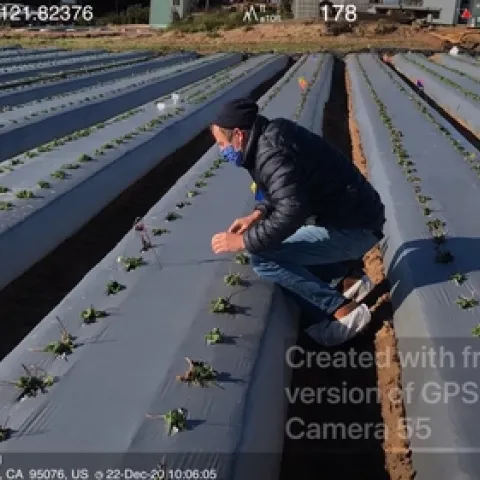
Hannah Lopez flying the Matrice: masked up!
IGIS: Article

IGIS Staff Update: Hannah Lopez

October 15, 2020
By Maggi Kelly
In February of 2020, IGIS welcomed a new student worker to the IGIS team. Hannah Lopez, an undergraduate at UC Berkeley majoring in Forestry and GIS, joined IGIS during the final semester of her senior year.
View Article
Nutrition Policy Institute News: Article

Wendi Gosliner receives grant to support increased procurement of California grown fruits, vegetables, and nuts in California state prisons

October 15, 2020
By Danielle Lee
Nutrition Policy Institute's Wendi Gosliner was awarded a $439,345 California Department of Food and Agriculture (CDFA) Specialty Crop Block Grant to partner with Impact Justice and ChangeLab Solutions to increase demand for California-grown fruits, vegetables and nuts in California Department of Co...
View Article
Primary Image
Signs of a predator. A tattered Buckeye butterfly, Junonia coenia, sipping nectar from a Mexican sunflower, Tithonia rotundifolia. (Photo by Kathy Keatley Garvey)

Buckeye Butterfly: Wanna Piece of Me?

October 14, 2020
By Kathy Keatley Garvey
Wanna piece of me? "Hey, Buckeye butterfly, you over there with chunks of a wing missing, yeah you, what happened?" "Well, it was like this. I was just fluttering around, looking for some good nectar, and a predator grabbed me. I don't know what it was. Maybe it was a praying mantis.
View Article