A Natural Solution for California's Herds: African Catfish Peptides

California's cattle producers and agricultural communities are all too familiar with the rising challenge of antibiotic resistance, making common bacterial infections harder to treat in livestock. But imagine a future where we could tackle these infections with a natural, powerful alternative. Our research points to just that: antimicrobial peptides (AMPs) found in African catfish.

We're really excited about these peptides because African catfish thrive in pathogen-rich freshwater, naturally producing these robust immune compounds in their skin mucus as a defense. This natural origin makes them highly appealing alternatives to synthetic drugs.

Predicted Safety and Potent Action

One of the most compelling aspects of these AMPs is their predicted safety for mammals. Our initial computer analyses suggest that various catfish AMPs are generally recognized as safe (GRAS). We predict they'll be absorbed in the human intestine without causing liver, brain, or heart toxicity. Furthermore, lab tests on a promising peptide, NACAP-II, confirmed it was non-hemolytic, meaning it didn't damage rabbit red blood cells—a strong indicator of its potential safety for mammalian cells.

Beyond safety, these peptides demonstrate effectiveness against problematic bacteria. One study revealed NACAP-II's strong activity against Extended-Spectrum Beta-Lactamase (ESBL)-producing Escherichia coli—a critical concern for both animal and human health due to its resistance to many common antibiotics. Another peptide, ACAP-IV, also showed antibacterial activity against E. coli and Staphylococcus aureus. We believe these AMPs work by directly disrupting bacterial cell membranes, a mechanism that makes it harder for bacteria to develop resistance compared to how they resist traditional antibiotics.

Primary Image
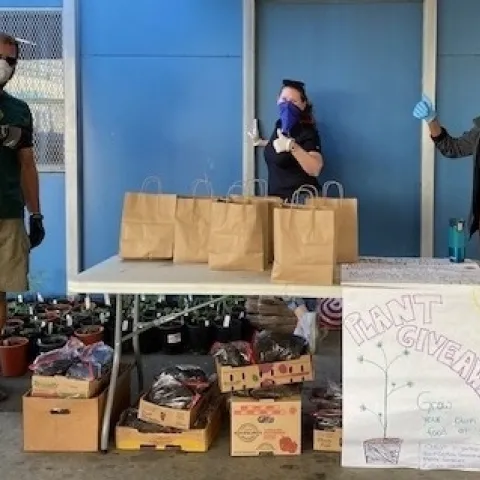
COVID194H
Placer/Nevada 4-H Blog: Article

Sparks for Placer County 4-H

May 1, 2020
Growing up in 4-H, having a friend in 4-H, having a parent who was in 4-H: these are all the precursors to a good story! I grew up in Sacramento County 4-H, where I was an active member in a few projects and passionate about 4-H Camp throughout high school.
View Article
Primary Image
small market
Healthy Central Sierra: Article

Supporting Farmers Markets in the Time of COVID-19

May 1, 2020
When California issued a statewide stay-at-home order to slow the spread of COVID-19 earlier this Spring, a handful of essential services were exempted from the order. Along with grocery stores and agricultural operations, farmers markets were included as essential sources of food.
View Article
Primary Image
weeds bordering avocado orchard
Topics in Subtropics: Article

Weed Control Videos

May 1, 2020
By Ben A Faber
Here are training videos on Weed Control Techniques. You may see a few familiar faces.
View Article
Primary Image
Elderberry flowers, Mike Flanner
The Real Dirt: Article

Elderberry

May 1, 2020
Gardeners looking for a drought-tolerant and highly disease-resistant native shrub might consider adding the blue elderberry (Sambucus cerulean also known as Sambucus Mexicana) to their landscape.
View Article
Primary Image
ss may 2020 kornfeld
UC Master Gardeners of San Mateo & San Francisco Counties: Article

Nasturtiums: Food for Birds and Bees and Thee

May 1, 2020
There are few plants as fine as the nasturtium, particularly coastside, where it practically grows itself and is often perennial. The entire plant is edible seeds, stems, leaves, and flowers. Pickling the seedpods makes "poor man's capers.
View Article