A Natural Solution for California's Herds: African Catfish Peptides

California's cattle producers and agricultural communities are all too familiar with the rising challenge of antibiotic resistance, making common bacterial infections harder to treat in livestock. But imagine a future where we could tackle these infections with a natural, powerful alternative. Our research points to just that: antimicrobial peptides (AMPs) found in African catfish.

We're really excited about these peptides because African catfish thrive in pathogen-rich freshwater, naturally producing these robust immune compounds in their skin mucus as a defense. This natural origin makes them highly appealing alternatives to synthetic drugs.

Predicted Safety and Potent Action

One of the most compelling aspects of these AMPs is their predicted safety for mammals. Our initial computer analyses suggest that various catfish AMPs are generally recognized as safe (GRAS). We predict they'll be absorbed in the human intestine without causing liver, brain, or heart toxicity. Furthermore, lab tests on a promising peptide, NACAP-II, confirmed it was non-hemolytic, meaning it didn't damage rabbit red blood cells—a strong indicator of its potential safety for mammalian cells.

Beyond safety, these peptides demonstrate effectiveness against problematic bacteria. One study revealed NACAP-II's strong activity against Extended-Spectrum Beta-Lactamase (ESBL)-producing Escherichia coli—a critical concern for both animal and human health due to its resistance to many common antibiotics. Another peptide, ACAP-IV, also showed antibacterial activity against E. coli and Staphylococcus aureus. We believe these AMPs work by directly disrupting bacterial cell membranes, a mechanism that makes it harder for bacteria to develop resistance compared to how they resist traditional antibiotics.
Primary Image
Gardening with Grandma!
UCCE Master Gardeners of San Bernardino County Blogs: Article

Coordinators Corner

April 28, 2020
By Margaret J O'neill
Finding Community in the Garden Gardens can mean so many things to people.
View Article
Primary Image
wear ppe
Lindcove Research and Extension Center News: Article

PPE in short supply for farm work during the COVID-19 crisis

April 28, 2020
By Pamela S Kan-Rice, Whitney B Brim-Deforest
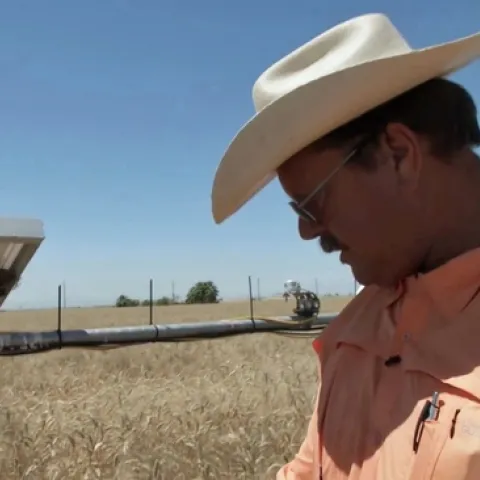
While most Californians are staying home to slow the spread of the novel coronavirus, California farmers, farmworkers and other agricultural professionals are out in the fields and packing houses working to produce food.
View Article
Tehama County: Article

May 2020

April 28, 2020
Hope today finds everyone safe and healthy.
View Article
Primary Image
3982
ANR Employee News: Article

Sierra Foothill REC seeks research proposals

April 27, 2020
By Pamela S Kan-Rice
The UC Sierra Foothill Research and Extension Center (SFREC) is soliciting proposals to support new and continuing research on rangeland and oak woodland ecology and management, beef cattle health, production and management, as well as related agricultural and natural resource themes important to Ca...
View Article
Primary Image
Lindcove REC maintains more than 300 different citrus selections and provides budwood to California nurserymen and growers at a minimal cost.
ANR Employee News: Article

Lindcove REC calls for research proposals

April 27, 2020
By Pamela S Kan-Rice
Lindcove Research & Extension Center (LREC), located in the foothills of Tulare County, has land, labor and facilities available for 2020/2021 research projects. The Research Advisory Committee reviews proposals and projects are evaluated based on scientific merit and regional need.
View Article
Glenn County: Article

Glenn County 4-H News Flash - April 27, 2020!

April 27, 2020
Quick Links: Market Animal Sale Options & Regulations Document: https://ucanr.edu/sites/glenn/files/324796.pdf Glenn County 4-H Virtual Showcase Information & Entry Survey Link: http://ceglenn.ucanr.
View Article
Primary Image
Emily Fairfax with a chewed tree, a signature sign of beaver activity.
The Confluence: Article

From being an engineer to researching nature’s engineers

April 27, 2020
By Faith Kearns. When I came face to face with beaver dams for the first time, I had what can only be described as a transformative experience, says Emily Fairfax, an assistant professor of environmental science and resource management at California State University, Channel Islands.
View Article
Primary Image
A praying mantis egg case, ootheca, on the tower of jewels, Echium wildpretii. (Photo by Kathy Keatley Garvey)
Bug Squad: Article

A Little Brown, Carefully Wrapped Package in the Garden

April 27, 2020
By Kathy Keatley Garvey
The predator and the prey... Or the predator-to-bee. Currently, honey bees are foraging on our tower of jewels, Echium wildpretii, in our family's pollinator garden in Vacaville, Calif. It's a veritable tower of bees.
View Article