A Natural Solution for California's Herds: African Catfish Peptides

California's cattle producers and agricultural communities are all too familiar with the rising challenge of antibiotic resistance, making common bacterial infections harder to treat in livestock. But imagine a future where we could tackle these infections with a natural, powerful alternative. Our research points to just that: antimicrobial peptides (AMPs) found in African catfish.

We're really excited about these peptides because African catfish thrive in pathogen-rich freshwater, naturally producing these robust immune compounds in their skin mucus as a defense. This natural origin makes them highly appealing alternatives to synthetic drugs.

Predicted Safety and Potent Action

One of the most compelling aspects of these AMPs is their predicted safety for mammals. Our initial computer analyses suggest that various catfish AMPs are generally recognized as safe (GRAS). We predict they'll be absorbed in the human intestine without causing liver, brain, or heart toxicity. Furthermore, lab tests on a promising peptide, NACAP-II, confirmed it was non-hemolytic, meaning it didn't damage rabbit red blood cells—a strong indicator of its potential safety for mammalian cells.

Beyond safety, these peptides demonstrate effectiveness against problematic bacteria. One study revealed NACAP-II's strong activity against Extended-Spectrum Beta-Lactamase (ESBL)-producing Escherichia coli—a critical concern for both animal and human health due to its resistance to many common antibiotics. Another peptide, ACAP-IV, also showed antibacterial activity against E. coli and Staphylococcus aureus. We believe these AMPs work by directly disrupting bacterial cell membranes, a mechanism that makes it harder for bacteria to develop resistance compared to how they resist traditional antibiotics.
Primary Image
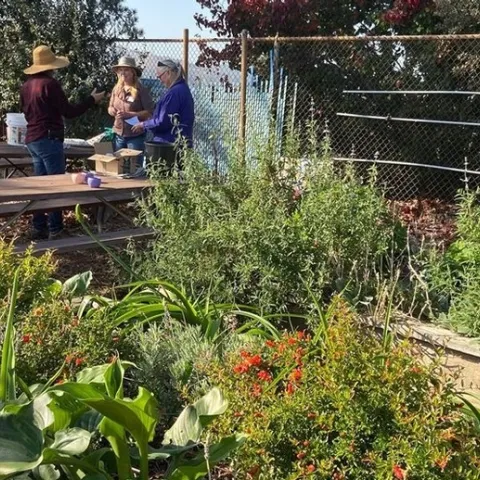
A praying mantis depositing an egg mass, ootheca. (Photo by Kathy Keatley Garvey)
Entomology & Nematology News: Article

Bohart Museum Open House: How to Raise Insects

November 6, 2019
By Kathy Keatley Garvey
Like to learn how to raise insects? Insects such as monarch butterflies, praying mantids and silkworm moths? The UC Davis Bohart Museum of Entomology will host an open house on Arthropod Husbandry: Raising Insects for Research and Fun from 1 to 4 p.m., Saturday, Nov.
View Article
Primary Image
photo by Michelle Davis
Under the Solano Sun: Article

Ginkgo, The Survivor

November 6, 2019
Many years ago, Esther Blanco, Mary Gabbard and I did a short presentation for our Master Gardener class on Ginkgo trees. Here is some of what I remember: Buy male trees. Female trees produce fruit, that while edible in a tiny amount, is toxic in minimally larger amounts, and it truly stinks.
View Article
Primary Image
plebia selwynq
Topics in Subtropics: Article

Invasive? Naturalized? Adventive?

November 6, 2019
By Ben A Faber
Species that move into new areas are known as adventive, but the word has several shades of meaning. Some scientists include deliberately introduced species, but others include only those that arrived on their own or by accident.
View Article
Kern County: Article

Kern UCCE/DWR Weekly Crop Water Use Report 11-04-2019

November 5, 2019
Please see below link to access "How To Use Weekly Crop Water Use (ET) Reports to Assist Farm Water Management" How To Use Weekly Crop Water Use Report Please see below link to access "Weekly ET Report 11-04-2019" ET Report 11-04-2019 Please see disclaimer link below: University of California Divisi...
View Article
Primary Image
Spraying a strawberry field. (Photo by Christian Nansen)
Bug Squad: Article

Hats Off to UC Davis Ag Entomologist and Student Computer Scientists

November 5, 2019
By Kathy Keatley Garvey
When UC Davis agricultural entomologist Christian Nansen wanted to develop a free smart phone application to help strawberry growers predict spray coverage to combat pests, he knew just where to go. The UC Davis Computer Science Club. And, now the three-year collaborative project is a reality.
View Article
Primary Image
A word cloud image of comments from ranchers. The larger the word, the more frequently it appeared in comments.
Ranching in the Sierra Foothills: Article

Public Safety Power Shutoffs - Preliminary Results from Rancher Survey

November 5, 2019
By Daniel K Macon
Between PG&E's public safety power shutoffs and a lack of precipitation, October was an interesting month for foothill ranchers. Many areas received a germinating rainfall in mid-September; most of that new grass withered in an October that saw only 0.02 inches of rain in Auburn.
View Article
ANR Contracts & Grants Updates: Article

SESYNC to Host Free Workshop:

November 5, 2019
By Kathleen P Nolan
Dear Colleagues, The National Socio-Environmental Synthesis Center (SESYNC) invites applications from a diverse array of scientists for a three-day workshop in January 2020 focused on how National Ecological Observatory Network (NEON) Airborne Observation Platform (AOP) data could be used in socio-e...
View Article