A Natural Solution for California's Herds: African Catfish Peptides

California's cattle producers and agricultural communities are all too familiar with the rising challenge of antibiotic resistance, making common bacterial infections harder to treat in livestock. But imagine a future where we could tackle these infections with a natural, powerful alternative. Our research points to just that: antimicrobial peptides (AMPs) found in African catfish.

We're really excited about these peptides because African catfish thrive in pathogen-rich freshwater, naturally producing these robust immune compounds in their skin mucus as a defense. This natural origin makes them highly appealing alternatives to synthetic drugs.

Predicted Safety and Potent Action

One of the most compelling aspects of these AMPs is their predicted safety for mammals. Our initial computer analyses suggest that various catfish AMPs are generally recognized as safe (GRAS). We predict they'll be absorbed in the human intestine without causing liver, brain, or heart toxicity. Furthermore, lab tests on a promising peptide, NACAP-II, confirmed it was non-hemolytic, meaning it didn't damage rabbit red blood cells—a strong indicator of its potential safety for mammalian cells.

Beyond safety, these peptides demonstrate effectiveness against problematic bacteria. One study revealed NACAP-II's strong activity against Extended-Spectrum Beta-Lactamase (ESBL)-producing Escherichia coli—a critical concern for both animal and human health due to its resistance to many common antibiotics. Another peptide, ACAP-IV, also showed antibacterial activity against E. coli and Staphylococcus aureus. We believe these AMPs work by directly disrupting bacterial cell membranes, a mechanism that makes it harder for bacteria to develop resistance compared to how they resist traditional antibiotics.
Blog - Forest Research and Outreach : Article

Grazing for fire fuels management

October 1, 2019
By Susan D Kocher
Reposted from the UCANR Knowledge Stream Catastrophic wildfires are becoming more frequent, more intense and more destructive in California.
View Article
Primary Image
The last of this season's elderberries were hanging on the plants during the Elderberry Field Day Sept. 17.
Food Blog: Article

California elderberries have rich benefits for farms and diets

October 1, 2019
By Jeannette Warnert
Native California elderberries can be found at the intersection of sustainable farming, super nutrition and economic viability. Naturally drought tolerant, flavorful and packed with nutrients, they are capturing the interest of farmers, health-conscious consumers and scientists.
View Article
Primary Image
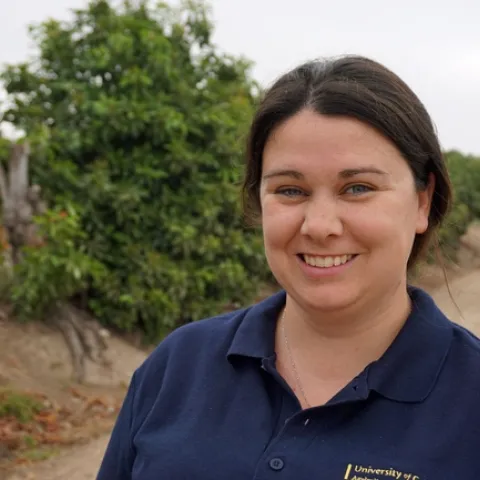
Cindy Kron
ANR Employee News: Article

Names in the News

September 30, 2019
By Pamela S Kan-Rice
Kron named area IPM advisor for North Coast Cindy Kron has joined UC Cooperative Extension as areawide IPM advisor for Sonoma, Napa, Mendocino and Lake counties.
View Article
UC Weed Science (weed control, management, ecology, and minutia): Article

Summer Annual Weeds

September 30, 2019
By Chris J McDonald
As the summer heat is finally nearing its end, and its officially fall on the calendar, there unfortunately is a new crop of weeds flowering right now. Some of our summer annuls have started to go to seed, others are just about ready, and others are already starting to senesce.
View Article
Primary Image
Adult Caenorhabditis elegans. Wikipedia describes it as "a free-living, transparent nematode, about 1mm in length, that lives in temperature soil environments." (Courtesy of Wikipedia)

Plant Nematologist Nathan Schroeder: 'Endless Worms Most Beautiful'

September 30, 2019
By Kathy Keatley Garvey
If you're interested in nematodes--also called "roundworms"--then you'll want to be around when plant nematologist Nathan Schroeder, associate professor of crop sciences at the University of Illinois at Urbana-Champaign, presents a seminar on Wednesday, Oct.
View Article
ANR News Blog: Article

ANR in the news September 16-30

September 30, 2019
By Pamela S Kan-Rice
The Camp Fire started on federal land. This rule would make PG&E clean up its power lines (Sac Bee) Emily Cadei, Sept.
View Article
Primary Image
Christian Nansen, guest editor for special edition of journal Remote Sensing. (Photo by Kathy Keatley Garvey)
Entomology & Nematology News: Article

Christian Nansen: Call for Articles on Remote Sensing

September 30, 2019
By Kathy Keatley Garvey
UC Davis agricultural entomologist Christian Nansen, the newly selected guest editor of a special issue of the journal Remote Sensing, has issued a call for contributions.
View Article