A Natural Solution for California's Herds: African Catfish Peptides

California's cattle producers and agricultural communities are all too familiar with the rising challenge of antibiotic resistance, making common bacterial infections harder to treat in livestock. But imagine a future where we could tackle these infections with a natural, powerful alternative. Our research points to just that: antimicrobial peptides (AMPs) found in African catfish.

We're really excited about these peptides because African catfish thrive in pathogen-rich freshwater, naturally producing these robust immune compounds in their skin mucus as a defense. This natural origin makes them highly appealing alternatives to synthetic drugs.

Predicted Safety and Potent Action

One of the most compelling aspects of these AMPs is their predicted safety for mammals. Our initial computer analyses suggest that various catfish AMPs are generally recognized as safe (GRAS). We predict they'll be absorbed in the human intestine without causing liver, brain, or heart toxicity. Furthermore, lab tests on a promising peptide, NACAP-II, confirmed it was non-hemolytic, meaning it didn't damage rabbit red blood cells—a strong indicator of its potential safety for mammalian cells.

Beyond safety, these peptides demonstrate effectiveness against problematic bacteria. One study revealed NACAP-II's strong activity against Extended-Spectrum Beta-Lactamase (ESBL)-producing Escherichia coli—a critical concern for both animal and human health due to its resistance to many common antibiotics. Another peptide, ACAP-IV, also showed antibacterial activity against E. coli and Staphylococcus aureus. We believe these AMPs work by directly disrupting bacterial cell membranes, a mechanism that makes it harder for bacteria to develop resistance compared to how they resist traditional antibiotics.
Primary Image
Hodge Black
ANR Employee News: Article

In memoriam: Hodge Black

August 27, 2019
By Pamela S Kan-Rice
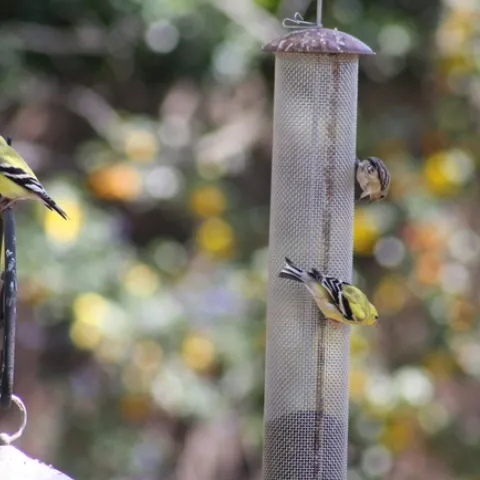
James Hodge Black, UC Cooperative Extension advisor emeritus, passed away Aug. 10, 2019, at the age of 83 in Colorado Springs, Colo. Black earned his B.S. in general agriculture in 1957 and his M.S. in entomology in 1961 from the University of Arkansas.
View Article
Primary Image
hlb map

Where Is HLB? Where is ACP? In California?

August 27, 2019
By Ben A Faber
The Asian Citrus Psyllid Distribution and Management Site provides you with a zoomable map to view psyllids, HLB, Psyllid Management areas, parasite releases and management information.
View Article
Primary Image
First in series: A male European wool carder bee (Anthidium manicatum) targets a female foraging on a snapdragon. (Photo by Kathy Keatley Garvey)
Bug Squad: Article

Love Is in the Air...er...in the Snapdragons

August 26, 2019
By Kathy Keatley Garvey
Love is in the air. Or, more specifically, in the snapdragons. If you maintain a pollinator garden, you've probably seen female European wool carder bees (Anthidium manicatum) nectaring on flowers or scraping or carding fuzz for their nests.
View Article
Primary Image
A varroa mite on a drone pupa. (Photo by Kathy Keatley Garvey)
Entomology & Nematology News: Article

Upcoming UC Davis Bee Course: How to Manage Varroa Mites

August 26, 2019
By Kathy Keatley Garvey
If you're a beekeeper, you not only keep bees in your hive, but unfortunately, varroa mites. This major pest of honey bees is considered Public Enemy No. 1 in the beekeeping world.
View Article
UCCE Siskiyou: Article

Sept-Oct 2019

August 26, 2019
Upcoming Events Northern Area Youth Summit National 4-H Week 2019 Citizenship Washington Focus & Leadership Washington Focus Wilderness Experience Club Treasurer's Club/County/State Record Book Competitions New Year Enrollment State Fashion Revue...
View Article
ANR Employee News: Article

Academics sought to serve on Program Council

August 26, 2019
By Pamela S Kan-Rice
Academic Assembly Council is seeking self-nominations to serve on the ANR Program Council. The ANR Program Council advises the Vice President on Division-wide planning and delivery of programs and develops recommendations for allocation of Division resources.
View Article
Primary Image
A blue oak stands in a vineyard. The bat echolocation microphone and yellow sticky card (to sample insects) at the top of the telescoping pole are attached to a vine post at the edge of the tree canopy.
Green Blog: Article

Oaks in vineyards a ‘win-win’ for bats and growers

August 26, 2019
By Pamela S Kan-Rice
Californians love their oak trees. During vineyard development, Central Coast grape growers often feel compelled to leave an old iconic oak standing, even if it ends up right in the middle of their vineyard.
View Article
Primary Image
Pollinators-in-your-Backyard poster
The Stanislaus Sprout: Article

September 5, 2019 Pollinator Event

August 26, 2019
By Anne E Schellman
Honey bees get a lot of press, but they aren't the only pollinators in our gardens and landscapes. California is home to over 1600 species of native bees, and many can be found in your backyard. In addition to native bees, there are also butterflies, moths, beetles, flies, and other pollinators.
View Article
Primary Image
CASI’s Jeff Mitchell delivering presentation on strip-tillage in CA at the 2019 National Strip-till Farmer Association’s annual meeting in Peoria, IL on August 2, 2019
Conservation Agriculture: Article

Changing the production landscape with smarter strip-till practices

August 26, 2019
By Jeffrey P Mitchell
Presentation by Jeff Mitchell at the National Strip-Till Farmer Association Conference Peoria, IL August 2, 2019 A You Tube video of the presentation that CASI's Jeff Mitchell made on the evolution of strip-tillage in California cropping systems may be viewed at https://www.striptillfarmer.
View Article