A Natural Solution for California's Herds: African Catfish Peptides

California's cattle producers and agricultural communities are all too familiar with the rising challenge of antibiotic resistance, making common bacterial infections harder to treat in livestock. But imagine a future where we could tackle these infections with a natural, powerful alternative. Our research points to just that: antimicrobial peptides (AMPs) found in African catfish.

We're really excited about these peptides because African catfish thrive in pathogen-rich freshwater, naturally producing these robust immune compounds in their skin mucus as a defense. This natural origin makes them highly appealing alternatives to synthetic drugs.

Predicted Safety and Potent Action

One of the most compelling aspects of these AMPs is their predicted safety for mammals. Our initial computer analyses suggest that various catfish AMPs are generally recognized as safe (GRAS). We predict they'll be absorbed in the human intestine without causing liver, brain, or heart toxicity. Furthermore, lab tests on a promising peptide, NACAP-II, confirmed it was non-hemolytic, meaning it didn't damage rabbit red blood cells—a strong indicator of its potential safety for mammalian cells.

Beyond safety, these peptides demonstrate effectiveness against problematic bacteria. One study revealed NACAP-II's strong activity against Extended-Spectrum Beta-Lactamase (ESBL)-producing Escherichia coli—a critical concern for both animal and human health due to its resistance to many common antibiotics. Another peptide, ACAP-IV, also showed antibacterial activity against E. coli and Staphylococcus aureus. We believe these AMPs work by directly disrupting bacterial cell membranes, a mechanism that makes it harder for bacteria to develop resistance compared to how they resist traditional antibiotics.
Primary Image
RR FLIER Save the date
California Naturalist: Article

Save the Date!

August 30, 2018
Save the Date!California Naturalist Program Regional Rendezvous October 28, 2018 at the Miners Foundry Cultural Center in Nevada City...
View Article
Primary Image
CASI's John Diener of Five Points to be featured in "Stories of the Soil" video by Cool Planet and the Future of Agriculture Podcast with Tim Hammerich!
Conservation Agriculture: Article

CASI's John Diener of Five Points to be featured in

August 30, 2018
By Jeffrey P Mitchell
August 29, 2018 John Diener of Red Rock Ranch in Five Points, CA was extensively interviewed at his farm on August 29th by a video group from Cool Planet and the Future of Agriculture Podcast about his long-term soil care practices and experiences.
View Article
Fresno County 4-H: Article

August-September 2018 Guidelines

August 30, 2018
In This Edition: Kicking off the 4-H Year 2018/2019 Officer/Leadership Training DaySeptember 8 Pg. 2 4-H Achievement Night September 15 Pg. 3 Fresno County 4-H Leaders Council & Committee Mtgs. -Pg. 3 Attention 4-H TeensPg. 4 CCLS (Community Club Leaders) - Need to Know- Pg.
View Article
ANR Contracts & Grants Updates: Article

ANR ADVISE$

August 30, 2018
By Kathleen P Nolan
Dear Colleagues, In today's competitive funding extramural environment, research is shifting to teams. Coordinated teams of investigators with diverse skills and knowledge must integrate their work across disciplines to solve complex, multi-factorial social problems with multiple causes.
View Article
ANR Adventures: Article

Communicating is more than just fun facts

August 29, 2018
By Wendy Powers
It's time for more fun facts: Almonds represent approximately 29% of ag receipts in Stanislaus County and dairy brings in 18% Mechanical thinning of stone fruit translates to an estimated $1400/acre profit Nutria, a rodent pest, is a force to be reckoned with in California.
View Article
Primary Image
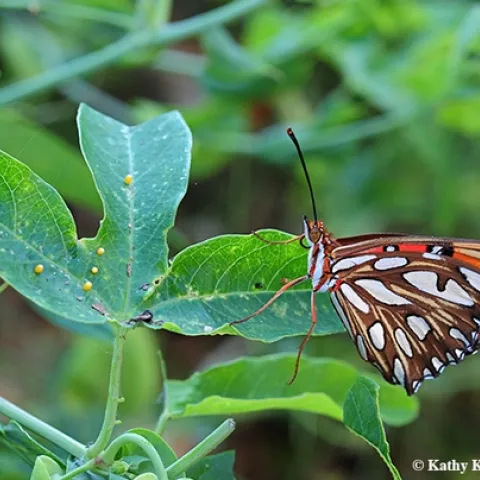
Gulf Fritillaries (Agraulis vanillae)on their host plant, Passiflora, doing what nature intended. At the far right is a Gulf Frit caterpillar. (Photo by Kathy Keatley Garvey)
Bug Squad: Article

A Two-Headed Butterfly?

August 29, 2018
By Kathy Keatley Garvey
There's an old joke circulating among entomologists about excited novices contacting them about finding a "two-headed butterfly." Sounds like National Enquirer stuff, right? Wrong. Just two butterflies mating.
View Article