A Natural Solution for California's Herds: African Catfish Peptides

California's cattle producers and agricultural communities are all too familiar with the rising challenge of antibiotic resistance, making common bacterial infections harder to treat in livestock. But imagine a future where we could tackle these infections with a natural, powerful alternative. Our research points to just that: antimicrobial peptides (AMPs) found in African catfish.

We're really excited about these peptides because African catfish thrive in pathogen-rich freshwater, naturally producing these robust immune compounds in their skin mucus as a defense. This natural origin makes them highly appealing alternatives to synthetic drugs.

Predicted Safety and Potent Action

One of the most compelling aspects of these AMPs is their predicted safety for mammals. Our initial computer analyses suggest that various catfish AMPs are generally recognized as safe (GRAS). We predict they'll be absorbed in the human intestine without causing liver, brain, or heart toxicity. Furthermore, lab tests on a promising peptide, NACAP-II, confirmed it was non-hemolytic, meaning it didn't damage rabbit red blood cells—a strong indicator of its potential safety for mammalian cells.

Beyond safety, these peptides demonstrate effectiveness against problematic bacteria. One study revealed NACAP-II's strong activity against Extended-Spectrum Beta-Lactamase (ESBL)-producing Escherichia coli—a critical concern for both animal and human health due to its resistance to many common antibiotics. Another peptide, ACAP-IV, also showed antibacterial activity against E. coli and Staphylococcus aureus. We believe these AMPs work by directly disrupting bacterial cell membranes, a mechanism that makes it harder for bacteria to develop resistance compared to how they resist traditional antibiotics.
Primary Image
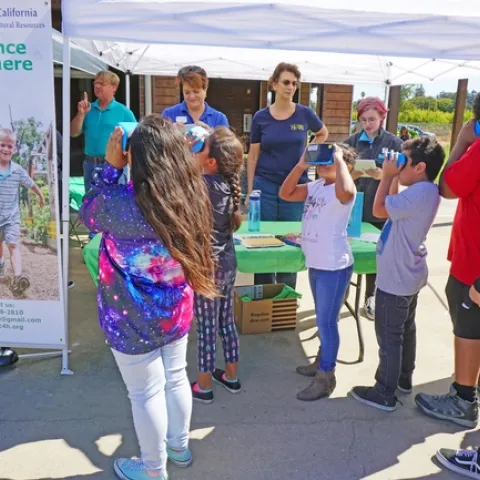
The California Naturalist training involves both classroom and field sessions.
ANR News Blog: Article

Opportunity knocks for aspiring naturalists in California

August 17, 2018
By Jeannette Warnert
The California Naturalist program will be offered in an eight-day immersion course in Cambria this month, and in a slower-paced eight-week program that starts in September in San Luis Obispo, reported Michele Roest in the San Luis Obispo Tribune.
View Article
Cooperative Extension, Sutter-Yuba Counties: Article

Rice Notes - August, 2018

August 17, 2018
UCCE Rice Field Day 2018 UCCE Rice Yield Contest New Watergrass Species: Be on the lookout! Testing for Suspected Herbicide Resistance Management of stem rot...
View Article
ANR News Blog: Article

August 2018 News Clips 8/1-8/15

August 16, 2018
By Pamela S Kan-Rice
UC: Tariffs could cost fruit, nut industries over $3 billion (Farm Press) Aug. 15 A new report released by the University of California Agriculture and Natural Resources' Agricultural Issues Center estimates the higher tariffs could cost major U.S. fruit and nut industries $2.
View Article
Colusa County: Article

UC IPM Breakfast tomorrow

August 16, 2018
August IPM Breakfast Meeting Yuba-Sutter-Colusa Counties Friday, August 17th, 2018 7:30am 9:00am IHOP Restaurant, 1310 Franklin Rd, Yuba City, CA (No-host breakfast) Join Area IPM Advisor Emily Symmes and Sacramento Valley Orchard Systems Farm Advisors Janine Hasey and Franz Niederholzer to discuss...
View Article
Primary Image
Logo
UC Dry Bean Blog: Article

New UC IPM Guidelines for Dry Beans

August 16, 2018
By Rachael Long
The Insect and Mite sections of the UC IPM Pest Management Guidelines for Dry Beans have been recently revised and updated and are now available online at: UC IPM Dry Beans Pest Management Guidelines. Authors include UCCE Farm Advisor Rachael Long and UC IPM Advisor Pete Goodell (emeritus).
View Article