A Natural Solution for California's Herds: African Catfish Peptides

California's cattle producers and agricultural communities are all too familiar with the rising challenge of antibiotic resistance, making common bacterial infections harder to treat in livestock. But imagine a future where we could tackle these infections with a natural, powerful alternative. Our research points to just that: antimicrobial peptides (AMPs) found in African catfish.

We're really excited about these peptides because African catfish thrive in pathogen-rich freshwater, naturally producing these robust immune compounds in their skin mucus as a defense. This natural origin makes them highly appealing alternatives to synthetic drugs.

Predicted Safety and Potent Action

One of the most compelling aspects of these AMPs is their predicted safety for mammals. Our initial computer analyses suggest that various catfish AMPs are generally recognized as safe (GRAS). We predict they'll be absorbed in the human intestine without causing liver, brain, or heart toxicity. Furthermore, lab tests on a promising peptide, NACAP-II, confirmed it was non-hemolytic, meaning it didn't damage rabbit red blood cells—a strong indicator of its potential safety for mammalian cells.

Beyond safety, these peptides demonstrate effectiveness against problematic bacteria. One study revealed NACAP-II's strong activity against Extended-Spectrum Beta-Lactamase (ESBL)-producing Escherichia coli—a critical concern for both animal and human health due to its resistance to many common antibiotics. Another peptide, ACAP-IV, also showed antibacterial activity against E. coli and Staphylococcus aureus. We believe these AMPs work by directly disrupting bacterial cell membranes, a mechanism that makes it harder for bacteria to develop resistance compared to how they resist traditional antibiotics.

Primary Image
Fig 1. Large crabgrass. (Credit: Clyde Elmore)

Managing Weedy Grasses

June 20, 2018
By John A Roncoroni
[From the Spring issue of the UC IPM Retail Nursery & Garden Center News] I hate crabgrass! is a common lament I've heard from residents during my 35 years as a UCCE Weed Science Farm Advisor.
View Article
Primary Image
DSCF1051
Small and Organic Farm Advisor: Article

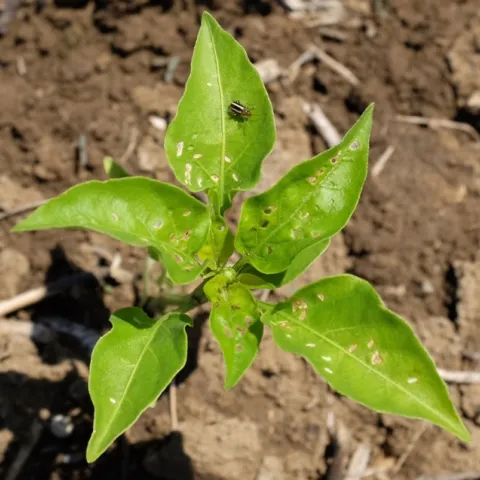
Large flea beetles are abundant this spring and may surprise you

June 20, 2018
By Margaret G Lloyd
Flea beetles have been abundant this spring and have been a surprise to many because larger genera of flea beetles and resulting larger holes have been present. The stable, warm spring with few heat waves has been favorable to their development.
View Article
Primary Image
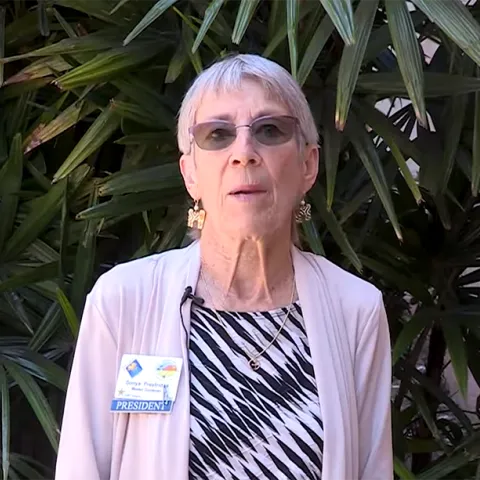
Master Gardener President
You See CE: Article

The Master Gardener Experience

June 20, 2018
By Leah M Taylor
What It's Like To Go Through The UC Master Gardener Program     Cooperative Extension in San Diego CountyEvery county in the state of California has a Cooperative Extension office that focuses it's research, education and outreach on issues affecting residents in their respective counties…
View Article
Primary Image
avocado fruit
Topics in Subtropics: Article

A More Water Efficient Avocado?

June 20, 2018
By Ben A Faber
Here's a pretty technical report of water efficiency in avocado - the amount of water it takes to make fruit. It looks like there might be some varieties that could produce more fruit with less water.
View Article
Primary Image
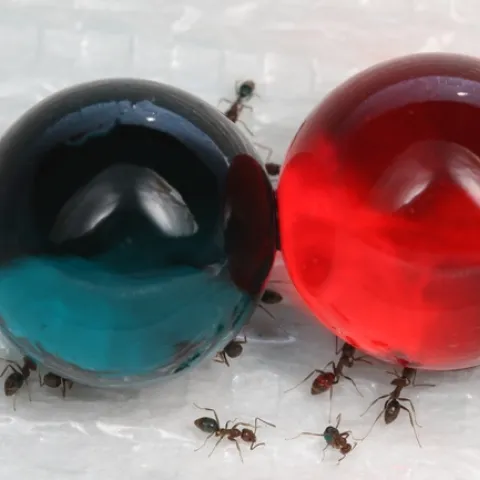
Fig 1. Argentine ants feeding on green or red hydrogels to demonstrate liquid bait uptake.

Using Seaweed to Kill Argentine Ants

June 19, 2018
By Anne E Schellman
[From the Spring issue of the UC IPM Green Bulletin] Argentine ants can be a damaging ant pest species in both agricultural and urban environments in California. Outdoors, they disrupt biological control by tending honeydew-producing pests and protecting them from natural enemies.
View Article
Primary Image
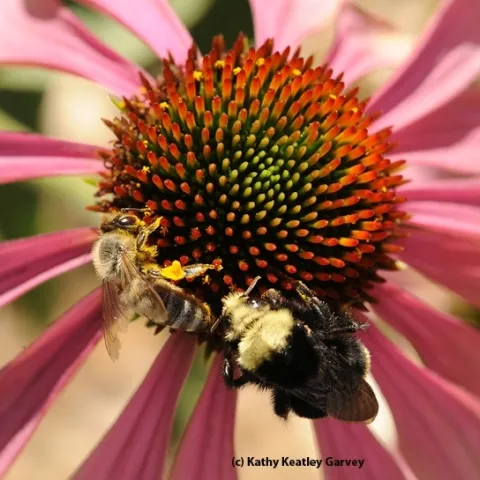
A honey bee and bumble bee share a coneflower in the Häagen-Dazs Honey Bee Haven. This is a yellow-faced bumble bee, Bombus vosnesenskii. (Photo by Kathy Keatley Garvey)
Bug Squad: Article

National Pollinator Week: Visit the UC Davis Bee Garden

June 19, 2018
By Kathy Keatley Garvey
Let's celebrate National Pollinator Week. And what better time for the UC Davis Department of Entomology and Nematology to host an open house than during National Pollinator Week? It's from 11 a.m. to 2 p.m.
View Article
Kern County: Article

Kern UCCE/DWR Weekly Crop Water Use Report 06-18-2018

June 19, 2018
Please see below link to access "How To Use Weekly Crop Water Use (ET) Reports to Assist Farm Water Management" How To Use Weekly Crop Water Use Report Please see below link to access "Weekly ET Report 06-18-18" ET Report 6-18-18 Please see disclaimer link below: University of California Division of...
View Article