A Natural Solution for California's Herds: African Catfish Peptides

California's cattle producers and agricultural communities are all too familiar with the rising challenge of antibiotic resistance, making common bacterial infections harder to treat in livestock. But imagine a future where we could tackle these infections with a natural, powerful alternative. Our research points to just that: antimicrobial peptides (AMPs) found in African catfish.

We're really excited about these peptides because African catfish thrive in pathogen-rich freshwater, naturally producing these robust immune compounds in their skin mucus as a defense. This natural origin makes them highly appealing alternatives to synthetic drugs.

Predicted Safety and Potent Action

One of the most compelling aspects of these AMPs is their predicted safety for mammals. Our initial computer analyses suggest that various catfish AMPs are generally recognized as safe (GRAS). We predict they'll be absorbed in the human intestine without causing liver, brain, or heart toxicity. Furthermore, lab tests on a promising peptide, NACAP-II, confirmed it was non-hemolytic, meaning it didn't damage rabbit red blood cells—a strong indicator of its potential safety for mammalian cells.

Beyond safety, these peptides demonstrate effectiveness against problematic bacteria. One study revealed NACAP-II's strong activity against Extended-Spectrum Beta-Lactamase (ESBL)-producing Escherichia coli—a critical concern for both animal and human health due to its resistance to many common antibiotics. Another peptide, ACAP-IV, also showed antibacterial activity against E. coli and Staphylococcus aureus. We believe these AMPs work by directly disrupting bacterial cell membranes, a mechanism that makes it harder for bacteria to develop resistance compared to how they resist traditional antibiotics.
Primary Image
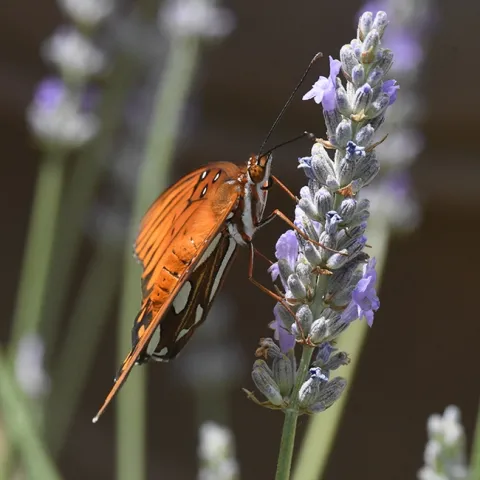
Gulf Fritillary (Agraulis vanillae) soars over a fence to lay its eggs on its host plant, the passionflower vine. (Photo by Kathy Keatley Garvey)
Bug Squad: Article

Gulf Fritillaries: Passion Makes Perfect

April 12, 2018
By Kathy Keatley Garvey
No wall can separate a Gulf Fritillary from its host plant, the passionflower vine (Passiflora). The Gulf Frit Agraulis vanillae), an orangish-reddish butterfly of the family Nymphalidae, fluttered over our six-foot fence, heading straight for the passionflower vine.
View Article
Primary Image
ACP adult and nymph
Topics in Subtropics: Article

ACP Monitoring Class

April 12, 2018
By Ben A Faber
This note from Cressida Silvers, either go to Temecula or maybe do a more local version of the training: Good afternoon, The upcoming CAPCA meeting (see below for details) in Temecula is a 2-day event (12 CEUs), including a workshop and field visit focused on detecting live ACP in citrus trees, and...
View Article
Tulare County Cooperative Extension: Article

Citrus Thrips Field Day at Lindcove

April 12, 2018
Citrus Thrips Field Day at Lindcove Tuesday, May 1, 2018 9:30 - 11:00 AM Lindcove Research and Extension Center 22963 Carson Ave.
View Article
Cooperative Extension, Sutter-Yuba Counties: Article

The New Ranch Update - April, 2018

April 12, 2018
Another Strange Year New Forage Varieties New Publication Outlines Livestock Protection Tools Wool Testing Workshop Calendar...
View Article
Primary Image
IMG 1355
Under the Solano Sun: Article

Saved by the Wildflowers

April 12, 2018
My husband and I tackled the Blue Ridge Loop Trail above Lake Berryessa in mid-March. He had been on it once before and had shown me beautiful pictures looking down on the lake.
View Article
UC Master Gardeners of Solano County: Article

Spring 2018

April 12, 2018
Turkey Tail Fungus-An Intriguingly Beautiful Pernicious Invader Preservation Pointers-Green is Good in Asian Food UCCE Master Gardener Garden Tour Seeds or Starts? Inviting Butterflies to Your Garden Water Saving Gardening-Drought or No Drought Garden Journals Got Weeds?
View Article
Primary Image
white rot fungi
Topics in Subtropics: Article

Oil and Fungal Evolution?

April 12, 2018
By Ben A Faber
Like most of us, trees don't want to be eaten alive. To prevent this gruesome fate, they developed extremely tough cell walls around 400 million years ago. For millions of years, nothing could break down lignin, the strongest substance in those cell walls.
View Article
Primary Image
a
UC Weed Science (weed control, management, ecology, and minutia): Article

Was That Weed?

April 12, 2018
By Ben A Faber
Occasionally plants show up in our office for identification and no one in the office knows what it is. So it's sent off to others who might know. This was the case of a perennial amaranth, also called goosefoot for some reason. This is Chenopodium californicum, also known as Blitum californicum.
View Article
ANR Adventures: Article

Statewide conference is coming to a close

April 11, 2018
By Wendy Powers
So far, so good in Ontario. I have some homework as a result of the PAC meeting that was held on Monday, but it was something I really needed to do anyway. My responsibilities' for the statewide conference 2018 are over.
View Article