A Natural Solution for California's Herds: African Catfish Peptides

California's cattle producers and agricultural communities are all too familiar with the rising challenge of antibiotic resistance, making common bacterial infections harder to treat in livestock. But imagine a future where we could tackle these infections with a natural, powerful alternative. Our research points to just that: antimicrobial peptides (AMPs) found in African catfish.

We're really excited about these peptides because African catfish thrive in pathogen-rich freshwater, naturally producing these robust immune compounds in their skin mucus as a defense. This natural origin makes them highly appealing alternatives to synthetic drugs.

Predicted Safety and Potent Action

One of the most compelling aspects of these AMPs is their predicted safety for mammals. Our initial computer analyses suggest that various catfish AMPs are generally recognized as safe (GRAS). We predict they'll be absorbed in the human intestine without causing liver, brain, or heart toxicity. Furthermore, lab tests on a promising peptide, NACAP-II, confirmed it was non-hemolytic, meaning it didn't damage rabbit red blood cells—a strong indicator of its potential safety for mammalian cells.

Beyond safety, these peptides demonstrate effectiveness against problematic bacteria. One study revealed NACAP-II's strong activity against Extended-Spectrum Beta-Lactamase (ESBL)-producing Escherichia coli—a critical concern for both animal and human health due to its resistance to many common antibiotics. Another peptide, ACAP-IV, also showed antibacterial activity against E. coli and Staphylococcus aureus. We believe these AMPs work by directly disrupting bacterial cell membranes, a mechanism that makes it harder for bacteria to develop resistance compared to how they resist traditional antibiotics.
Primary Image
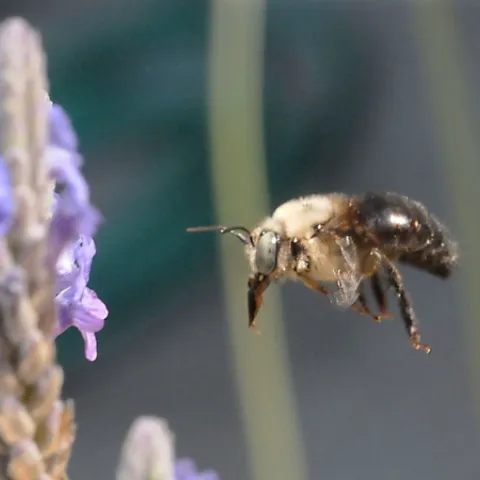
CAUGHT IN FLIGHT, a male carpenter bee heads for the lavender. (Photo by Kathy Keatley Garvey)
Bug Squad: Article

To Catch a Carpenter Bee

June 3, 2009
By Kathy Keatley Garvey
To catch a carpenter bee... The carpenter bees (Xylocopa tabaniformis) that nectar the sage, lavender, catmint and coral bells in our bee friendly garden move fast. How fast? As fast as a buzz. They buzz into a blur and then back into a buzz. Oh, but there are ways to capture their images.
View Article
Primary Image
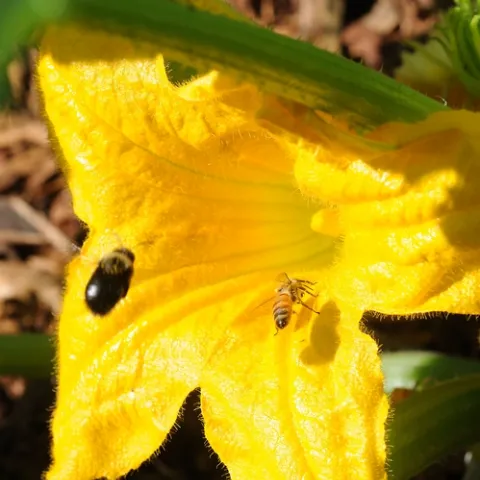
A CARPENTER BEE and a honey bee head for the same squash blossom. (Photo by Kathy Keatley Garvey)
Bug Squad: Article

Victory in the Garden

June 2, 2009
By Kathy Keatley Garvey
If you like squash, you have a bee to thank. Without bees, no pollination. Without pollination, no squash. Honey bees in California pollinate some 100 agricultural crops, including fruits, nuts and vegetables. One of them is squash.
View Article
Primary Image
'THE FACE OF DARWIN,' a ceramic mosaic created in a freshman seminar at UC Davis in commemoration of Darwin's 200th birthday anniversary, shows the organisms he studied and the secret notes he harbored. (Photo courtesy of Diane Ullman)
Bug Squad: Article

The Face of Darwin

June 1, 2009
By Kathy Keatley Garvey
Look closely at Charles Darwin's ceramic face. You'll see selections from his secret notebooks and images of organisms that most influenced his scientific studies. His beard is peppered with moths. You'll also find barnacles, iguanas, finches, orchids and other creatures on his face.
View Article
Primary Image
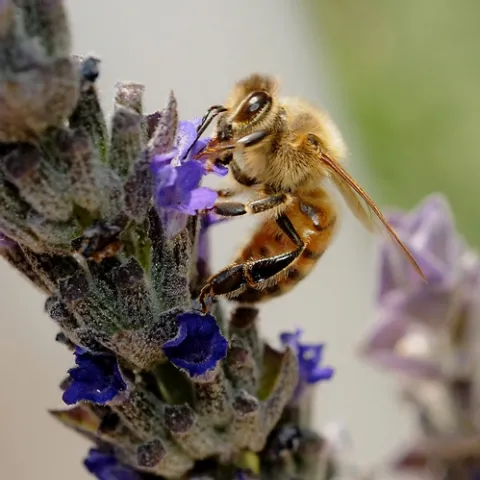
HONEY BEE nectaring on lavender. (Photo by Kathy Keatley Garvey)
Bug Squad: Article

All Things Lavender

May 29, 2009
By Kathy Keatley Garvey
A field of dreams, for a honey bee, almost certainly would be a field of lavender. Call it what you want, but if a bee could talk, it would probably be "lovely lavender.
View Article
Primary Image
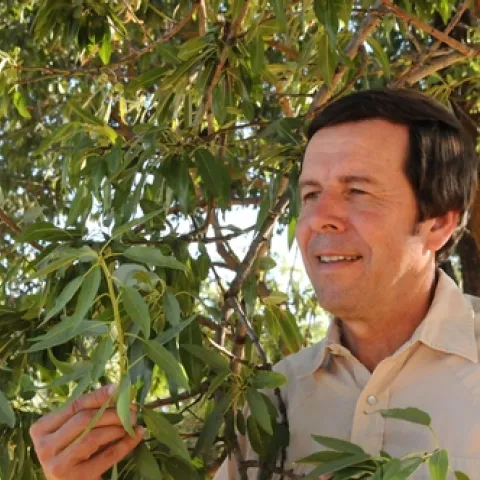
FRANK ZALOM, professor of entomology and integrated pest management specialist (IPM), UC Davis Department of Entomology, is part of the IPM team making a difference in Central Asia. (Photo by Kathy Keatley Garvey)
Bug Squad: Article

Delivering IPM to Central Asia

May 28, 2009
By Kathy Keatley Garvey
Making a difference--that's what it's all about. An integrated pest management (IPM) team from the United States is in Central Asia for the third Integrated Pest Management Stakeholders' Forum, June 1-5 in Bishhek, Kyrgystan.
View Article
Primary Image
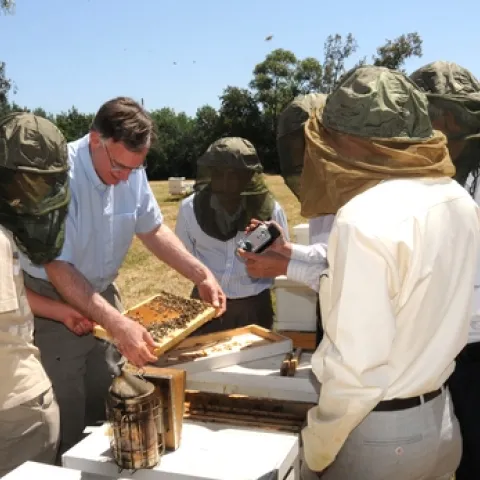
OPENING A HIVE--UC Cooperative Extension Apiculturist Eric Mussen (second from left) shows a frame to the Vietnamese scientists. (Photo by Kathy Keatley Garvey)
Bug Squad: Article

Golden Moments

May 27, 2009
By Kathy Keatley Garvey
They're now back in Vietnam, but for three days they went on a honey of a tour.
View Article
Primary Image
WHILE one male carpenter bee (Xylocopa tabaniformis) nectars on sage, another male attempts to scare him away. Male carpenter bees are very territorial. (Photo by Kathy Keatley Garvey)
Bug Squad: Article

Two Is Not Company

May 26, 2009
By Kathy Keatley Garvey
You rarely see two male adult carpenter bees in the same photo. They are very aggressive and territorial. While they're waiting for females to arrive, they chase all prospective suitors away. Unlike the females, however, they can't sting.
View Article
Primary Image
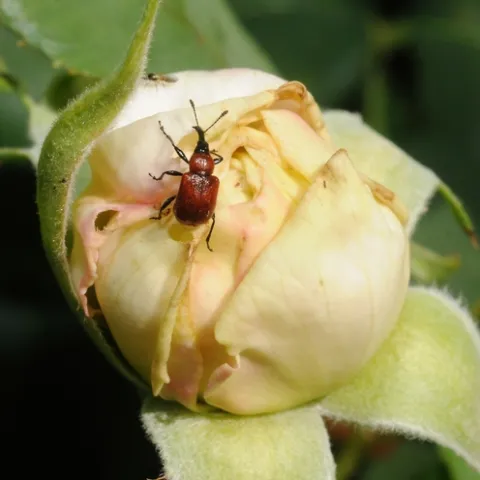
ROSE CURCULIO lays its eggs inside a yellow rose bud. Note the holes in the rose bud. (Photo by Kathy Keatley Garevy)
Bug Squad: Article

I Never Promised You...a Rose Weevil

May 25, 2009
By Kathy Keatley Garvey
I beg your pardon, I never promised you a rose garden. Along with the sunshine, There's gotta be a little rain sometimes. --Joe South And maybe a rose curculio or rose weevil.
View Article
Primary Image
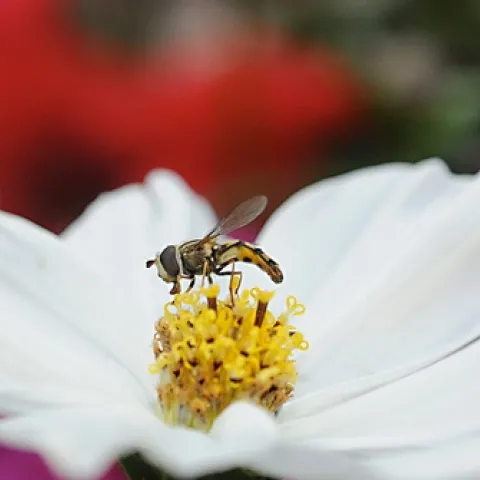
SYRPHID, aka flower fly or hover fly, lands on a cosmos. (Photo by Kathy Keatley Garvey)
Bug Squad: Article

Caught on the Cosmos

May 22, 2009
By Kathy Keatley Garvey
Cosmos flowers are somewhat like Libras. They balance. In fact, the word, "cosmos," means "harmony" or "ordered universe" in Greek. Plant cosmos and you'll soon be enjoying colorful flowers that belong to the Asteraceae family, which also includes sunflowers, daisies and asters.
View Article
Primary Image
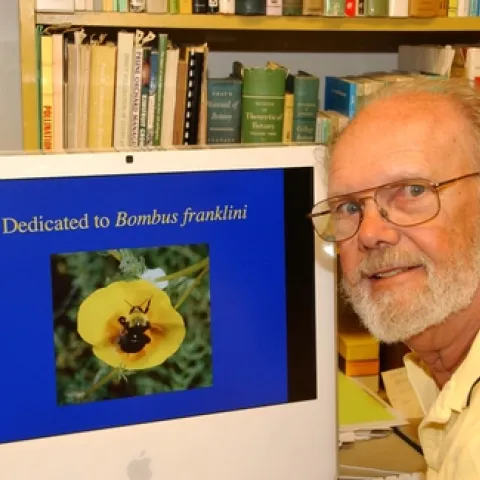
UC DAVIS RESEARCHER Robbin Thorp with a computer screen showing Franklin's bumble bee. He captured this image on a California poppy. (Photo by Kathy Keatley Garvey)
Bug Squad: Article

Goodbye, Franklin's Bumble Bee?

May 21, 2009
By Kathy Keatley Garvey
Let's have a show of hands. How many of you have seen Franklin's bumble bee in the wild? Never HEARD of it, you say? Well, you probably will never SEE it, either. Bumble bee experts think it may be extinct.
View Article