A Natural Solution for California's Herds: African Catfish Peptides

California's cattle producers and agricultural communities are all too familiar with the rising challenge of antibiotic resistance, making common bacterial infections harder to treat in livestock. But imagine a future where we could tackle these infections with a natural, powerful alternative. Our research points to just that: antimicrobial peptides (AMPs) found in African catfish.

We're really excited about these peptides because African catfish thrive in pathogen-rich freshwater, naturally producing these robust immune compounds in their skin mucus as a defense. This natural origin makes them highly appealing alternatives to synthetic drugs.

Predicted Safety and Potent Action

One of the most compelling aspects of these AMPs is their predicted safety for mammals. Our initial computer analyses suggest that various catfish AMPs are generally recognized as safe (GRAS). We predict they'll be absorbed in the human intestine without causing liver, brain, or heart toxicity. Furthermore, lab tests on a promising peptide, NACAP-II, confirmed it was non-hemolytic, meaning it didn't damage rabbit red blood cells—a strong indicator of its potential safety for mammalian cells.

Beyond safety, these peptides demonstrate effectiveness against problematic bacteria. One study revealed NACAP-II's strong activity against Extended-Spectrum Beta-Lactamase (ESBL)-producing Escherichia coli—a critical concern for both animal and human health due to its resistance to many common antibiotics. Another peptide, ACAP-IV, also showed antibacterial activity against E. coli and Staphylococcus aureus. We believe these AMPs work by directly disrupting bacterial cell membranes, a mechanism that makes it harder for bacteria to develop resistance compared to how they resist traditional antibiotics.

Bug Squad: Article

Crowd-Pleasing Hamilton Will Be at Dixon May Fair

May 10, 2017
By Kathy Keatley Garvey
If you missed seeing Hamilton, not to worry. Hamilton will be at the 142nd annual Dixon May Fair on Friday, May 12. Not the crowd-pleasing Broadway musical, but a crowd-pleasing scorpion named Hamilton, a resident of the UC Davis Bohart Museum of Entomology.
View Article
Primary Image
moon illusion rail
Topics in Subtropics: Article

Avocado Illusion

May 10, 2017
By Ben A Faber
Old crop, new crop. What's up there in the trees? Are they big enough to sell? Is there a good set for next year? These are questions every avocado grower has every year, and often all year long. What is up there in the trees is confounded by what is called the "Avocado Illusion".
View Article
Bug Squad: Article

Bugs to the Fair: From UC Davis to the Dixon May Fair

May 9, 2017
By Kathy Keatley Garvey
The theme of the 142nd annual Dixon May Fair set Thursday, May 11 through Sunday, May 14, is "Farm to Fair." But you could also say: "Bugs to Fair!" That's because the Bohart Museum of Entomology at the University of California, Davis, will have a presence there, all in the Floriculture Building.
View Article
Primary Image
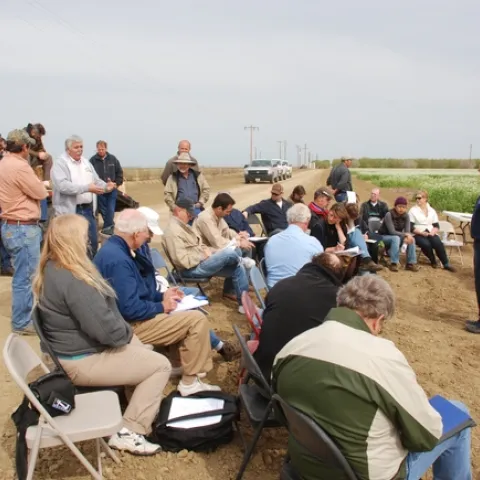
Farmers gather for training at a previous conservation agriculture field day. A half-day workshop titled 'Benefits of Soil Management for Farming Systems" will be held June 6, 2017, at the UC West Side Research and Extension Center in Five Points.
Conservation Agriculture: Article

Soil management training slated for June 6 in Five Points

May 8, 2017
By Jeannette Warnert
UC Cooperative Extension will train farmers June 6 at the UC West Side Research and Extension Center in Five Points on the benefits of soil management and a systems-oriented approach for achieving healthy soil. The free program runs from 9 a.m. to 1 p.m. and includes lunch.
View Article
Primary Image
MOU Signing Ceremony in Winters, CA for the California Farm Demonstration Network.
Conservation Agriculture: Article

MOU Signing Ceremony for the California Farm Demonstration Network

May 8, 2017
By Jeffrey P Mitchell
About fifty people gathered at the farm of Russ Lester just west of Winters, CA on a beautiful afternoon on the 5th of May for the signing of the Memorandum of Understanding for the California Farm Demonstration Network, a major undertaking by the University of California's Division of Agriculture a...
View Article
Primary Image
pixie whips
Topics in Subtropics: Article

New Rootstocks for the Little 'Pixie'

May 6, 2017
By Ben A Faber
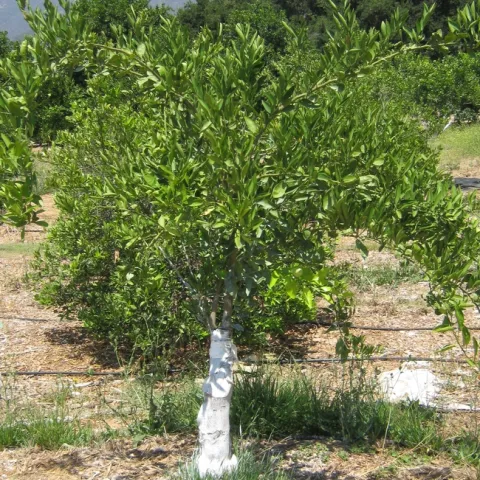
'Pixie' mandarin is a very vigorous, upright tree. Although the fruit is small, hence its name, it can produce fruit on the ends of long branches which deform the canopy structure, making it hard to pick. The sweet, seedless fruit is worth picking, though.
View Article
Primary Image
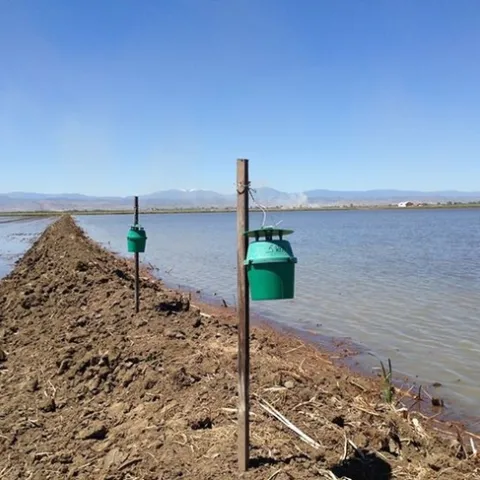
Armyworm traps on the edge of a field. Photo by: Luis Espino
UC Rice Blog: Article

UC Rice is live on Social Media

May 5, 2017
By Whitney B Brim-Deforest
UC Rice is now live on social media! We will be posting events that may be of interest to California rice and of course, lots of pictures of California rice country! Please follow us here: On Twitter: @UCRice On Facebook: @UCRice On Instagram: @UCRice...
View Article
Bug Squad: Article

How to Have a Rice Day

May 5, 2017
By Kathy Keatley Garvey
Rice farmers in southeast Asia don't "have a rice day" when the dreaded brown planthopper is infesting their crops. The brown planthopper, Nilaparvata lugens, or BPH, is the economically most important rice pest in Asia.
View Article