A Natural Solution for California's Herds: African Catfish Peptides

California's cattle producers and agricultural communities are all too familiar with the rising challenge of antibiotic resistance, making common bacterial infections harder to treat in livestock. But imagine a future where we could tackle these infections with a natural, powerful alternative. Our research points to just that: antimicrobial peptides (AMPs) found in African catfish.

We're really excited about these peptides because African catfish thrive in pathogen-rich freshwater, naturally producing these robust immune compounds in their skin mucus as a defense. This natural origin makes them highly appealing alternatives to synthetic drugs.

Predicted Safety and Potent Action

One of the most compelling aspects of these AMPs is their predicted safety for mammals. Our initial computer analyses suggest that various catfish AMPs are generally recognized as safe (GRAS). We predict they'll be absorbed in the human intestine without causing liver, brain, or heart toxicity. Furthermore, lab tests on a promising peptide, NACAP-II, confirmed it was non-hemolytic, meaning it didn't damage rabbit red blood cells—a strong indicator of its potential safety for mammalian cells.

Beyond safety, these peptides demonstrate effectiveness against problematic bacteria. One study revealed NACAP-II's strong activity against Extended-Spectrum Beta-Lactamase (ESBL)-producing Escherichia coli—a critical concern for both animal and human health due to its resistance to many common antibiotics. Another peptide, ACAP-IV, also showed antibacterial activity against E. coli and Staphylococcus aureus. We believe these AMPs work by directly disrupting bacterial cell membranes, a mechanism that makes it harder for bacteria to develop resistance compared to how they resist traditional antibiotics.

IGIS: Article

MODIS and R: a dream partnership

November 1, 2015
By Maggi Kelly
Found by Natalie: Tuck, Sean L., Helen RP Phillips, Rogier E. Hintzen, Jrn PW Scharlemann, Andy Purvis, and Lawrence N. Hudson. "MODISToolsdownloading and processing MODIS remotely sensed data in R." Ecology and evolution 4, no. 24 (2014): 4658-4668.
View Article
Primary Image
UC Davis entomology undergraduate student Wade Spencer practices his peacock jumping spider moves. (Photo by Kathy Keatley Garvey)
Bug Squad: Article

Peacock Jumping Spider Goes Viral!

October 30, 2015
By Kathy Keatley Garvey
When the Bohart Museum of Entomology hosts its annual membership Halloween party, don't expect to see ghosts and goblins and witches. No, expect to see a peacock jumping spider, violin spider, and praying mantis. And okay, maybe a monarch butterfly and a honey bee or two.
View Article
Primary Image
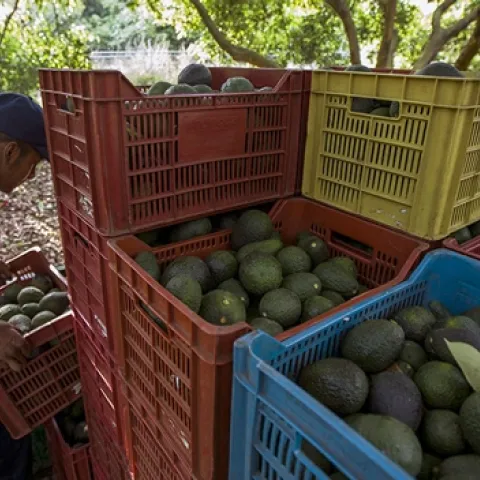
avocado fruit
Topics in Subtropics: Article

Avocado Day

October 30, 2015
By Ben A Faber
Please join us for Avocado Field Day at UCR on November 17, 2015 from 11:00-3:30. The event is located at UCR's field research station (1060 Martin Luther King Blvd., Riverside).
View Article
Primary Image
"Pollen Power": A robber fly with a trace of pollen. (Photo by Kathy Keatley Garvey)
Bug Squad: Article

For the Love of Insects

October 29, 2015
By Kathy Keatley Garvey
We love looking at insect images. Drum roll...the winning images for the Entomological Society of America's Photo Salon, a global competition, have just been announced. They will be shown at the ESA's meeting, Nov. 15-18 in Minneapolis, Minn.
View Article
Primary Image
Gulf Fritillaries in a "Butterfly Ballet." (Photo by Kathy Keatley Garvey)
Bug Squad: Article

Butterfly Ballet: No Boundaries, No Borders

October 28, 2015
By Kathy Keatley Garvey
If you're nurturing a passionflower vine (Passiflora), you've probably seen "The Butterfly Ballet."' The Gulf Fritillaries (Agraulis vanillae), orangish-reddish butterflies with silver-spangled wings, stay close to Passiflora, their host plant. It's the circle of life.
View Article
UC Weed Science (weed control, management, ecology, and minutia): Article

The beautiful world of weeds

October 28, 2015
A recent announcement for the Twentynine Palms (CA) annual weed show got me thinking about how we (okay...I...) view unwanted plants. As a weed scientist, I spend >99% of my time thinking critically about weeds...specifically, their biology, ecology and management.
View Article
Primary Image
Freeloader flies, from family Milichiidae, crowd the carcass of a honey bee trapped in a web. (Photo by Kathy Keatley Garvey)
Bug Squad: Article

Pity the Poor Honey Bees

October 27, 2015
By Kathy Keatley Garvey
Pity the poor honey bees. They have to contend with pesticides, parasites, pests, diseases, malnutrition, stress and that mysterious malady called colony collapse disorder in which adult bees abandon the hive, leaving behind the queen, immature bees and food stores.
View Article
Primary Image
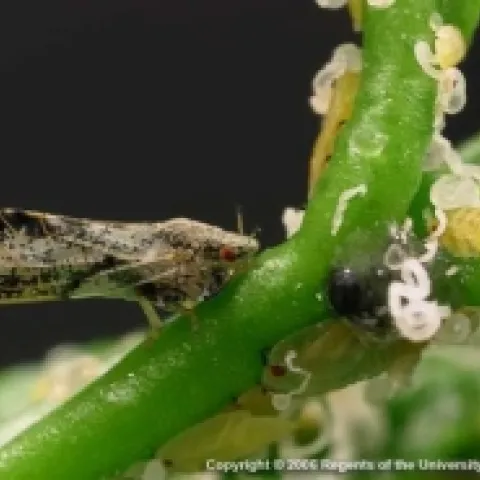
ACP nymph wax
Topics in Subtropics: Article

Area-wide Asian Psyllid Treatments in Ventura

October 27, 2015
By Ben A Faber
On Aug. 30, Ventura County's citrus growers, pest-control advisers (PCAs) and pest-control operators (PCOs) embarked on the most ambitious program of Asian citrus psyllid suppression in commercial groves ever undertaken in California.
View Article