A Natural Solution for California's Herds: African Catfish Peptides

California's cattle producers and agricultural communities are all too familiar with the rising challenge of antibiotic resistance, making common bacterial infections harder to treat in livestock. But imagine a future where we could tackle these infections with a natural, powerful alternative. Our research points to just that: antimicrobial peptides (AMPs) found in African catfish.

We're really excited about these peptides because African catfish thrive in pathogen-rich freshwater, naturally producing these robust immune compounds in their skin mucus as a defense. This natural origin makes them highly appealing alternatives to synthetic drugs.

Predicted Safety and Potent Action

One of the most compelling aspects of these AMPs is their predicted safety for mammals. Our initial computer analyses suggest that various catfish AMPs are generally recognized as safe (GRAS). We predict they'll be absorbed in the human intestine without causing liver, brain, or heart toxicity. Furthermore, lab tests on a promising peptide, NACAP-II, confirmed it was non-hemolytic, meaning it didn't damage rabbit red blood cells—a strong indicator of its potential safety for mammalian cells.

Beyond safety, these peptides demonstrate effectiveness against problematic bacteria. One study revealed NACAP-II's strong activity against Extended-Spectrum Beta-Lactamase (ESBL)-producing Escherichia coli—a critical concern for both animal and human health due to its resistance to many common antibiotics. Another peptide, ACAP-IV, also showed antibacterial activity against E. coli and Staphylococcus aureus. We believe these AMPs work by directly disrupting bacterial cell membranes, a mechanism that makes it harder for bacteria to develop resistance compared to how they resist traditional antibiotics.

Primary Image
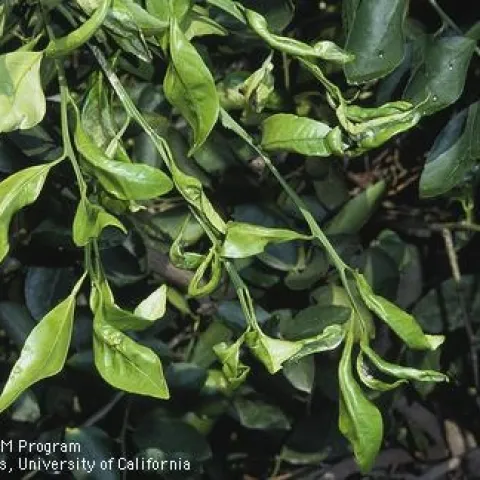
navel orange split
Topics in Subtropics: Article

Navel Orange Fruit Splitting? Another Drought Effect.

November 13, 2015
By Ben A Faber
Years of drought, and a stressed tree are a perfect set up for navel oranges and fruit splitting. The days have turned cooler and suddenly out of nowhere there is rain. That wonderful stuff comes down and all seems right with the world, but then you notice the navel fruit are splitting.
View Article
Primary Image
farmers market
Topics in Subtropics: Article

Learn About New Produce Marketing Channels in Los Angeles

November 13, 2015
By Ben A Faber
Meet the Buyer: An L.A. Produce Market Tour for Los Angeles Growers and Food Advocates Do you want to find new channels for selling your produce and make connections with produce buyers? Join us on a one day tour of produce distributors in the L.A.
View Article
Primary Image
A truck loaded with bee hives. Image taken through a car window. (Photo by Kathy Keatley Garvey)
Bug Squad: Article

What to Do When a Bee Truck Overturns

November 12, 2015
By Kathy Keatley Garvey
When a bee truck overturns, all sorts of things can happen. None of them is good--unless both the people and the bees fare well. Bystanders panic. Bees can and do react to all the commotion by stinging the first responders and the bystanders. It's especially difficult at night.
View Article
UC Weed Science (weed control, management, ecology, and minutia): Article

Weed-eating Biomachines

November 12, 2015
By Julie A Finzel
Weed-Eating Biomachines: How Grazing Livestock can Help Control Invasive Weeds In any good weed control program there are some basic steps that should be followed.
View Article
Primary Image
Monarch butterfly lands on the American flag. (Photo by Kathy Keatley Garvey)
Bug Squad: Article

Hurrah for the Red, White and Blue! (And Other Colors, Too)

November 11, 2015
By Kathy Keatley Garvey
Hurrah for the Red, White and Blue! Today is Veterans' Day, honoring and celebrating our U.S. military veterans. When I think of Veterans' Day, I think of all my ancestors, from the Revolutionary War on down, who answered our country's call for service.
View Article
Primary Image
Moment of freedom--a female monarch is released. (Photo by Kathy Keatley Garvey)
Bug Squad: Article

A Mid-Life Chrysalis

November 10, 2015
By Kathy Keatley Garvey
A mid-life chrysalis? Well, maybe not mid-life, but definitely out of season. A female monarch butterfly eclosed today in our little indoor butterfly habitat. Two weeks ago, we rescued the caterpillar from a narrow-leafed milkweed plant in our Vacaville pollinator garden and brought it inside.
View Article
UC Rice Blog: Article

UC IPM online courses offer continuing education units

November 10, 2015
By Luis Espino
Are you looking for continuing education units (CEUs) to complete your renewal application this year for the Department of Pesticide Regulation (DPR)? The UC Statewide IPM Program has several online courses available that can help you get those last few needed credits.
View Article
UC Weed Science (weed control, management, ecology, and minutia): Article

UC IPM online courses offer DPR/SPCB continuing education units

November 10, 2015
By Cheryl A Reynolds
Are you looking for continuing education units (CEUs) to complete your renewal application this year for the Department of Pesticide Regulation (DPR)? The UC Statewide IPM Program has several online courses available that can help you get those last few needed credits.
View Article