A Natural Solution for California's Herds: African Catfish Peptides

California's cattle producers and agricultural communities are all too familiar with the rising challenge of antibiotic resistance, making common bacterial infections harder to treat in livestock. But imagine a future where we could tackle these infections with a natural, powerful alternative. Our research points to just that: antimicrobial peptides (AMPs) found in African catfish.

We're really excited about these peptides because African catfish thrive in pathogen-rich freshwater, naturally producing these robust immune compounds in their skin mucus as a defense. This natural origin makes them highly appealing alternatives to synthetic drugs.

Predicted Safety and Potent Action

One of the most compelling aspects of these AMPs is their predicted safety for mammals. Our initial computer analyses suggest that various catfish AMPs are generally recognized as safe (GRAS). We predict they'll be absorbed in the human intestine without causing liver, brain, or heart toxicity. Furthermore, lab tests on a promising peptide, NACAP-II, confirmed it was non-hemolytic, meaning it didn't damage rabbit red blood cells—a strong indicator of its potential safety for mammalian cells.

Beyond safety, these peptides demonstrate effectiveness against problematic bacteria. One study revealed NACAP-II's strong activity against Extended-Spectrum Beta-Lactamase (ESBL)-producing Escherichia coli—a critical concern for both animal and human health due to its resistance to many common antibiotics. Another peptide, ACAP-IV, also showed antibacterial activity against E. coli and Staphylococcus aureus. We believe these AMPs work by directly disrupting bacterial cell membranes, a mechanism that makes it harder for bacteria to develop resistance compared to how they resist traditional antibiotics.
UC Weed Science (weed control, management, ecology, and minutia): Article

(Weed) Science and Replication

August 25, 2014
By Chris J McDonald
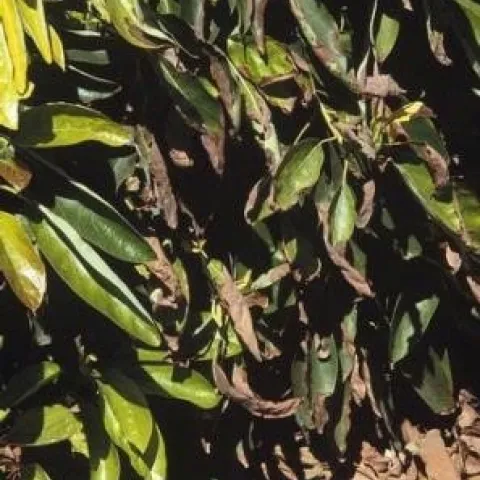
I have had the pleasure to conduct a variety of experiments, watch numerous management talks and take many classes on the scientific method. During these adventures I've noticed that people seem to misunderstand (or not comprehend the full power of) replication.
View Article
Primary Image
image 24241
IGIS: Article

That was a long, rolling quake

August 24, 2014
By Maggi Kelly
From Live EarthquakesWe felt the 6.1 quake here in Berkeley as a long, rolling, continual shimmy. Up in Napa it was considerably more than that. Lots of news about lost wine etc.
View Article
Primary Image
Praying mantis hides beneath the petals of a Mexican sunflower. (Photo by Kathy Keatley Garvey)
Bug Squad: Article

A Miss Is as Good as a Smile

August 22, 2014
By Kathy Keatley Garvey
Our buddy, the resident praying mantis, appears to be in perfect form. Crouched beneath the Mexican sunflower (Tithonia), he glistens in the early morning light, as honey bees, long-horned bees, Gulf Fritillary butterflies and fiery skippers search for food.
View Article
Primary Image
sodic-crust stutsman-co

Salt and Gypsum

August 22, 2014
By Ben A Faber
With the drought our perpetual salt problems are exacerbated due to less water and often more saline water. The question keeps coming up if gypsum (calcium sulfate) can help correct the problem. And the answer is maybe, but along the coast, probably not.
View Article
Primary Image
Honey bees flying in formation toward an artichoke in bloom. (Photo by Kathy Keatley Garvey)
Bug Squad: Article

The Artichoke in Bloom: Bee Food

August 21, 2014
By Kathy Keatley Garvey
Bee food. That's what the globe artichoke is. Bee food. Many of us let our artichokes flower, not because we don't like the vegetable, but because we like bees better.
View Article
UC Rice Blog: Article

Rice Field Day: Wednesday, August 27, 2014

August 21, 2014
By Luis Espino
The annual Rice Field Day will be Wednesday, August 27, 2014, at the Rice Experiment Station (RES), Biggs, California. You and your associates are cordially invited to join us to observe and discuss research in progress at RES.
View Article
Primary Image
Cabbage white butterfly in mid-flight. (Photo by Kathy Keatley Garvey)
Bug Squad: Article

Luck of a Lady in White

August 20, 2014
By Kathy Keatley Garvey
There's something about the cabbage white butterfly (Pieris rapae) that makes folks foam at the mouth.
View Article
Primary Image
image 24159
IGIS: Article

New VTM photo reshoots from Joyce - check it!

August 20, 2014
By Maggi Kelly
Joyce Gross is our most avid VTM photography buffs. Here are two new VTM reshoots for our viewing pleasure. Her original post here. She says: This was the first VTM photo site I've found that required a hike to get there.
View Article
IGIS: Article

Measuring Development: Energy & Environment

August 20, 2014
By Maggi Kelly
I spoke yesterday at the CEGA-DIME* co-sponsored event: Measuring Development: Energy & Environment. This was a terrific day of interesting talks, thoughtful conversations and great networking.
View Article
Primary Image
A drone (male bee) emerging. (Photo by Kathy Keatley Garvey)
Bug Squad: Article

Keeping Bees

August 19, 2014
By Kathy Keatley Garvey
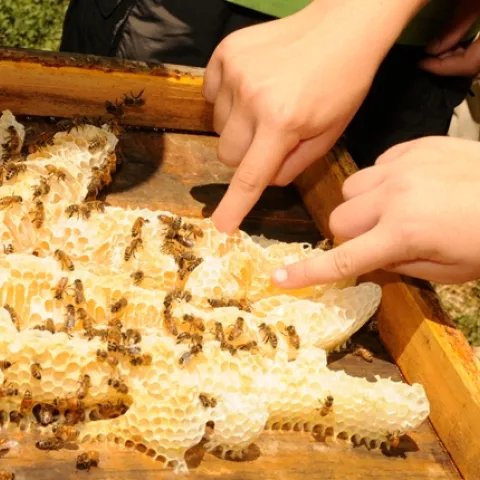
So you want to keep bees in your backyard... When do you start? What should you do? Newly retired Extension apiculturist Eric Mussen of the UC Davis Department of Entomology and Nematology, continues to field questions.
View Article