A Natural Solution for California's Herds: African Catfish Peptides

California's cattle producers and agricultural communities are all too familiar with the rising challenge of antibiotic resistance, making common bacterial infections harder to treat in livestock. But imagine a future where we could tackle these infections with a natural, powerful alternative. Our research points to just that: antimicrobial peptides (AMPs) found in African catfish.

We're really excited about these peptides because African catfish thrive in pathogen-rich freshwater, naturally producing these robust immune compounds in their skin mucus as a defense. This natural origin makes them highly appealing alternatives to synthetic drugs.

Predicted Safety and Potent Action

One of the most compelling aspects of these AMPs is their predicted safety for mammals. Our initial computer analyses suggest that various catfish AMPs are generally recognized as safe (GRAS). We predict they'll be absorbed in the human intestine without causing liver, brain, or heart toxicity. Furthermore, lab tests on a promising peptide, NACAP-II, confirmed it was non-hemolytic, meaning it didn't damage rabbit red blood cells—a strong indicator of its potential safety for mammalian cells.

Beyond safety, these peptides demonstrate effectiveness against problematic bacteria. One study revealed NACAP-II's strong activity against Extended-Spectrum Beta-Lactamase (ESBL)-producing Escherichia coli—a critical concern for both animal and human health due to its resistance to many common antibiotics. Another peptide, ACAP-IV, also showed antibacterial activity against E. coli and Staphylococcus aureus. We believe these AMPs work by directly disrupting bacterial cell membranes, a mechanism that makes it harder for bacteria to develop resistance compared to how they resist traditional antibiotics.
Primary Image
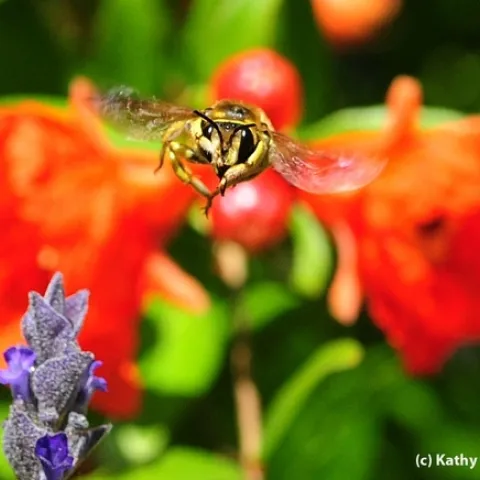
carpenter bee
Topics in Subtropics: Article

Bee Research Buzzing at Cal State Channel Islands

January 13, 2014
By Ben A Faber
Pollination ecologists have typically studied a focal plant species and one or a few closely related pollinator taxa, such as bumblebees, which fostered the view that plant-pollinator relationships are highly specialized.
View Article
Primary Image
young avocacdo tree

Planting Holes

January 12, 2014
By Ben A Faber
I am amazed how such a simple procedure can go so wrong. For avocado and citrus growers, its time to think about planting in the spring. And every spring and summer I get called out to diagnose trees that are failing. It often turns out that the trees have been planted too deeply.
View Article
Primary Image
A honey bee heading toward an almond blossom. The honey bee is one of the candidates for Insect News Network's Bug of the Year. (Photo by Kathy Keatley Garvey)

Which Bug's for You?

January 10, 2014
By Kathy Keatley Garvey
What's your favorite bug? Inquiring minds want to know. At least one inquiring mind wants to know.
View Article
Primary Image
The "porch light" bumble bee. (Photo by Kathy Keatley Garvey)
Bug Squad: Article

'Zombie' Bumble Bees?

January 9, 2014
By Kathy Keatley Garvey
This is the story of what may be three parasitized bumble bees. Or to put it more precisely, three Bombus melanopygus queens. Early this morning, in between dark and dawn, three black-tailed bumble bees buzzed around our porch lights.
View Article
UC Rice Blog: Article

2014 Rice Grower Meetings - Program

January 9, 2014
By Luis Espino
2014 Annual Rice Grower Meetings Sponsored by UC Cooperative Extension -------------- 4 Locations -------------- WHERE & WHEN Richvale: Monday, Jan. 27, 8:00 am, Evangelical Church, 5219 Church St., Richvale Glenn: Monday, Jan.
View Article
Primary Image
Copy of avocado irrigation

When the Rains Don't Do Their Thing

January 9, 2014
By Ben A Faber
"We don't need to irrigate, it's winter." This is a commonly held idea, and many years it is true. Adequately timed rains will often meet the needs of avocado trees during the winter period, and in times like last year, even satisfy much of the spring requirement.
View Article
Primary Image
Bed bug. (Photo by Piotr Naskrecki, courtesty of the Centers for Disease Control and Prevention.)

Bring on the Bed Bugs at the Bohart

January 8, 2014
By Kathy Keatley Garvey
They're the bugs you love to hate. Bed bugs, lice, ticks, mites, fleas and mosquitoes. If you want to see and/or learn more about them, attend the Bohart Museum of Entomology's "Snuggle Bugs" open house from 1 to 4 p.m., Sunday, Jan.
View Article