A Natural Solution for California's Herds: African Catfish Peptides

California's cattle producers and agricultural communities are all too familiar with the rising challenge of antibiotic resistance, making common bacterial infections harder to treat in livestock. But imagine a future where we could tackle these infections with a natural, powerful alternative. Our research points to just that: antimicrobial peptides (AMPs) found in African catfish.

We're really excited about these peptides because African catfish thrive in pathogen-rich freshwater, naturally producing these robust immune compounds in their skin mucus as a defense. This natural origin makes them highly appealing alternatives to synthetic drugs.

Predicted Safety and Potent Action

One of the most compelling aspects of these AMPs is their predicted safety for mammals. Our initial computer analyses suggest that various catfish AMPs are generally recognized as safe (GRAS). We predict they'll be absorbed in the human intestine without causing liver, brain, or heart toxicity. Furthermore, lab tests on a promising peptide, NACAP-II, confirmed it was non-hemolytic, meaning it didn't damage rabbit red blood cells—a strong indicator of its potential safety for mammalian cells.

Beyond safety, these peptides demonstrate effectiveness against problematic bacteria. One study revealed NACAP-II's strong activity against Extended-Spectrum Beta-Lactamase (ESBL)-producing Escherichia coli—a critical concern for both animal and human health due to its resistance to many common antibiotics. Another peptide, ACAP-IV, also showed antibacterial activity against E. coli and Staphylococcus aureus. We believe these AMPs work by directly disrupting bacterial cell membranes, a mechanism that makes it harder for bacteria to develop resistance compared to how they resist traditional antibiotics.
Primary Image
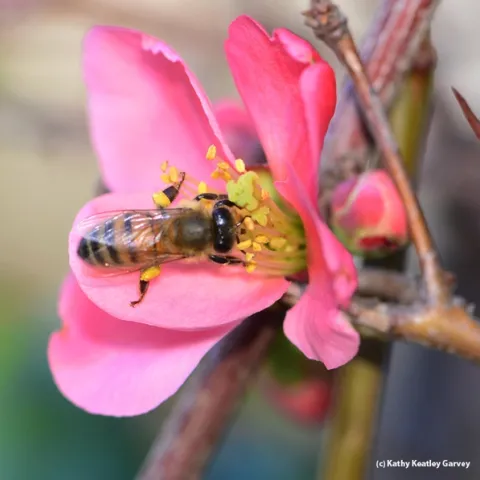
Five honey bees on one pomegranate blossom. (Photo by Kathy Keatley Garvey)

Pom Squad

May 10, 2013
By Kathy Keatley Garvey
It was definitely a hot spot. Honey bees foraging last week on a pomegranate tree on Hopkins Road, west of the UC Davis main campus, competed for food on hundreds of blossoms. We counted five honey bees on one blossom alone in what amounted to a pushing/shoving match.
View Article
Primary Image
I-HM-CLEC-CO.001
Pest News: Article

Bed bug monitors help early detection

May 10, 2013
Egg, five nymphal stages, and adult bed bugs, Cimex lectularius. Photo by Dong-Hwan Choe. Bed bugs are quickly becoming major household nuisance pests.
View Article
Primary Image
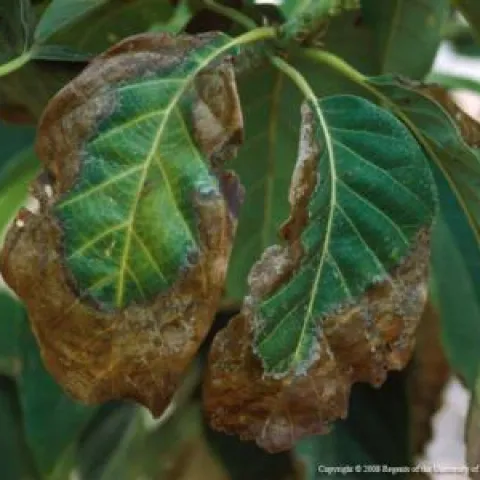
Dothiorella 2
Topics in Subtropics: Article

DOTHIORELLA LEAF AND STEM BLIGHT

May 10, 2013
By Ben A Faber
Stem and leaf blights are symptoms that appear for various reasons high rainfall or humidity, spray burn, chewing insect infestation. Here in California we can add other causes, such as drought and salinity burn.
View Article
Primary Image
A noctuid cutworm, which will turn into a "dull brown moth," crawls on yarrow in the UC Davis Arboretum. (Photo by Kathy Keatley)

Moths on Moth-ers Day

May 9, 2013
By Kathy Keatley Garvey
Saturday, May 11 is "Moth-ers Day" at the Bohart Museum of Entomology, University of California, Davis.
View Article
Primary Image
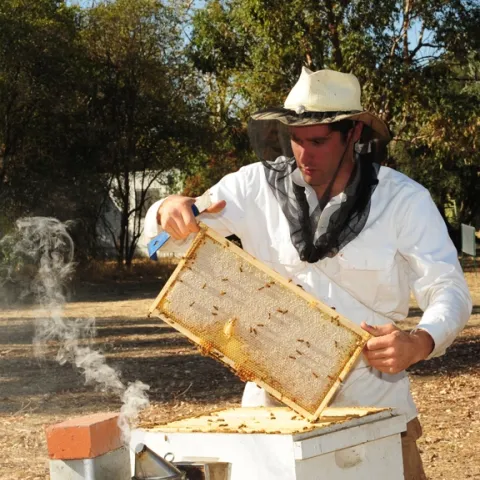
Beekeeper Brian Fishback shows his daughter, Emily, his bee observation hive. (Photo by Kathy Keatley Garvey)

Bugfest at Dixon May Fair

May 8, 2013
By Kathy Keatley Garvey
If you think that every insect on a flower is a honey bee, you should see what the UC Davis Department of Entomology is showcasing at the Dixon May Fair, May 9-12.
View Article
Primary Image
FightingFire web
Topics in Subtropics: Article

Fire Season Really hasn't stopped this Year

May 8, 2013
By Ben A Faber
Here's a list of links for growers and homeowners on how to prepare for fire and in the case of fruit trees, how to treat them after they have burned and how to calculate the loss of a commercial fruit tree.
View Article
Primary Image
Honey bee tumbles off a flowering catmint and lands on a leaf. (Photo by Kathy Keatley Garvey)

A Day in the Life of a Single Worker Bee

May 7, 2013
By Kathy Keatley Garvey
A day in the life of a single worker bee... A honey bee tumbles off the flowering catmint (Nepeta) and struggles to right herself. Her wings tattered, her body battered, she does not buzz away.
View Article
UC Weed Science (weed control, management, ecology, and minutia): Article

Dandelions Beware!

May 7, 2013
By Robert G Wilson
Spring is finally upon on us in Northeast California. The joy of flowering trees, green grass, and warmer weather is here! Unfortunately, the familiar site of yellow dandelion flowers and other broadleaf weeds in my lawn is also abundant.
View Article